

Post Content
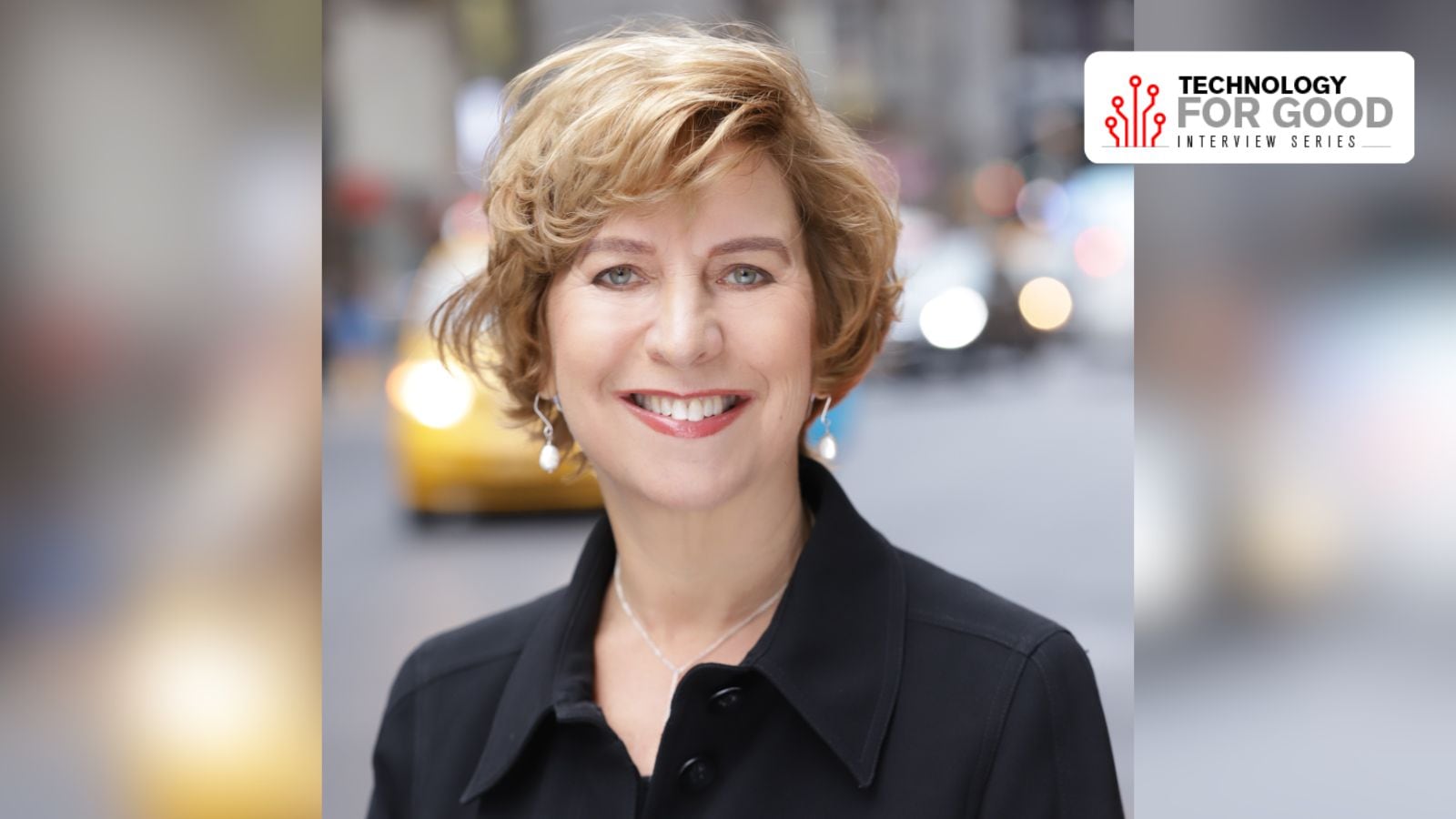
Vivian Schiller is the Vice President and executive director at Aspen Digital, where she works with policymakers, citizen groups, and companies to promote the responsible use of technology for an informed society. Aspen Digital is part of the Aspen Institute, a global convenor of changemakers.
Previously, Vivian served as the CEO and president of NPR, and as a director of the Scott Trust, which owns The Guardian newspaper. She has also been a strategic advisor to Craig Newmark philanthropies, and held senior roles at The New York Times, NBC News, CNN, and Twitter (now X).
Vivian spoke to indianexpress.com on the AI zoomer and doomer narratives, the need for a middle path, on deepfakes, and on how AI augments creativity more than replacing talent. Edited excerpts:
Venkatesh Kannaiah: Tell us about Aspen Digital and the broad contours of your work.
Vivian Schiller: Aspen Digital’s focus is on technology and media and how they can be harnessed for the public good. At any given time, we have around 30 different initiatives, from cybersecurity to international cooperative frameworks for digital governance to forms of emerging tech like quantum computing. Over the last few years, our focus has been on AI, its role in society and ensuring that it supports human rights and dignity and aligning the tech with sustainable development goals.
Everything we do has a convening element, but our purpose is not solely to set up meetings. Our recent convening was about AI and global security issues, and we had OpenAI, Anthropic, and Google having conversations with researchers, civil society and philanthropies. The goal is for people who are not usually in dialogue with each other to try to find common ground.
We also give grants. One is about initiatives that can support advancement in the workplace, using AI. We are granting around 60 million dollars across the field for such projects.
Story continues below this ad
Venkatesh Kannaiah: Tell us about your interest in AI and creativity, and how this is impacting Hollywood.
Vivian Schiller: So much of the discourse on AI has been about what we call the zoomers and doomers. The zoomers want to accelerate AI at all costs, and the doomers say that we’re all going to be dead in five years. And what has been missing from the conversation is how AI is having an impact on people’s lives today and how it is being used creatively and in a positive manner.
As an experiment, our Shared Futures event showcased people from the creative fields and how they are using AI not to replace what they do, but to augment what they do. Creators face a lot of challenges when it comes to AI, such as protecting their intellectual property or being replaced by AI. We address those issues as well. But it’s just important to understand some of the positive use cases of AI and recognise that it’s not getting enough attention.
Filmmakers using AI are able to manifest their creative ideas with speed and affordability that was not available to them earlier. It has opened up opportunities for people who don’t have the deep resources of a Hollywood studio to create something new and get an audience. We see it from animation to storyboarding to all forms of creativity.
Story continues below this ad
There are also concerns from screenwriters, directors, and actors that AI models are ingesting their work and replicating their work without credit or compensation.
The tech has advanced so much that you could easily fabricate a well-known Hollywood star and put them in a movie without their consent. Or you can give a prompt to an AI to write a film in the style of James Cameron. All of this is possible because it’s been trained on the actual labour of humans. It is a live issue that’s being litigated right now in Hollywood. I support the rights of creators to protect their copyright.
When AI is used in place of human creativity, it will be reductive and derivative, and it will fail in terms of capturing the imagination. And also, it’s not right to the creators because it means their intellectual property is being ripped off.
Venkatesh Kannaiah: When are we likely to see AI bots determining election results? Or have we overestimated their influence?
Story continues below this ad
Vivian Schiller: I’m going to dispute that we had overestimated their influence. We did a lot of work during 2020 and 2024, which was an unprecedented year of national elections around the world.
In 2024, many expected that there was going to be some spectacular deepfake that would change the outcome of elections and or send the world into chaos. That spectacular event did not happen. That does not mean that deepfakes or misinformation did not have an impact.
Here is what happened. AI has enabled bad actors and those who want to cause mischief or change the outcome of elections. It has allowed them to inject thoughts into public discourse at an unprecedented scale and speed, and with a level of targeting that was not possible before.
If it were one big splashy deepfake, people might not have been fooled, or it might have easily been debunked. We are all getting information from our feeds, and they are being manipulated by bots that are preying on people’s tendency to be attracted to salacious or controversial content. People are being swayed because they feel that many other people are moving in one direction, even though the ‘many others’ may be fake bots. To me, this is much more concerning than some big deepfake.
Story continues below this ad
Even more terrifying is not that I think people will be fooled. I think they will just stop believing anything at all, even real information, even real images or even real video. When there is so much fake information, it is very much possible for someone to say that they do not believe anything whatsoever.
Venkatesh Kannaiah: How is AI adoption by governments for solving citizen problems or grievances working out?
Vivian Schiller: More than governments, I am excited when I see local communities using AI to help solve their community problems.
And that can range anywhere from public opinion polling on citizen interests to making it easy for citizens to access public services. We at Aspen Digital have an initiative about identifying AI tools and services that can help emergency managers with the preparation and response to disasters, both natural and man-made. It could be about road closures, the need for evacuation and recovery, and providing access to these services.
Story continues below this ad
Venkatesh Kannaiah: Tell us about AI-led scenarios the global south should be worried about?
Vivian Schiller: The first one is my fear that because there’s so much AI-generated false information, people will either be fooled or they will stop believing anything at all. If we lose the foundation of agreed-upon facts, whether it’s about climate, economy or anything else, it could lead to chaos.
Secondly, as AI becomes more ubiquitous, much of its control is in the hands of a few private companies and not in the hands of the common citizens. Citizens and governments need to be involved with AI because we cannot rely on the private sector alone.
And there is the privacy issue. AI has the ability to do individual and mass surveillance at scale. It has facial recognition tools that are targeted and sophisticated. I think the tech giants or the private sector cannot be counted on to do the right thing. So this is where regulation is needed, and governments need to get involved.
Story continues below this ad
Venkatesh Kannaiah: Is there still time and space for ethical AI and responsible tech, or has the water flowed down the bridge?
Vivian Schiller: Of course, there is still time. I am inspired by people that I meet all over the world who are working hard on these issues. You have the tech giants, and of course, they have their business interests. We need private industry, too.
I see organisations, individuals, and governments around the world who are committed to making sure that AI is in service to the people and not people in service to AI. Citizens are not merely the data that feeds into fine-tuning these advanced models. We need to maintain our agency as human beings and make sure that AI works for us and not the other way around.
Venkatesh Kannaiah: Three things for India to be optimistic about AI.
Story continues below this ad
Vivian Schiller: India should be optimistic about the potential, but the reality of how AI is helping with tools for rural farmers in areas like, say, water supply and crop rotation.
AI is giving us climate data that was not available before, some of which can help with solutions to the climate crisis. We are also seeing AI as an augmentation to human creativity, and its exciting applications in the health sector. AI is helping create vaccines with a speed and an accuracy that would never have been possible before. This is just mind-boggling.
We are in such an unusual moment, both of opportunities and challenges, and that is why this false binary of the AI zoomers and doomers makes me crazy, because there’s a huge reality in the middle.
