

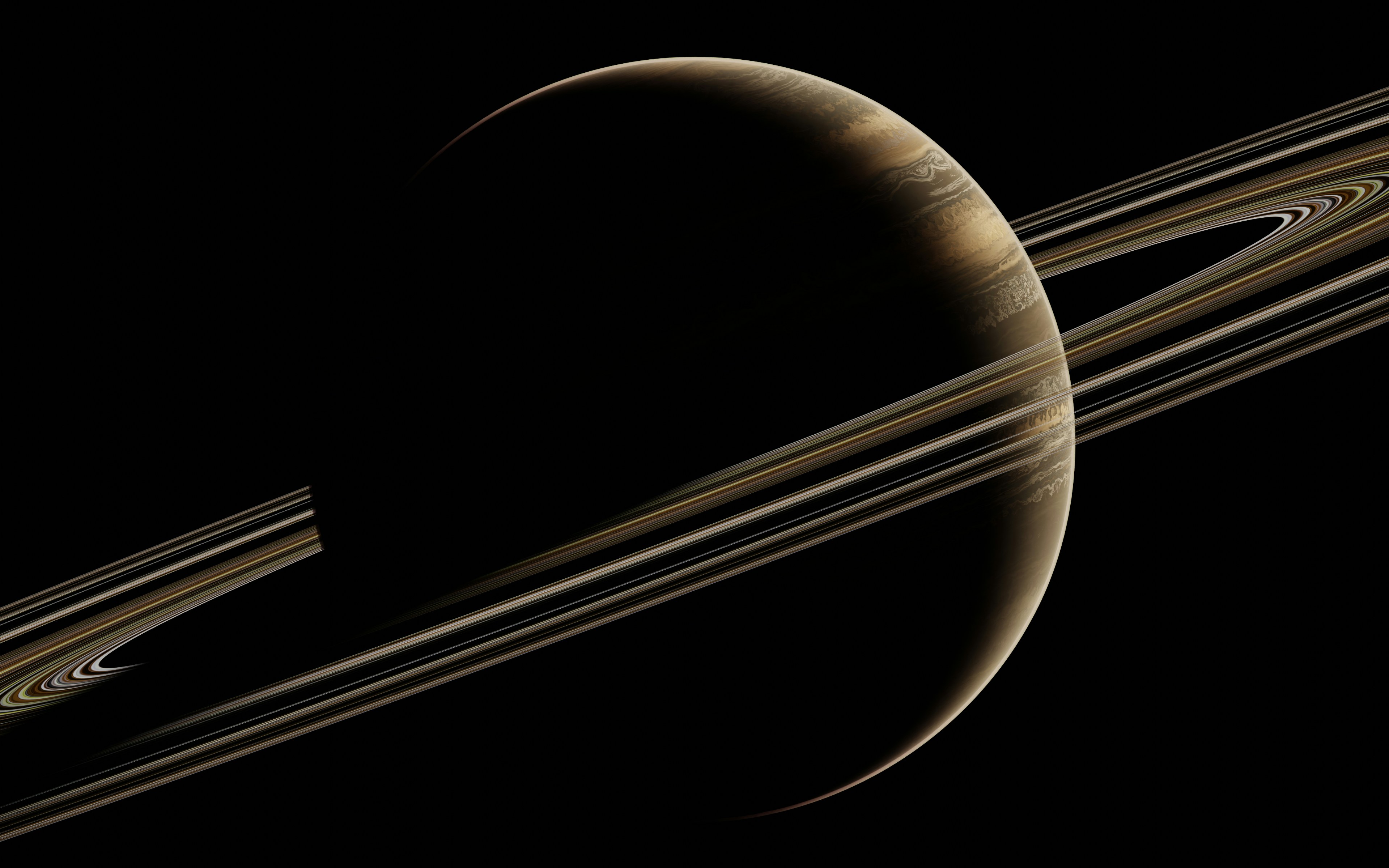
Post ContentThe additions include four new moons of Jupiter and 11 of Saturn, formally reported by the Minor Planet Centre, which tracks and verifies small celestial objects. (Image for representation: Unsplash)
A new set of moons has been discovered orbiting Jupiter and Saturn, raising the number of these celestial bodies to 101 and 285, respectively. The discovery is part of the growing list of natural satellites in the solar system, which now has a total of 442 moons.
The additions include four new moons of Jupiter and 11 of Saturn, formally reported by the Minor Planet Centre, which tracks and verifies small celestial objects.
Small, faint, and hard to detect
The newly found moons are relatively tiny, averaging about 3 km across. They orbit far from their parent planets, much farther than the well-known larger moons. Due to this, these objects are extremely faint, and it is almost impossible to see them using normal backyard telescopes.
Also Read | Astronomers spot violent collision of two exoplanets 11,000 light-years away: ‘It went completely bonkers’
Their brightness levels fall between magnitude 25 and 27, far dimmer than Earth’s moon, which shines at magnitude -12.6.
Astronomers Scott Sheppard and David Tholen discovered Jupiter’s four new moons, employing powerful telescopes in Chile and Hawaii, including deep space observation centres.
A team led by Edward Ashton identified Saturn’s 11, using a powerful telescope in Hawaii. Ashton’s team had already found 128 Saturnian moons in 2025.
Both Sheppard and Ashton are renowned in this field, together contributing to the discovery of more than 200 moons.
Story continues below this ad
Also Read: New magnetic discovery inside Sun could help predict solar storms more precisely
Despite Saturn currently leading in moon count, upcoming missions such as Europa Clipper and JUICE, on their way to reach Jupiter in the early 2030s, may reveal even more moons around the gas giant.
A growing inventory of moons
Across the solar system, the numbers continue to rise. Earth has one moon, Mars two, Uranus 28, and Neptune 16, while Venus and Mercury have none.
© IE Online Media Services Pvt Ltd
