

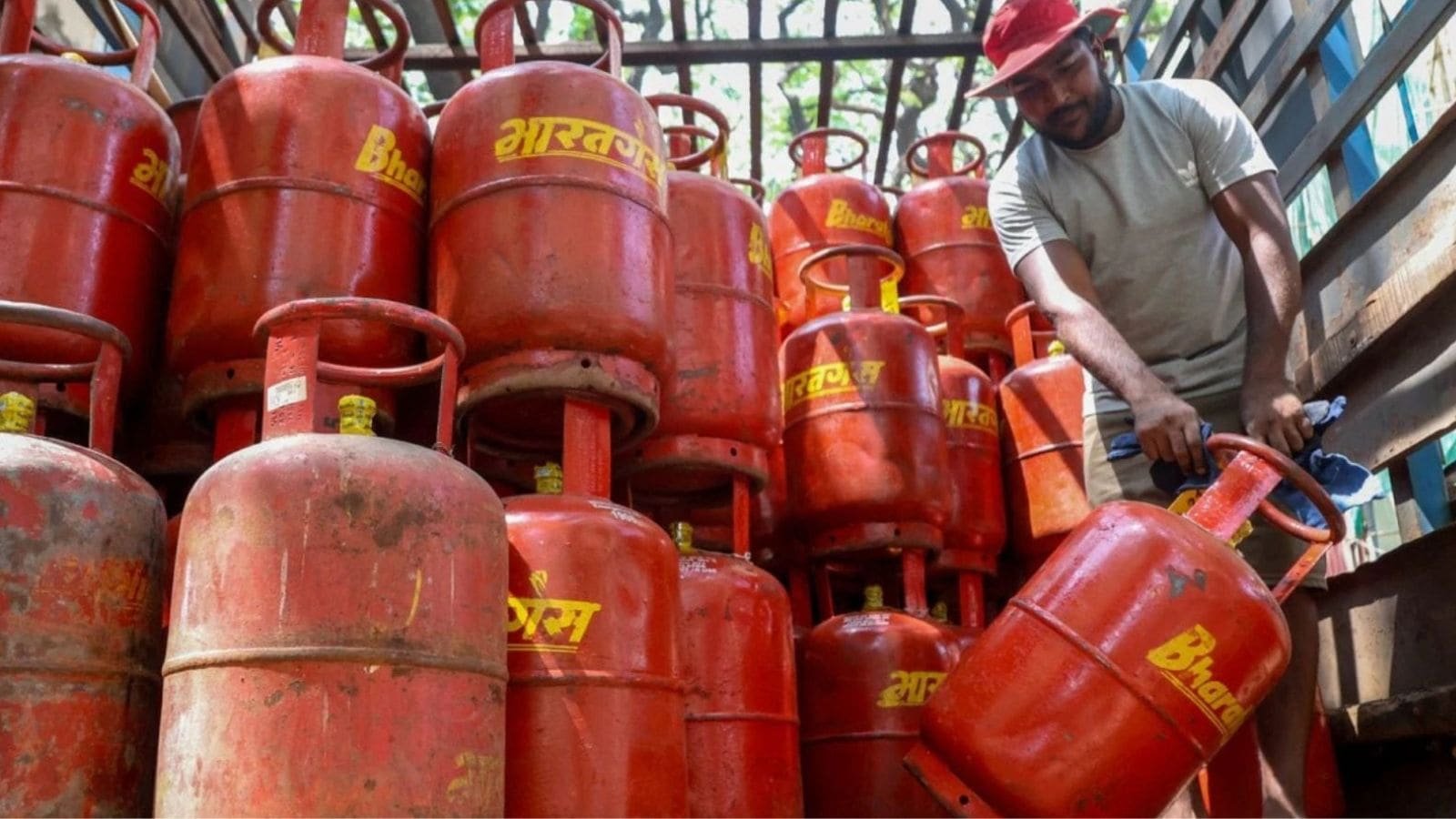
India depends on imports to meet about 60% of its LPG demand, and 90% of its LPG imports came from West Asia through the Strait of Hormuz. (File image)
With the massive cut in commercial supplies of liquefied petroleum gas (LPG) hitting restaurants and hotels, particularly the small-scale establishments among them, the Centre on Saturday approved an additional 20% allocation of commercial LPG to states and union territories specifically for restaurants, dhabas, hotels, industrial canteens, food processing and dairy sectors, subsidised canteens or food outlets run by state governments and local bodies, and community kitchens.
These segments of commercial LPG consumers were among the worst-hit. The additional allocation will also be for refills of 5-kg cylinders for migrant labourers. Moreover, the government has made it mandatory for commercial and industrial consumers of LPG to register with public sector fuel retailers, and also apply for a piped natural gas (PNG) connection to become eligible to get commercial LPG.
With this additional allocation, commercial LPG allocation to states can be up to 50% of the estimated requirement. The government had earlier allowed 20% allocation to states for commercial LPG consumers, and later offered an additional 10% if states took certain specific measures to help expedite PNG infrastructure. LPG supply to commercial and industrial consumers was cut in a bid to shield households that use LPG as kitchen fuel. This was done as a large chunk of India’s LPG supplies were disrupted due to the effective closure of the critical maritime chokepoint of the Strait of Hormuz amid the West Asia war.
India depends on imports to meet about 60% of its LPG demand, and 90% of its LPG imports came from West Asia through the Strait of Hormuz. Apart from prioritising LPG supplies to households over commercial and industrial consumers, the government ordered refiners to maximise LPG production, and directed them to divert propane, butane, and other streams from petrochemical manufacturing to LPG production.
Also Read | No shortage: Govt says domestic LPG production up 40% amid Iran war
These measures have helped raise domestic LPG production by around 40% vis-à-vis the pre-war levels, which translates to around 16% of the country’s overall LPG demand. The increase in domestic production of the fuel is being seen as a reason for the increased allocation of commercial LPG to states. While the supply of LPG is still a matter of concern in view of the prevailing geopolitical situation, delivery of LPG cylinders are being maintained at the pre-West Asia war levels, the government said in a release. It added that panic cylinder bookings among households have reduced and there has been no dry-out reported at any of the 2,500-odd LPG distributorships in the country.
In a letter to chief secretaries of all states and union territories, Petroleum Secretary Neeraj Mittal wrote that the commercial and industrial LPG consumers will have to register with public sector oil marketing companies (OMCs)—Indian Oil Corporation, Bharat Petroleum Corporation, and Hindustan Petroleum Corporation—before they can become eligible for commercial LPG supplies. Also, they will have to apply for a PNG connection in order to get commercial LPG.
“OMCs shall register such customers and keep a record of the sector they operate in the end-use of LPG and annual weight requirement of LPG of that customer in respective database(s)…All commercial/industrial LPG consumers shall have to apply for PNG with the City Gas Distribution (CGD) entity in their city as applicable and take all actions that will take them to a state of readiness for receiving PNG before they can be eligible to be allotted any commercial LPG from the overall 50% allocation,” Mittal wrote.
Story continues below this ad
The government has been appealing to LPG consumers—commercial and industrial users as well as households—to shift to piped PNG, wherever feasible, to take some pressure off of LPG supplies. According to data shared by the government, over 1.25 lakh new natural gas connections—including domestic, commercial, industrial, and compressed natural gas (CNG)—have been given over the past couple of weeks. Over 5,600 LPG consumers have also shifted to PNG over the past few days.
Although natural gas supplies to India have also been hit due to the Strait of Hormuz’s closure, the situation is not as concerning as in the case of LPG. India depends on imports to meet roughly half of its natural gas needs, with 55-60% of the imports coming through the Strait. Apart from the centre incentivising states with additional commercial LPG volumes if they expedite PNG infrastructure expansion, some CGD companies have also announced incentives like some volumes of free gas and waiver of connection charges to encourage consumers to sign up for PNG connections.
The Petroleum and Natural Gas Regulatory Board (PNGRB) has also advised CGD companies to deploy additional resources and step up outreach to provide connections quickly to consumers wherever networks are available. According to the government’s estimates, there are roughly 60 lakh households that are in the vicinity of PNG coverage, and can quickly switch to piped gas connections. As against 33.3 crore households with LPG connections, the number for PNG connections stands at around 1.5 crore.
© The Indian Express Pvt Ltd
