

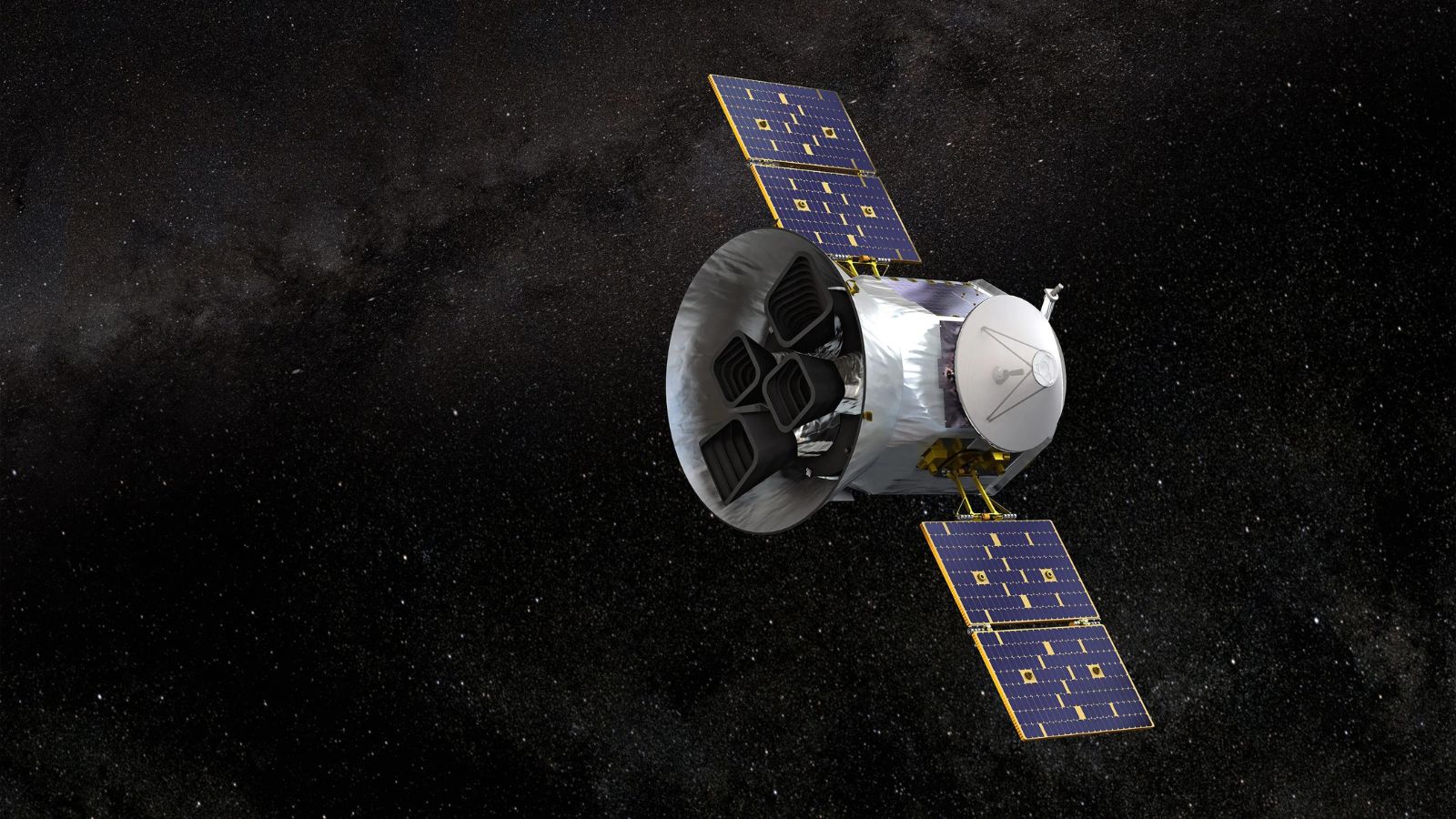
Post Content The new map comes from the Surface Water and Ocean Topography satellite, a joint mission between Nasa and CNES. Launched in December 2022. (Image: Nasa)
It is often said that scientists know more about the surface of the Moon than the bottom of Earth’s oceans. While detailed maps and images of the Moon, even its far side, have been available for years, much of the seafloor remains largely unexplored. That scenario may soon begin to change.
US space agency, Nasa, has unveiled a new map of the ocean floor created using data collected from space. The project is part of a broader effort to map the entire seabed in far greater detail by the end of this decade.
Mapping the ocean from orbit
The new map comes from the Surface Water and Ocean Topography satellite, a joint mission between Nasa and CNES. Launched in December 2022, the satellite circles Earth and can scan about 90 per cent of the planet every 21 days.
Also Read | Nasa plans nuclear-powered mission to send Skyfall helicopters to Mars by 2028
Instead of directly imaging the ocean floor, the satellite uses a clever method. It measures tiny changes in the height of water across oceans, lakes, and rivers. These small variations can reveal what lies beneath the surface.
How gravity helps map the seafloor
The technique is based on gravity. Large underwater features such as mountains and hills have more mass, which creates a slightly stronger gravitational pull. This causes subtle bulges in the water above them.
Scientists can study these tiny bumps to understand the shape of the seafloor below.
“The SWOT satellite was a huge jump in our ability to map the seafloor,” says David Sandwell, a geophysicist at the Scripps Institution of Oceanography.
Story continues below this ad
Earlier satellites could only detect very large features, such as seamounts taller than one kilometre. But SWOT is much more sensitive. It can identify features less than half that size, offering a far more detailed picture of the ocean floor. Hence, researchers believe the number of known seamounts could rise from about 44,000 to as many as 100,000.
Why mapping the seafloor matters
Understanding the seafloor is important for many reasons. It can help improve navigation and shipping routes, support the laying of underwater communication cables, and identify potential hazards.
Also Read | Artemis II to take astronauts around Moon again, over half a century after US’ last trip
It also plays a key role in studying ocean currents, tides, and ecosystems. In addition, mapping the seabed helps scientists better understand plate tectonics and how Earth’s surface changes over time.
A step toward a global map
The work using SWOT data is part of a larger international effort to map the entire seafloor by 2030. While ships equipped with sonar are still needed for the most detailed measurements, satellites like SWOT can cover vast areas quickly.
Story continues below this ad
“We won’t get the full ship-based mapping done by then. But SWOT will help us fill it in, getting us close to achieving the 2030 objective,” says Sandwell.
As more data is collected and analysed, scientists expect to refine their maps even further. For now, this new approach marks a major step forward in uncovering one of Earth’s last great unknown landscapes.
© IE Online Media Services Pvt Ltd
