

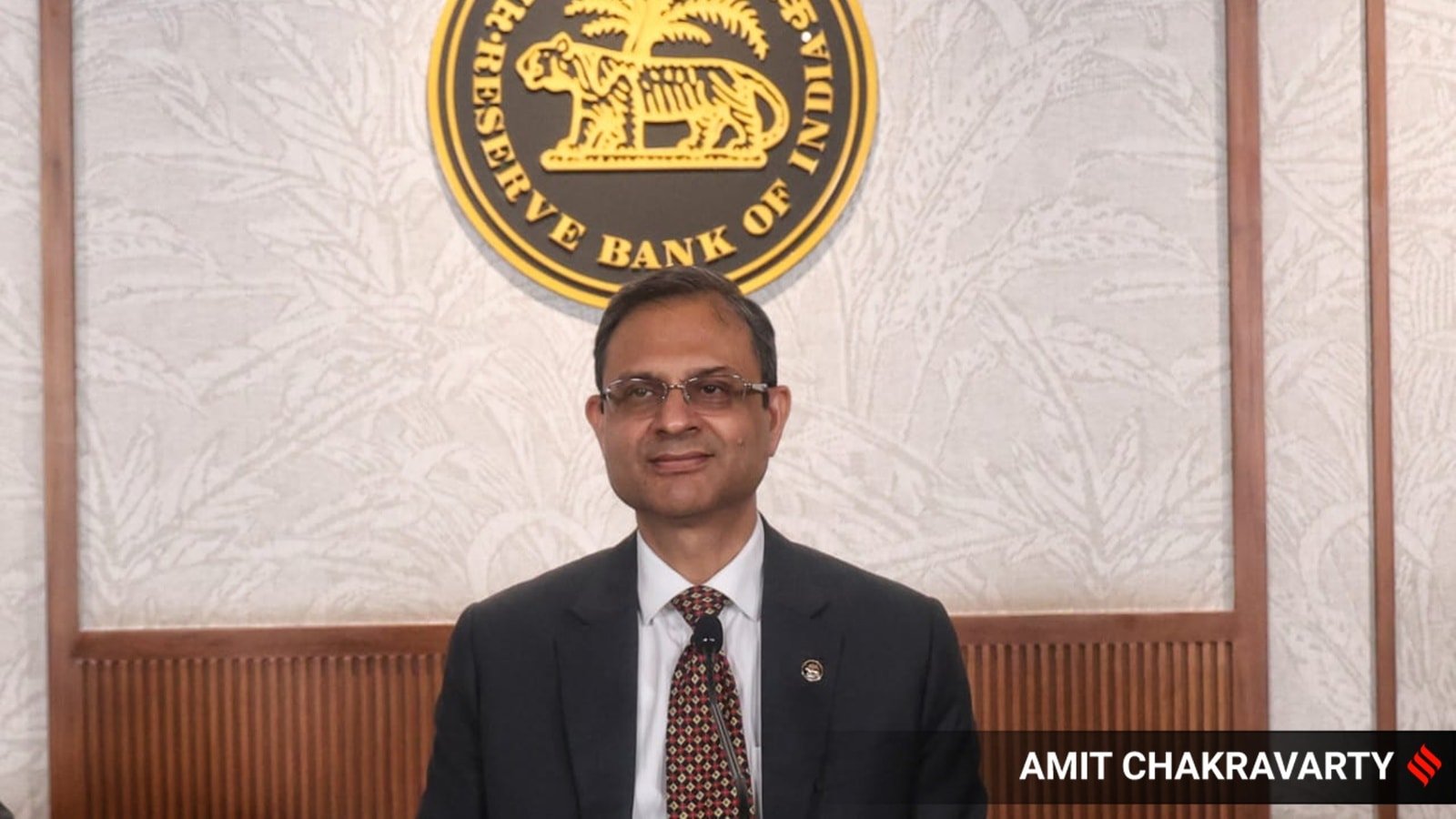
Reserve Bank of India Governor Sanjay Malhotra on Wednesday warned that geopolitical uncertainties have heightened significantly and upside risks to the inflation outlook, driven by increased energy price pressures, have increased. The West Asia conflict that led to elevated energy prices is likely to impede growth, he cautioned, forecasting a lower growth in FY2027.
Governor also cautioned that heightened uncertainty, increased risk aversion and safe haven demand could impact domestic liquidity conditions, economic activity, consumption and investment. “Weaker global growth prospects may dampen external demand and reduce remittance flows,” he said.
His statement, however, came on a day when the US announced a two-week ceasefire in the Middle East.
Core inflation pressures remain muted, although supply chain dislocations and the risk of second-round effects render the future inflation trajectory uncertain, he said while unveiling the monetary policy. The central bank has kept the key Repo rate unchanged at 5.25 per cent. “Elevated crude oil prices could increase imported inflation and widen the current account deficit,” he said.
“Going forward, elevated energy and other commodity prices, as also shocks to availability of inputs due to disruptions in the Strait of Hormuz are likely to impact growth in 2026-27,” he said. The Monetary policy Committee has forecast a lower growth of 6.9 per cent for FY27 as against 7.6 per cent in FY26.
The MPC further noted that high frequency indicators till February, 2026 suggest the continuation of strong momentum in economic activity. “Growth impulses continue to be supported by robust private consumption and investment demand. However, the West Asia conflict is likely to impede growth,” Malhotra said.
Going forward, elevated energy and other commodity prices, as also shocks to availability of inputs due to disruptions in the Strait of Hormuz are likely to impact growth in 2026-27, he said.
Story continues below this ad
He said higher input costs associated with increase in energy prices and international freight and insurance costs along with supply-chain disruptions that would constrain availability of key inputs for downstream sectors, would impair growth. The Government has taken several measures targeted at supporting exports and protecting supply chains. This should mitigate the adverse impact of the conflict, he said.
The RBI panel opined that the intensity and the duration of the conflict and the resultant damage to the energy and other infrastructure add risk to the inflation and growth outlooks. However, the fundamentals of the Indian economy are on a stronger footing, providing it with greater resilience to withstand shocks now than in the past. The economy is confronted with a supply shock. “It is prudent to wait and watch the changing circumstances and the evolving growth-inflation outlook. Accordingly, the MPC voted to keep the policy rate unchanged even as it remains vigilant, closely monitoring incoming information and assessing the balance of risks,” Malhotra said.
In January-February headline inflation continued to remain below target — it was 2.7 per cent and 3.2 per cent respectively. However, CPI inflation in FY27 is projected at a higher level of 4.6 per cent
“Disruptions in energy markets, fertilisers and other commodities may adversely impact industry, agriculture and services, reducing domestic output. Heightened uncertainty, increased risk aversion and safe haven demand could impact domestic liquidity conditions, economic activity, consumption and investment,” Malhotra said.
Story continues below this ad
“Weaker global growth prospects may dampen external demand and reduce remittance flows. Adverse spillovers from global financial markets could tighten domestic financial conditions and raise the cost of borrowing,” he said. Overall, the initial supply shock can potentially transform into a demand shock over the medium term if the restoration of supply chains is delayed.
Turning to the inflation outlook, Malhotra said recent spikes in energy prices due to the conflict have emerged as a risk. Although retail prices of petrol and diesel have remained unchanged so far, the pass-through of higher global energy prices has resulted in some price increases in a few other fuel items.
Governor on rupee
Despite stronger macroeconomic fundamentals, the Indian rupee in 2025-26 depreciated more than the average in the previous years, RBI Governor Sanjay Malhotra said. “Let me reiterate that our exchange rate policy remains unchanged. Specifically, intervention in the foreign exchange market is aimed at smoothening excessive and disruptive volatility without targeting any specific level or band for the exchange rate,” Malhotra said.
“This is consistent with our long-standing policy of the exchange rates being market determined,” Malhotra said The RBI stands committed to this policy and would judiciously contain excessive or disruptive volatility to ensure that self-fulfilling expectations do not exacerbate currency movements beyond what is warranted by fundamentals, he said.
Story continues below this ad
The rupee which fell to a record low of 95.22 against the dollar recently recovered to 92.56 on Wednesday.
