

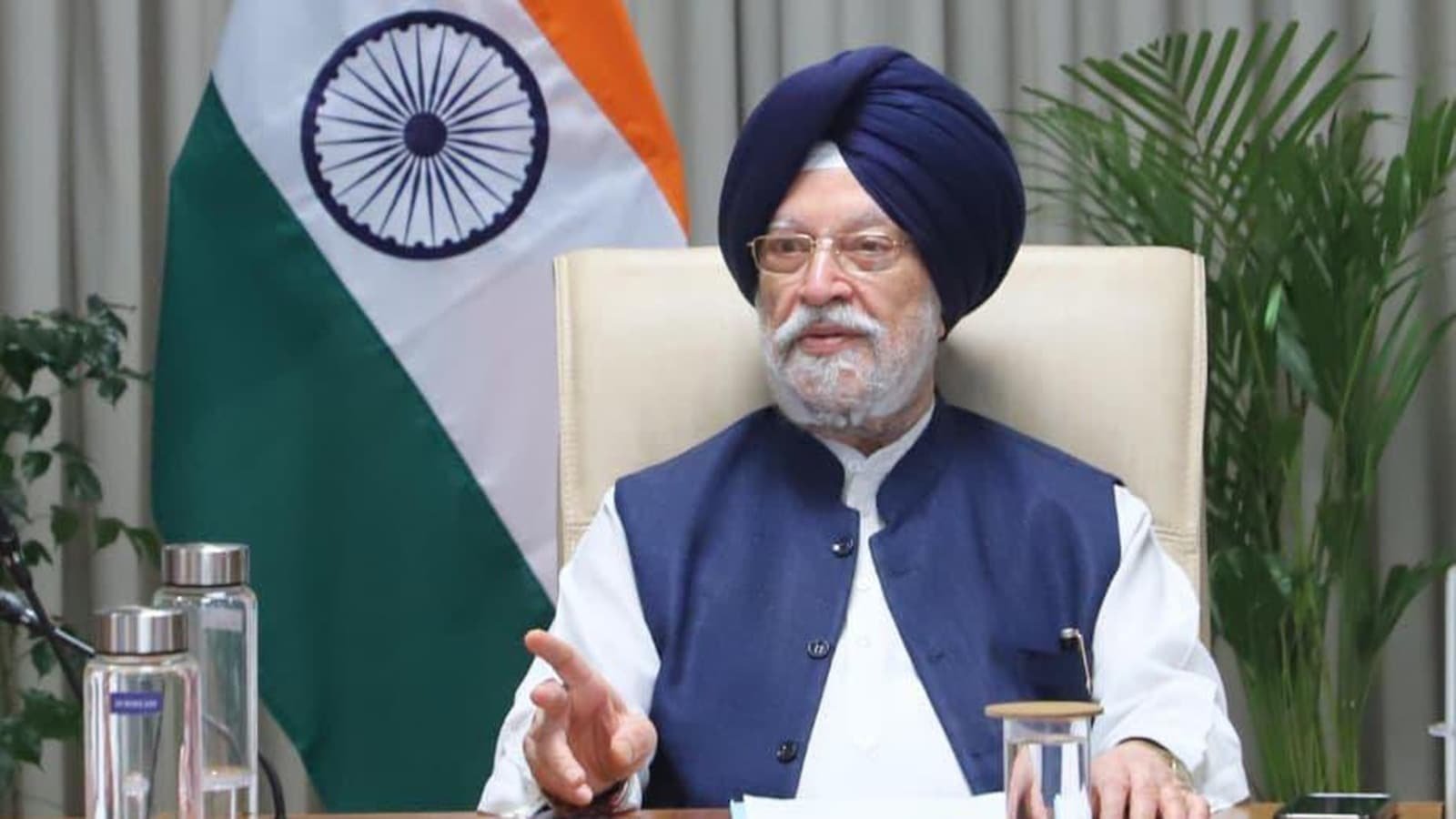
Amid the temporary and fragile ceasefire between the US and Iran in the West Asia war, Petroleum Minister Hardeep Singh Puri is on a two-day visit to the Gulf country, which is India’s largest source of liquefied natural gas (LNG) and liquefied petroleum gas (LPG).
While the Petroleum Ministry made a last-minute announcement about Puri’s visit on Thursday, it did not provide further details. In a government briefing on the West Asia crisis, Petroleum Ministry Joint Secretary Sujata Sharma said that details of the minister’s visit shall be provided once he is back from Qatar.
Puri’s visit comes just a day after the US and Iran announced a two-week ceasefire in the West Asia war, with Iran also saying that safe passage of ships through the maritime chokepoint of the Strait of Hormuz “will be possible via coordination with Iran’s armed forces” and due consideration of “technical limitations”. The situation, however, remains tense with vessel movements through the Strait still highly constricted on Thursday.
Also Read | West Asia conflict: Govt orders refiners to maximise LPG production to ensure continued cooking gas availability
India depends on LNG imports to meet about half of its natural gas needs, and 55-60% of those come from West Asia via the Strait of Hormuz. Qatar alone accounts for over two-fifths of India’s LNG imports. According to Commerce Ministry data, India imported 27 million tonnes of LNG in 2024-25, of which 11.2 million tonnes, or 41.4%, came from Qatar. India has long-term LNG contracts totalling 8.5 million tonnes per annum (mtpa) with QatarEnergy; India also buys Qatari LNG from the spot market. As for LPG, India’s import dependency is around 60%, and 90% of the imports come through the Strait, with Qatar being the largest supplier with a share of over 20%.
The effective halt in vessel movements through the Strait of Hormuz have impacted LPG and LNG supplies to India, with no LNG tanker coming to the country from the Persian Gulf since early March, and only eight India-flagged LPG tankers coming through the Strait. In the initial days of the conflict, QatarEnergy declared a force majeure, and so its customers in India, led by Petronet LNG.
Also Read | Indian LPG tanker Green Asha crosses Strait of Hormuz; 8th India-flagged vessel to transit the Strait since early March
In view of the supply hit, the government also cut natural gas allocation to certain industries in order to keep priority sectors adequately supplied. The supply hit was more severe in the case of LPG, with supplies to commercial customers and industries heavily cut to ensure households get sufficient cooking fuel. Furthermore, LNG supply concerns were compounded due to attacks on Qatar’s Ras Laffan Industrial City, in which a part of QatarEnergy’s mega LNG facility was also damaged. Almost all of India’s Qatari LNG imports come from Ras Laffan.
Story continues below this ad
QatarEnergy’s primary LNG production units, liquefaction plants, and export infrastructure are all concentrated in Ras Laffan, making it the world’s largest LNG hub that accounts for roughly a fifth of global LNG supply. The attacks by Iran damaged two LNG producing trains totaling 12.8 mtpa of production, representing approximately 17% of Qatar’s LNG exports, and could take up to five years to repair, QatarEnergy said in a statement last month.
Explained | 8 Indian ships have exited the Persian Gulf via Strait of Hormuz, 16 remain
Although QatarEnergy didn’t specifically mention the impact on supplies to India, there have been concerns that long-term LNG flows to India could be impacted. “The damage sustained by the LNG facilities will take between three to five years to repair. The impact is on China, South Korea, Italy and Belgium. This means that we will be compelled to declare force majeure for up to five years on some long-term LNG contracts,” Saad Sherida Al-Kaabi, the Minister of State for Energy Affairs, the President and CEO of QatarEnergy, was quoted as saying in the company statement.
Also Read | India-flagged LPG tanker Green Sanvi crosses Strait of Hormuz, seventh Indian vessel to exit Persian Gulf since early March
Industry sources in India expect the curtailment in LNG supplies, if any, from Qatar to not be too significant, since the specific LNG trains from where LNG is supplied to India were not damaged in the recent strikes. QatarEnergy has an LNG production capacity of 77 million tonnes per annum, which is under expansion. In 2025, QatarEnergy exported around 81 million tonnes of LNG. The strikes on Ras Laffan could cost QatarEnergy about $20 billion a year in lost revenue, the company said. The attacks also targeted a gas-to-liquids facility, which converts natural gas into drop-in fuels and produces base oils used to make premium engine oils and lubricants, and paraffins and waxes.
