

The study found that a total of 18 unique wild animals used the underpass frequently built under Delhi-Dehradun expressway.(Express Photo)
As Delhi-Dehradun expressway is set to be inaugurated by Prime Minister Narendra Modi on April 14, the Wildlife Institute of India (WII), in collaboration with National Highway Authority of India (NHAI), has recorded the first evidence of movement of animals like elephants, golden jackal and deers across one of Asia’s largest wildlife elevated corridor in the project.
Out of the 213-km expressway, 12-km stretch near Dehradun is the animal underpass to facilitate unobstructed animal movement below seven meters from the road. This section of the expressway cuts through Rajaji and Shivalik forest division, which is home to endangered species such as tigers, elephants, greater hornbills and king cobras.
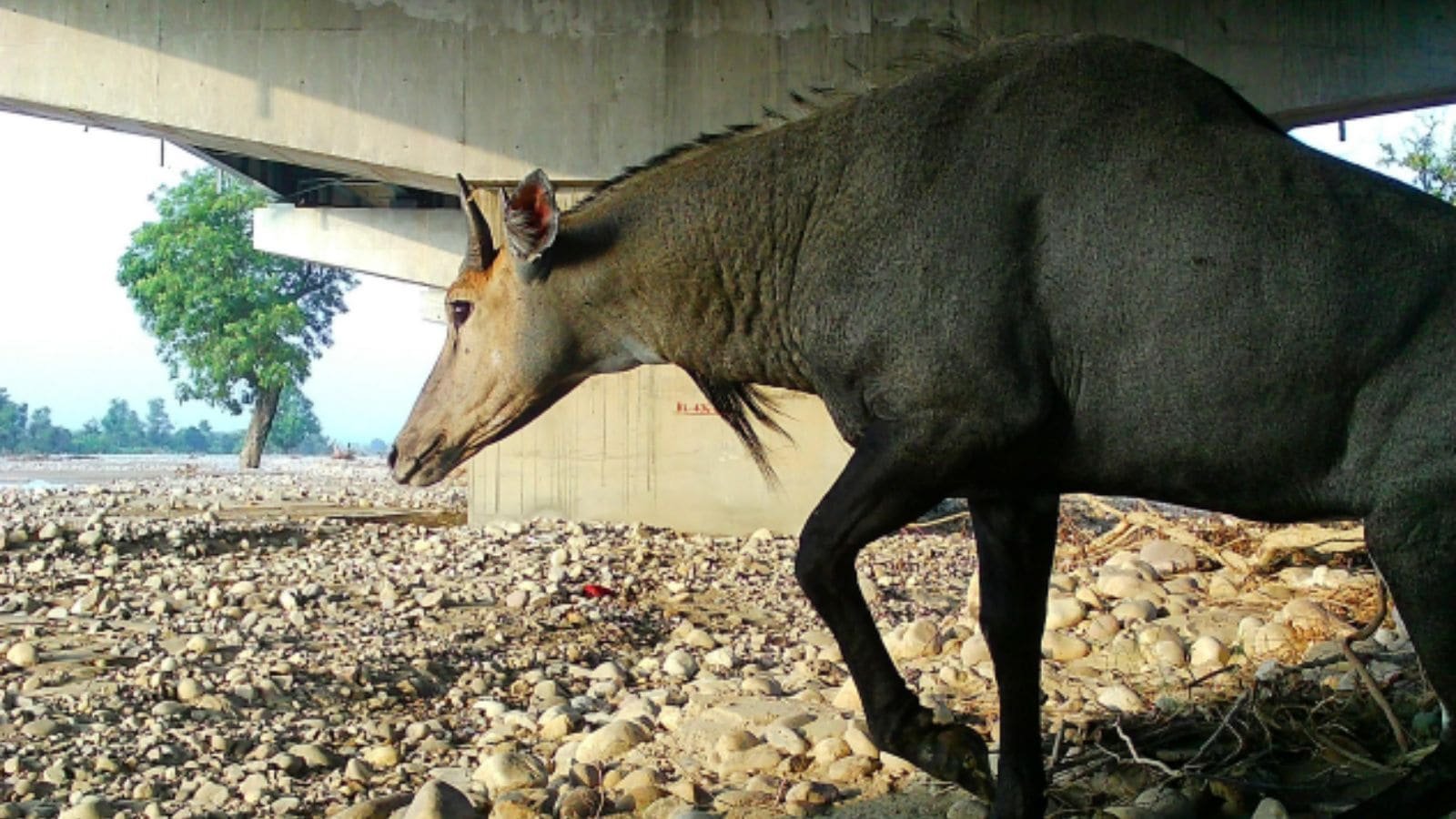
The Golden Jackal was the most frequently captured, followed by Nilgai, Sambar, and Spotted Deer. (Express Photo)
A senior NHAI official said that the study was conducted by WII along an 18 km stretch of Delhi-Dehradun Expressway between Ganeshpur and Asharodi in Haridwar, which features 12-km long animal underpass, to assess that how are animals using the underpass.
Large infrastructure projects like expressways that cut through reserved forests have raised concerns as they pose a threat to endangered animals. To address this issue, NHAI has been constructing animal underpasses, where vehicles move on elevated roads while animals can pass safely below, to reduce human-wildlife conflict.
The study found that a total of 18 unique wild animals used the underpass frequently built under Delhi-Dehradun expressway. The Golden Jackal was the most frequently captured, followed by Nilgai, Sambar, and Spotted Deer. Smaller mammals, including the Indian Hare also showed consistent movement through the structures. The study also found the 60 instances of the elephants safely utilising the corridors, showing that even larger animals can navigate through the new infrastructure.
The study found the 60 instances of the elephants safely utilising the corridors. (Express Photo)
“For this study, a total of 150 high-tech cameras and 29 Audiomoth acoustic recorders were deployed along the 18-km stretch of Delhi-Dehradun Economic corridor. The movement of animals were recorded for 40-days. The study documented a total of 1,11,234 images of humans, domestic animals, and wildlife. Among these, 40,444 photos were attributed to wild animals,” said the NHAI official.
The study was divided into three zones. Zone I covered 5.43 km long stretch between Ganeshpur and Mohand, and Zone II was 9.80 km-long stretch from the Mohand settlement to Asharodi police check post. Zone III was 3.14 km from Asharodi police check post to Mohabewala in the Doon valley, covering flat Riverbed, Hilly terrain and mixed stretches of Sal Forest in the Shivalik range.
Story continues below this ad
Officials said that the data shows that the species like golden jackals and wild boar have habituated to significant traffic sound. However, sensitive species like elephants and spotted deer selectively utilise underpass segments with lower sound levels. For such animals, NHAI will deploy sound barriers in high-frequency crossing areas to support more movement of animals.
Built at a cost of Rs. 12000 crore, the 6-lane expressway is expected to reduce the travel time from six hours to 2.5 hours. It will also provide connectivity to major expressways like Delhi-Mumbai, Delhi-Katra, Delhi-Meerut through Eastern Perpheral and Western Perpheral besides future expressways like Gorakhpur-Shamli and Haridwar Spur.
© The Indian Express Pvt Ltd
