

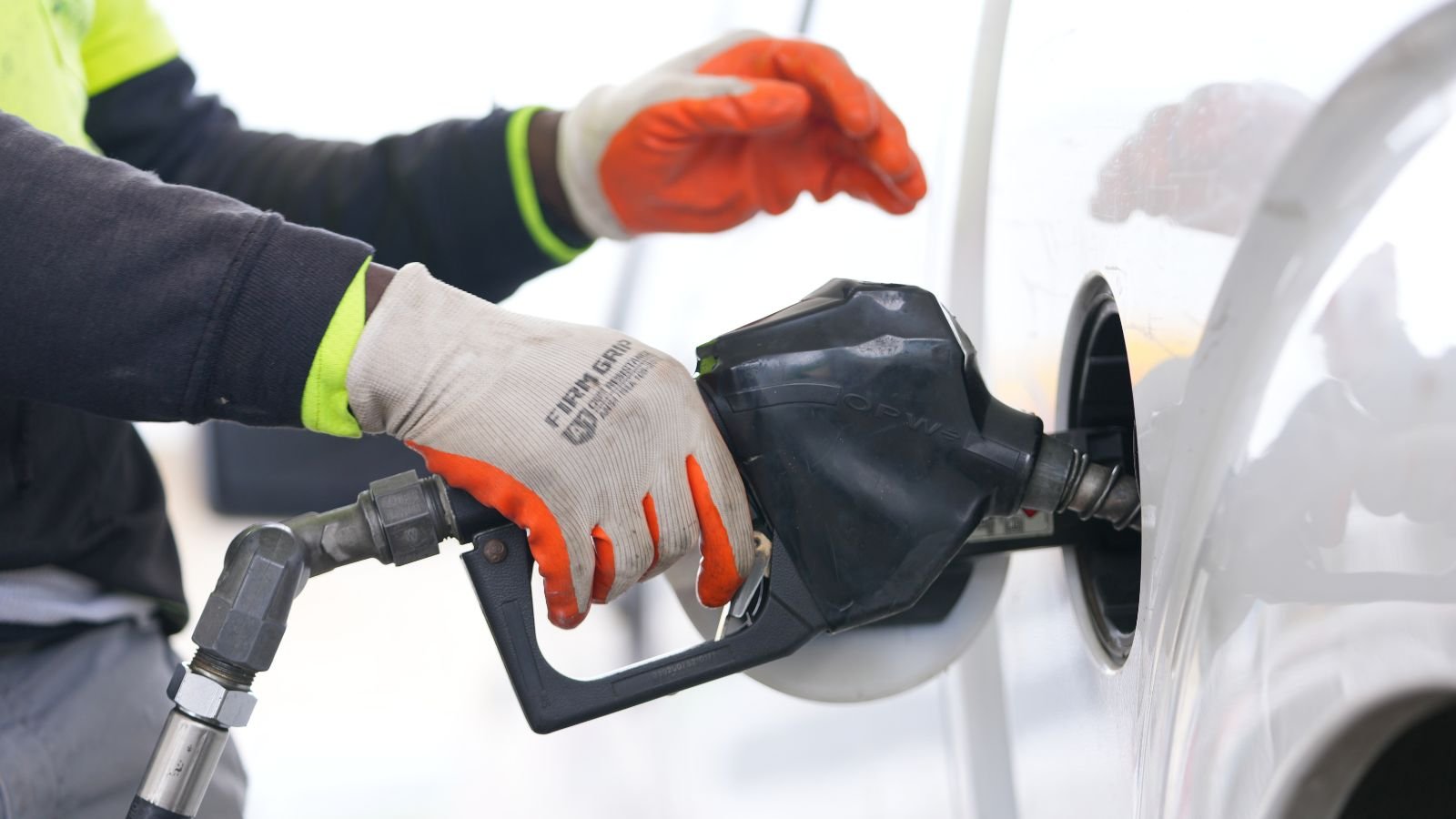
The export duty on petrol continues to be nil. (AP Photo)
Amid the surge in global oil and fuel prices due to the West Asia war, the government on Saturday significantly hiked the export duties on diesel and aviation turbine fuel (ATF), or jet fuel, to dissuade refiners from exporting the fuels and ensure adequate availability in the domestic market. The duty on export of diesel was more than doubled to Rs 55.5 per litre from Rs 21.5 per litre, while on jet fuel exports, the levy was hiked to Rs 42 per litre from Rs 29.5 per litre with immediate effect, according to notifications issued by the Finance Ministry. The export duty on petrol continues to be nil.
The export levies, or windfall gains taxes—in the form of excise duties—were imposed from March 27 with the objective of ensuring adequate availability of these fuels in the domestic market by disincentivising exports amid a major price difference between domestic and international markets. Public sector oil marketing companies (OMCs) have not hiked diesel and petrol prices in the domestic market, even as prices have surged in the international market. As for ATF, only a fraction of the international price pressure was passed on for domestic flights. According to the government, these duties are not for boosting government revenue, but to not allow fuel exporters to take undue advantage of the price differences.
“At a time when international diesel prices have surged sharply, the levy is designed to disincentivise exports and ensure that refinery output is directed first towards meeting domestic demand. Keeping Indian pumps fully supplied takes precedence over export opportunities, however commercially attractive those may be at current global prices,” the Petroleum Ministry had said in a release on March 27. Central Board of Indirect Taxes and Customs (CBIC) Chairman Vivek Chaturvedi had said that these duty rates will be reviewed on a fortnightly basis to align the duties with prevailing fuel prices in the international market.
At the rates announced that took effect on March 27, the revenue gain from export duties was estimated at around Rs 1,500 crore in a fortnight, as per back-of-the-envelope calculations by the government. The hike in export duties could lead to higher revenue gains. Along with the export duties on diesel and jet fuel, the government on March 27 had also slashed excise duty on domestic sales of petrol and diesel to provide some relief to the OMCs that have been incurring heavy losses on fuel sales. The gains from export duties on diesel and ATF would only be a fraction of the estimated Rs 7,000 crore per fortnight of revenue loss the government will bear due to the excise duty cut.
India’s total refining capacity stands at around 260 million tonnes per annum (mtpa), which is more than the domestic consumption, making India a net exporter of refined fuels. Diesel and ATF are the major petroleum fuels that India exports.
The export levies on diesel and ATF are not applicable to fuel exports from Reliance Industries (RIL) special economic zone (SEZ) refinery. RIL’s Jamnagar mega refining complex—the largest single-location refining complex in world—has a 35.2-million-tonnes-per-annum (mtpa) SEZ refinery and a 33-mtpa domestic tariff area (DTA) refinery. According to the CBIC, export duties are not applicable to SEZ refineries as per judicial pronouncements. Even when similar duties were imposed in the wake of Russia’s invasion of Ukraine, the government had explicitly exempted SEZ refineries from the levies.
With the West Asia war effectively closing off the critical maritime chokepoint of the Strait of Hormuz, crude oil and fuel prices have surged globally. India depends heavily on oil and gas imports to meet its energy needs, and fuel prices in the country are linked to global oil and fuel price benchmarks. With the effective halt in vessel movements through the Strait of Hormuz—from where one-fifth of global oil and natural gas flows usually transited—global energy supplies have been hit and prices have skyrocketed. While India has been in a comfortable position with regard to crude oil, petrol, and diesel availability, it still has to bear the brunt of high prices.
Story continues below this ad
“With global petroleum prices up by upto 100% in the last 1 month, PSU OMCs are incurring under-recoveries of Rs 24.40/litre on petrol and Rs 104.99/litre on diesel at RSP (retail selling price) level as on 01.04.2026,” the MoPNG had said in an April 1 post on X. Since the beginning of the West Asia war on February 28, global ATF prices have almost doubled to $195.19 per barrel for the week ended March 27 from $99.40 for the week ended February 28, as per the data compiled by IATA, the global industry body of airlines. The crack spread—difference between the price of crude oil and products like ATF derived from it—trebled to $81.44 per barrel for the week ended March 27 from $27.83 for the week ended February 27.
© The Indian Express Pvt Ltd
