

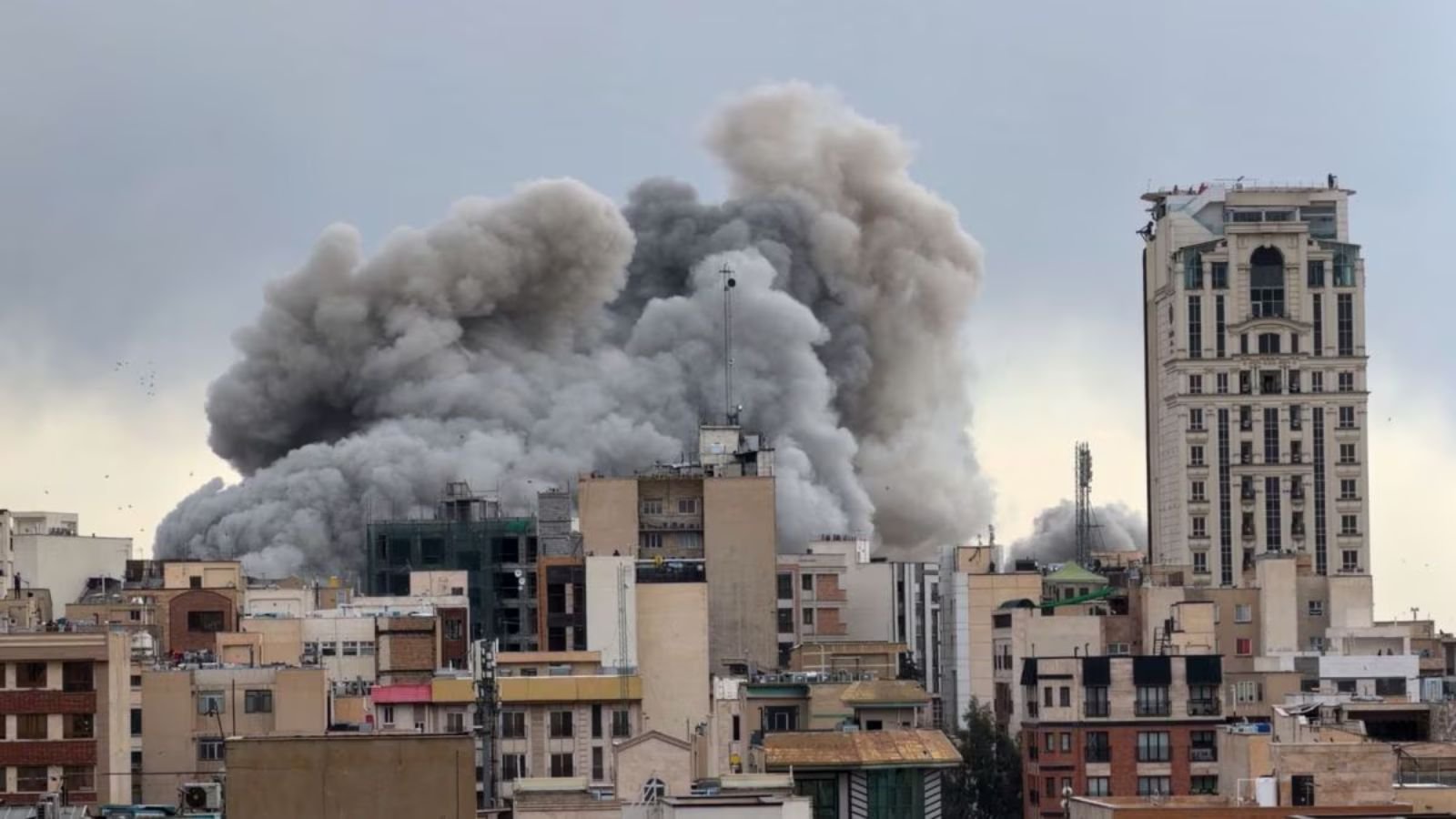
The war in West Asia has pushed up energy prices globally, with the price of India’s crude oil basket surging more than 60% in March compared to February. (File Photo)
India’s headline inflation rate rose to 3.4% in March, as the impact of the war in West Asia was only felt in small pockets and to a limited extent, according to data released by the Ministry of Statistics and Programme Implementation (MoSPI) on Monday.
At 3.4%, the March inflation rate as per the Consumer Price Index (CPI) is only slightly higher than February’s 3.21%. However, food inflation rose at a faster clip of 3.87%, up from 3.47% in February.
Inflation measures the change in price in one month compared to the same month last year.
While the March headline inflation numbers are fairly similar to those of February and along expected lines, there was a sharp rise in a key underlying number, with the inflation print for the ‘electricity, gas and other fuels’ category at 1.65% from 0.14% in February.
The war in West Asia has pushed up energy prices globally, with the price of India’s crude oil basket surging more than 60% in March compared to February. And while petrol and diesel have not become dearer for consumers at petrol pumps due to the oil marketing companies leaving their prices unchanged, the government increased the price of domestic LPG cylinders by Rs 60 in early March. Kerosene prices have also been raised.
With consumers being shielded by the higher energy prices being caused by the US and Israel’s war against Iran, the inflationary impact is likely to be far more visible in Wholesale Price Index (WPI) data for March, which will be released by the commerce ministry on Tuesday.
In February, WPI inflation stood at 2.13%, with ‘fuel and power’ prices 3.78% lower compared to February 2025. According to Union Bank of India economists led by Kanika Pasricha, India’s wholesale inflation likely jumped to 3.08% in March. This would be the highest in almost two years.
Story continues below this ad
Increases in wholesale prices usually feed into consumer prices with a delay. And even if oil marketing companies don’t raise pump prices of petrol and diesel, companies across various sectors such as consumer durables, paints, and fast-moving consumer goods have already started passing on the higher costs to consumers. These higher costs arise from not just more expensive fuel but also by-products of petrochemicals, such as plastics used for packaging and other purposes, that are inputs.
“We expect the impact of higher energy prices to gradually percolate over the coming months, as replacement supplies arrive with a lag. At the same time, we continue to monitor the risk of a fuel price increase in the weeks ahead,” Radhika Rao, Senior Economist at DBS Bank, said. Debopam Chaudhuri, Chief Economist at Piramal Finance, noted that while OMCs have so far absorbed the higher import costs, “this cushion may be nearing its limits unless crude prices correct meaningfully”.
While the small increase in CPI inflation in March will be of comfort to policymakers, they will be keeping a close eye on how prices evolve going forward, especially in the wake of peace talks in Islamabad failing. Last week, the Reserve Bank of India (RBI) left its policy repo rate unchanged at 5.25%, forecasting that inflation would average 4.6% in 2026-27 – more than double that in 2025-26. The Indian central bank also sees GDP growth declining to 6.9% in the current fiscal from 7.6% in the year ended March.
Within the ‘electricity, gas and other fuels’ category, while electricity charges were little changed in March, the price of ‘LPG cylinder and piped natural gas’ was 5.3% higher compared to last year. In February, the corresponding inflation figure was 1.6%.
Story continues below this ad
Kerosene sold via the public distribution system was 2.5% more expensive in March compared to February. And while diesel and petrol prices were unchanged, airfares jumped 14.2% year-on-year in March after having dropped 7% in February.
In response to a rise in the price of aviation turbine fuel due to the West Asia crisis, Indian airline companies in March announced a fuel surcharge, which passed on some of the cost to air passengers.
According to Rajani Sinha, Chief Economist at CareEdge Ratings, even if the West Asia crisis is resolved soon, global crude oil prices are likely to average $85-90 per barrel in 2026-27. “The burden of higher global crude oil prices will be shared by households, government and OMCs… While there will be limited pass-through to retail consumers in the form of higher petrol and diesel prices, there will be indirect impact with rising input prices,” Sinha added.
