

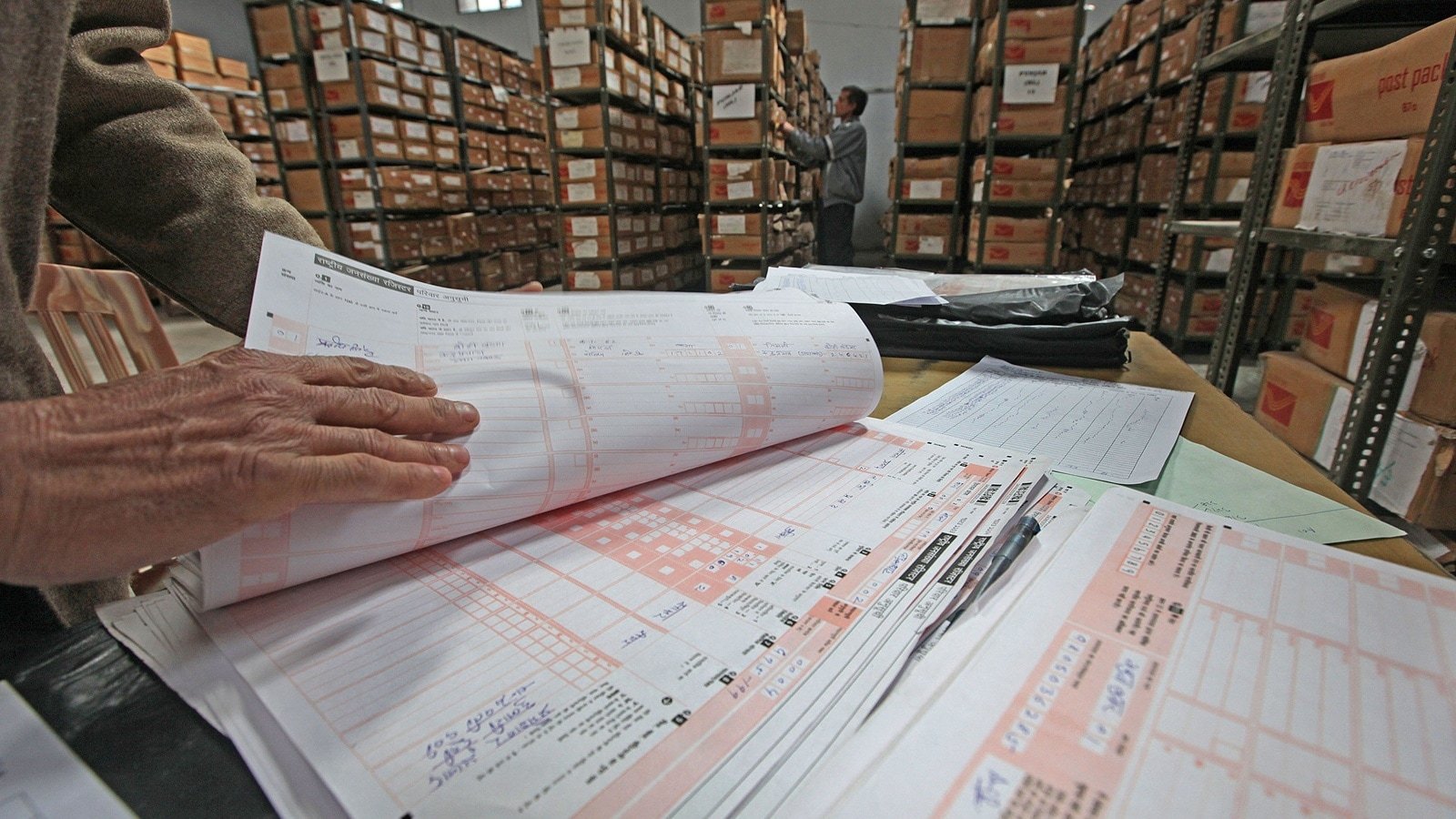
As per the data cited in volumes 3 and 4 of the SEEEPC survey report, about 50 per cent of SCs are daily wagers, while it is only one-tenth among General Castes. (Express Photo)
Telangana’s caste and socio-economic survey has found extraordinary inequalities and backwardness across communities in the state. Backward Classes Welfare Minister Ponnam Prabhakar said that SCs and STs were found to be three times more backward than General Castes, based on Composite Backwardness Index scores. Backward Classes are 2.7 times more backward than the General Castes.
Prabhakar said that the average state-wide Composite Backwardness Index score was 81. He said that the higher the index score, the higher the backwardness. The minister said that based on the index scores, 135 castes in the state, accounting for nearly 67 per cent of the total population, were more backward than previously thought.
Highlighting the contrasts, Prabhakar pointed out that the SC group “Dakkal” recorded the highest backwardness score at 116, while the Kapu caste recorded the lowest score at 12. “The social and economic disparities are concerning,” he said. He pointed out that more than 78 per cent of households belonging to socially and economically backward castes earned about Rs 1 lakh per annum, but over 13 per cent of Other Castes earned between Rs 5 lakh and Rs 50 lakh per annum. Only 2.1 per cent among SCs and STs earned over Rs 5 lakh per annum. The survey found that 21.2 per cent of the population has no access to tap water at home; 13.3 per cent of households have no toilet; and 5.8 per cent lack proper electricity connections.
Opinion | Centre should use Telangana survey as blueprint for caste census, involve all parties
Prabhakar released portions of the report of the Independent Expert Working Group on Telangana Socio, Economic, Educational, Employment, Political and Caste (SEEEPC) Survey. The survey covered over 3.50 crore Telangana households — nearly 97 per cent — and examined 242 caste groups using 42 indicators, including income, occupation, education, land ownership, property ownership, and access to medical and civic infrastructure. Among the 135 castes found to be more backward are 69 BC castes, 41 SC groups, and 25 Scheduled Tribe castes. As per the report, the castes facing backwardness have been left behind in education and employment opportunities, do not have proper access to healthcare or basic civic facilities, live in small overcrowded homes, do not own much land, have inadequate housing, do not have access to clean potable drinking water, have no functioning toilets, and are not economically stable. The report highlighted that large sections still borrow from moneylenders at high interest rates, get caught in debt traps, and even have to borrow money for medical emergencies.
As per the data cited in volumes 3 and 4 of the SEEEPC survey report, about 50 per cent of SCs are daily wagers, while it is only one-tenth among General Castes. Only 5 per cent of STs were holding jobs in the private sector, while more than 30 per cent of General Castes held well-paying private sector jobs. Raising questions about the efficiency and benefits of allotting lakhs of units in government housing schemes, the survey found that 63 per cent of Telangana households live in houses with two or fewer rooms in both urban and rural areas.
Political Pulse | How key Telangana panel will gauge caste backwardness on a scale
Deputy Chief Minister Bhatti Vikramarka Mallu said that tailor-made benefits and assistance, including financial support, will be provided to the 135 castes and sub-castes facing backwardness — including in education, employment, and need-based financial support to individual families — based on the findings of the state’s caste survey. As per the report, the SC population in Telangana is 17.43 per cent (61,84,319); ST is 10.45 per cent (37,05,929); and BC (other than Muslim BC-E) is 46.25 per cent (1,64,09,179). Among Muslims, BCs accounted for 10.08 per cent, and OCs for 2.48 per cent. Among Other Castes, OCs were 13.31 per cent and OC Muslims 2.48 per cent.
The SC Madiga caste is the largest community in the state, accounting for 10.3 per cent of the population, or 36.58 lakh. The next largest is Shaik Muslim (BC-E) at 27.96 lakh (7.9%), Mudiraj (OBC) at 26.39 lakh (7.4%), and Lambadis/Banjara (ST) at 24.04 lakh (6.8%).
Story continues below this ad
The door-to-door caste and socio-economic survey was undertaken on November 6, 2024, and completed in 50 days, followed by another two months of data collection through other means.
