

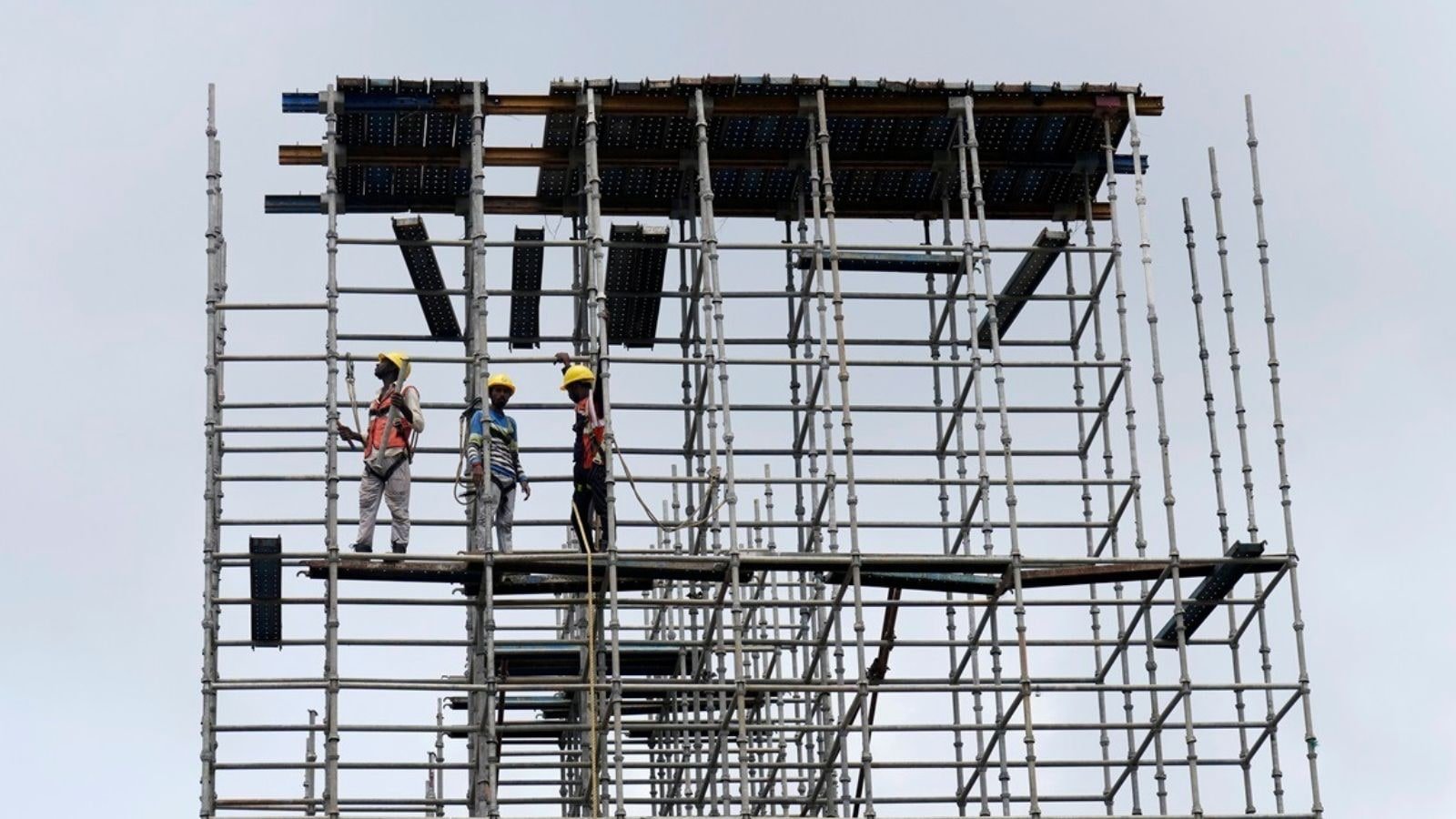
With the two-phase Assembly election in West Bengal just days away, and the Assam election having been held earlier this month, Kerala has seen a large number of migrant workers leaving to cast their votes, and officials and industry stakeholders have said this has had a major effect on several industries, including construction, agriculture and plywood, which heavily rely on these workers.
The government does not keep exact data on the number of migrant labourers in Kerala, but the Assembly was told last month that 4.39 lakh people registered with the state Labour Department’s Athidhi app, meant to facilitate essential activities for migrant workers. Moreover, 5.16 lakh migrant workers are registered with a government health insurance scheme in the state. However, the actual number of migrant workers in the state is estimated to be much higher.
As per a study conducted by the Kerala Institute of Labour and Employment, West Bengal accounts for the highest percentage of these labourers, with 35.4% of migrant workers in Kerala estimated to be from the state. Odisha comes in second with 15.9% and Assam a close third, with 15.2%.
With the election, especially in West Bengal, coming after a painstaking Special Intensive Revision (SIR) of electoral rolls, workers have been more inclined to return to cast their votes this time than in previous years, industry stakeholders and labour groups have said.
A senior official with the State Labour Commissionerate said, “Construction activities have almost come to a halt. Pre-monsoon work in construction and agriculture is badly hit due to migrant workers returning to their home states. Workers from Odisha and Jharkhand used to go home during this season to take up agricultural work in their villages, but this time, there is a crisis as workers from West Bengal have left for elections.”
The Uralungal Labour Contract Co-operative Society Limited, which is a leading firm in the civil infrastructure sector, has 6,000 migrant workers on its rolls, but now, only 500 are available. Its managing director, Shaju S, said, “The situation is grim in the entire sector, where 90% of workers are migrants. Our construction sites have become vacant. In the past, the workers used to leave home only for festivals. But with the elections being held after SIR, this has made them vigilant [in ensuring that they return to vote]. We are now planning to hire buses to bring them back if they are ready to return soon after voting. Several works have to be completed before the onset of the monsoon in June, but we fear they may stay back to take up agricultural jobs in villages.”
In the Perumbavur belt of Ernakulam district, which is a hub of the plywood industry in Kerala, most of the units are closed, with the industry facing a double shortage of workers as well as ethanol — a key raw material that has been affected by the conflict in West Asia. The industry relies almost entirely on migrant workers.
Story continues below this ad
Plywood Manufacturers Association president Riyas M H said, “We were slowly overcoming the methanol crisis, but the return of workers to West Bengal has pushed the industry again into crisis. Of the 700 units registered with the association, production has come to a halt in 70%. This has already impacted allied areas, such as the movement of timber to units. After the Assam elections, some workers have started coming in. But the majority of our workforce is from West Bengal. Now, we fear that they will return only after Bakrid (on May 27). At the same time, units have to pay existing local staff, like supervisors, drivers, etc.”
‘SIR pressure’
George Mathew, chairperson of the Progressive Workers Organisations, which works for the rights of migrant workers, said their return to their home states does not indicate an enthusiasm to take part in the democratic process, but a fear of being disenfranchised.
“The SIR process has put unprecedented pressure on them. They fear they may lose their citizenship or be denied benefits from the state government if they fail to vote this time. This has been a mad rush. Many migrants living in Ernakulam district had gone to Thiruvananthapuram or Kanyakumari (many trains start from these railway stations) to get a seat in the trains to the Northeast. Others travelled to Coimbatore to catch some trains. Contract carriage buses plying to West Bengal are charging up to Rs 6,000 per head. If they return en bloc after elections, there will be another mad rush on trains. There should have been provisions for sufficient train services to cater to the returning workers,” Mathew said.
At Kandanthara near Perumbavoor, most of the settlements of migrant workers are empty. Some, who are settled there with their families or engaged in local trade, have stayed behind. A trader, Mafikul Islam, from West Bengal, said he is not going back. “If I close down my shop and return for voting, I may lose my whole business,” he said.
Story continues below this ad
Asad Ali, a migrant worker who went home — he reached his hometown of Hajipara in Murshidabad district of West Bengal on Sunday night — said, “Many have already returned to the village. I was at Angamaly in Ernakulam district of Kerala, working as a mason. We fear that citizenship will be lost if we do not vote. I want to return after voting, but cannot think about travelling in jam-packed trains.”
The election in West Bengal will be held in two phases — April 23 and 29. The election in Assam was held on April 9, the same day that Kerala also went to the polls.
