

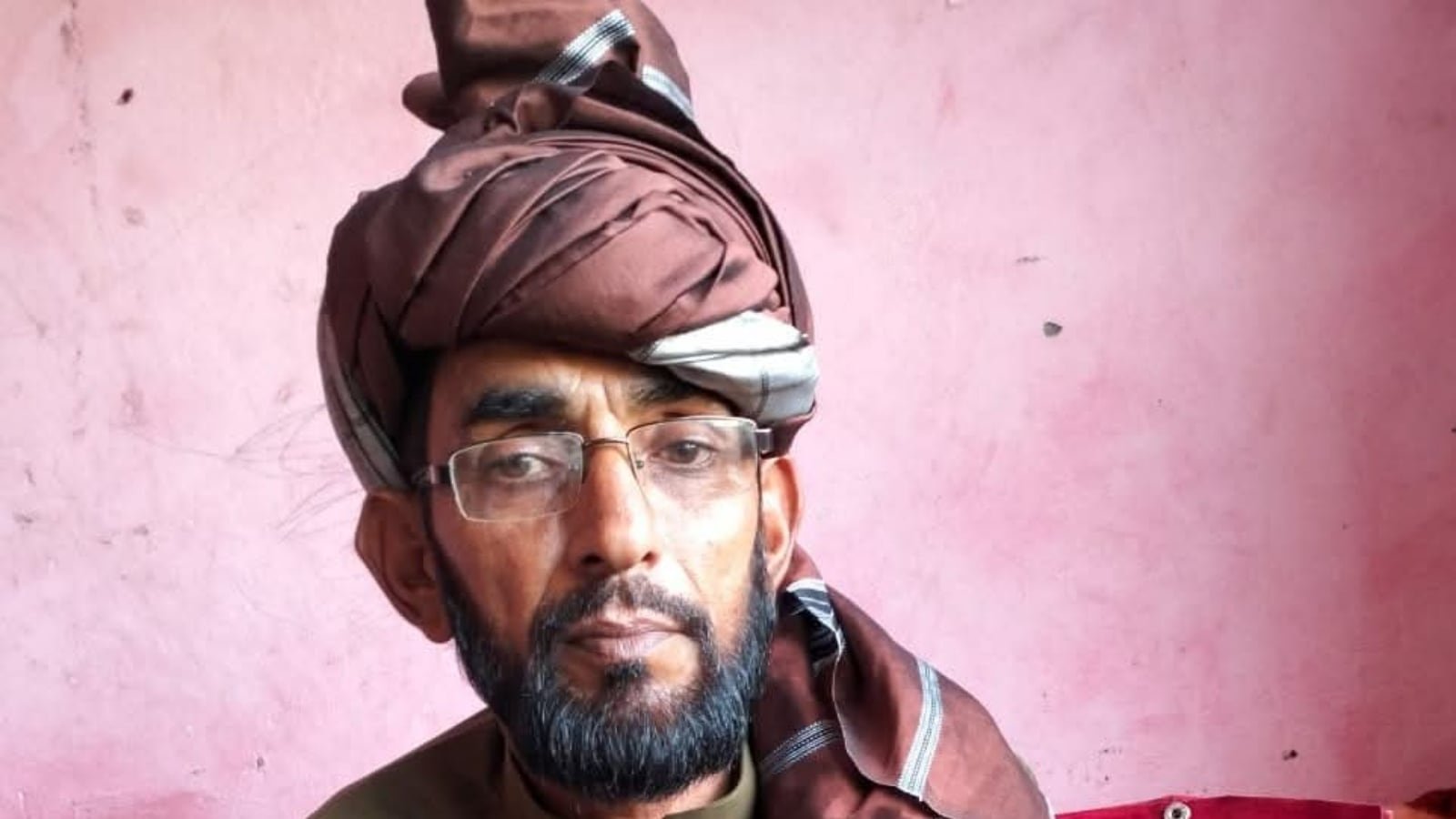
Fazal Tahir, 63, died of a heart attack. He was laid to rest in Poonch district’s Murrah village
When his brother was killed by terrorists in 2002, Fazal Tahir left his job as a supervisor at a marble company in Saudi Arabia to seek revenge. And that’s exactly what he did: he would be seen as instrumental in the Indian Army’s Operation Sarp Vinash, an exercise to purge Hilkaka — a hamlet nestled in the mountains of Surankote tehsil in Jammu’s Poonch — of terrorists who had established a parallel state there.
This week, the hero of Hilkaka, Tahir, a Muslim Gujjar , died of a heart attack in Uttarakhand and was laid to rest in his native Murrah village. He was 63, and is survived by two wives and three minor sons.
A Special Police Officer in Jammu & Kashmir Police, Tahir began working as a timber merchant after his retirement two years ago and was on a business trip to Uttarakhand when he had a heart attack.
“He called around 8 pm Wednesday to tell me that he had some chest pain and had visited a hospital. But he said he felt fine thereafter and told me he would return home Thursday. But half an hour later, I got a call from someone accompanying him. He had passed away,” his younger brother Maksood Fazal said.
Operation Sarp Vinash marked a turning point against cross-border terrorism in the area. It led to peace in Poonch district and neighbouring Rajouri, both along the Line of Control with Pakistan. Around 80 terrorists were killed during the operation.
Among those who died in the operation was paratrooper Sanjog Chhetri of 9 Para, who was posthumously awarded the Ashok Chakra in 2004.
But several believe the operation would not have succeeded without Tahir and his team of 20 people, all of whom gave up lucrative jobs in Saudi Arabia.
Story continues below this ad
When The Indian Express spoke to Tahir in 2023, he said that at the time of his brother Arif’s death at the hands of Lashkar-e-Toiba terrorists, he was earning Rs 50,000 a month in Saudi Arabia. The death of a terrorist had led to suspicion that Arif was an informer. He was abducted and killed.
On June 26, 2002, Tahir returned and soon after headed to the Indian Army’s Romeo Force, a special counter-insurgency unit headquartered at Palma in Rajouri district.
Tahir became an informer and was attached with troops at Surankote. In time, there was an uprising in the village too: a group of residents joined together to form the Indian Peace Pir Panjal Scouts, a local “undercover” counter-insurgency unit that eventually became part of the security forces. Tahir and some others were later recruited as Special Police Officers (SPOs) with a monthly honorarium of Rs 1,500 each and given weapons.
Since the money was insufficient, some locals working in Saudi Arabia began contributing 100 riyals a month for these SPOs. They were given specialised training by the Army and were eventually attached to the team from 9 Para and the police, which would launch the Hilkaka offensive at 12,000 ft on April 27 that year.
Story continues below this ad
By the time the operation wound down in May, some 95 hideouts had been cleared and 80 terrorists killed, with the rest fleeing to Rajouri.
Amid rising insurgency in 2023, Tahir alleged that security forces had forgotten those who fought by their side in the early 2000s.
For their part, the Indian Army paid him a solemn tribute, calling him a “valiant son of the soil” who stood with the troops during Operation Sarp Vinash.
According to his brother Maksood Fazal, Tahir left behind a void. “He was not only a brave man, but also one who looked out for his people. After Op Sarp Vinash, he got one of the two panchayats in Murrah connected by road in 2007-08 and got electricity in 2022,” he says. “He was worried about the education of children in remote areas and got many of them admitted to schools in Rajouri, Udhampur and Jammu.”
