

Post Content
Big Tech’s insatiable energy demands to run AI infrastructure like data centres have led to a wave of long-term supply deals and partnerships, as tech companies seem to race to secure power from every possible source.
Meta on Monday, April 27, announced that it has signed two such agreements with energy startups Overview Energy and Noon Energy, enabling the social media giant to tap solar energy beamed directly to the Earth from space and store the renewable energy for days at a time.
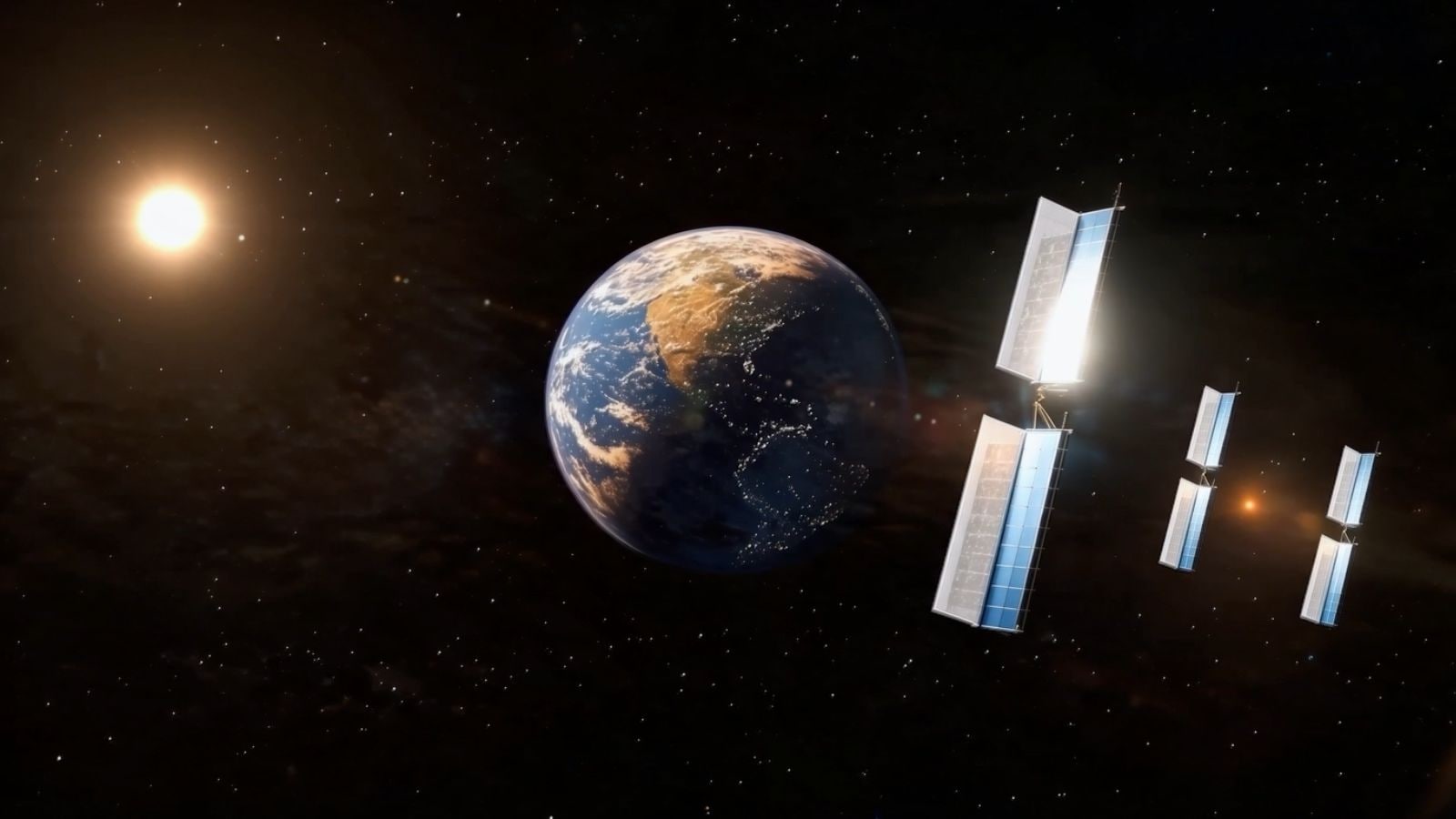
Overview Energy’s space-based solar energy infrastructure is expected to supply power to the Facebook parent’s data centres by the end of the decade. Its system is designed to collect solar energy in space and beam it to on-ground facilities for power generation around the clock.
While the financial terms of the deal were not disclosed, it gives Meta early access to up to 1 gigawatt of capacity from Overview’s system. However, the technology is still some time away, with an initial orbital demonstration of the system scheduled to be carried out in 2028 and full commercial power supply expected in 2030, the companies said.
Amid the surging demand for AI and the data centre boom, Meta and several other big tech companies have been exploring new power sources even as they face backlash from environmental activists and consumer groups.
Notably, AI’s growing energy demand is expected to strain national power grids, and while so-called hyperscalers such as Microsoft and Meta have pledged to bear rising energy costs or to pursue alternative energy sources, questions remain about how these commitments will be funded or sustained.
The resistance to data centres is also pushing tech companies to explore out-of-the-box solutions such as orbital data centres. In April this year, Elon Musk-owned SpaceX said it aims to launch up to 1 million data-centre satellites into orbit to bypass power and water limits on Earth.
Story continues below this ad
However, the concept of orbital data centres has been dismissed as outlandish and commercially unviable by many as rocket launch costs would need to fall from today’s low thousands of dollars per kilogram to the low hundreds of dollars per kilogram.
Also Read | AI, data centres could raise India’s peak power demand by 30GW
Meta’s agreement with Noon Energy also marks one of the largest commitments to long-duration energy storage in the industry. “Advancing AI at the speed and scale we’re working toward requires more energy, but today’s clean energy technologies have real limits: solar depends on sunlight, wind depends on weather, and the grid still needs more storage to make the most of both,” Meta said in a blog post.
“Space solar technology represents a transformative step forward by leveraging existing terrestrial infrastructure to deliver new, uninterrupted energy from orbit,” Nat Sahlstrom, vice president of energy and sustainability at Meta, said.
How it will work
Overview Energy’s system relies on satellites located in geosynchronous orbit roughly 22,000 miles above Earth’s equator, where sunlight is constant. These satellites will collect solar energy directly from space and beam it to the company’s Earth-based solar facilities on the ground in the form of low-intensity, near-infrared light.
Story continues below this ad
Those facilities will convert the beam into electricity and feed it into the grid the same way they handle direct sunlight today, Meta said.
One of the key advantages is that solar farms that would usually sit idle at night, will continue producing electricity around the clock, maximising their output and creating more energy for the grid. Another advantage is that this system does not require additional land or grid infrastructure as it relies on solar infrastructure that’s already in place, which means that it can come online faster than traditional buildouts at scale.
In order to be able to store this energy on the grid for days at a time, Meta is partnering with Noon Energy. It uses modular, reversible solid oxide fuel cells and carbon-based storage to provide over 100 hours of energy storage, much more than what today’s lithium-ion batteries can deliver.
Noon Energy looks to store solar energy beamed from space for days at a time by using modular, reversible solid oxide fuel cells. (Image: Meta)
In 2028, Overview Energy plans to showcase a demonstration of its system designed to beam energy wirelessly from space to a solar farm on Earth. The company looks to start supplying energy to the US grid by 2030, provided all goes well with the demo. Noon Energy also plans to put on a demo of its energy storage solution in 2028.
Story continues below this ad
While Meta has committed to receive up to 1 GW/100 GWh from Overview Energy, it said that the modular design of the system means that capacity can be expanded alongside the tech giant’s data centre expansion. It has also reserved up to 1 GW/100 GWh of ultra-long-duration energy storage capacity from Noon Energy. “Both technologies are early, and that’s exactly why they’re worth supporting now. The potential to unlock more from existing infrastructure and store energy for days at a time are the kinds of innovation that can reshape what’s possible,” Meta said.
Meta’s energy strategy
Meta’s data centre ambitions include several gigawatt-scale units across the United States, as part of a broader project costing $50 billion.
At a dinner party hosted by US President Donald Trump last year, Meta CEO Mark Zuckerberg announced a staggering $600 billion investment in the US through 2028. However, he later seemed to doubt the actual figure in what seemed like a hot mic moment.
Also Read | Sam Altman vs Elon Musk: Why OpenAI’s CEO says space-based data centres won’t matter this decade
The energy needed to power these massive data centres will come from a range of suppliers. Meta has signed agreements with energy firms such as Vistra, TerraPower, Oklo, and Constellation Energy for a total of 7.7 GW of nuclear energy. It has also partnered with firms such as Sage Geosystems and XGS Energy to develop next-generation geothermal energy. So far, Meta has contracted more than 30 GW of clean and renewable energy.
