

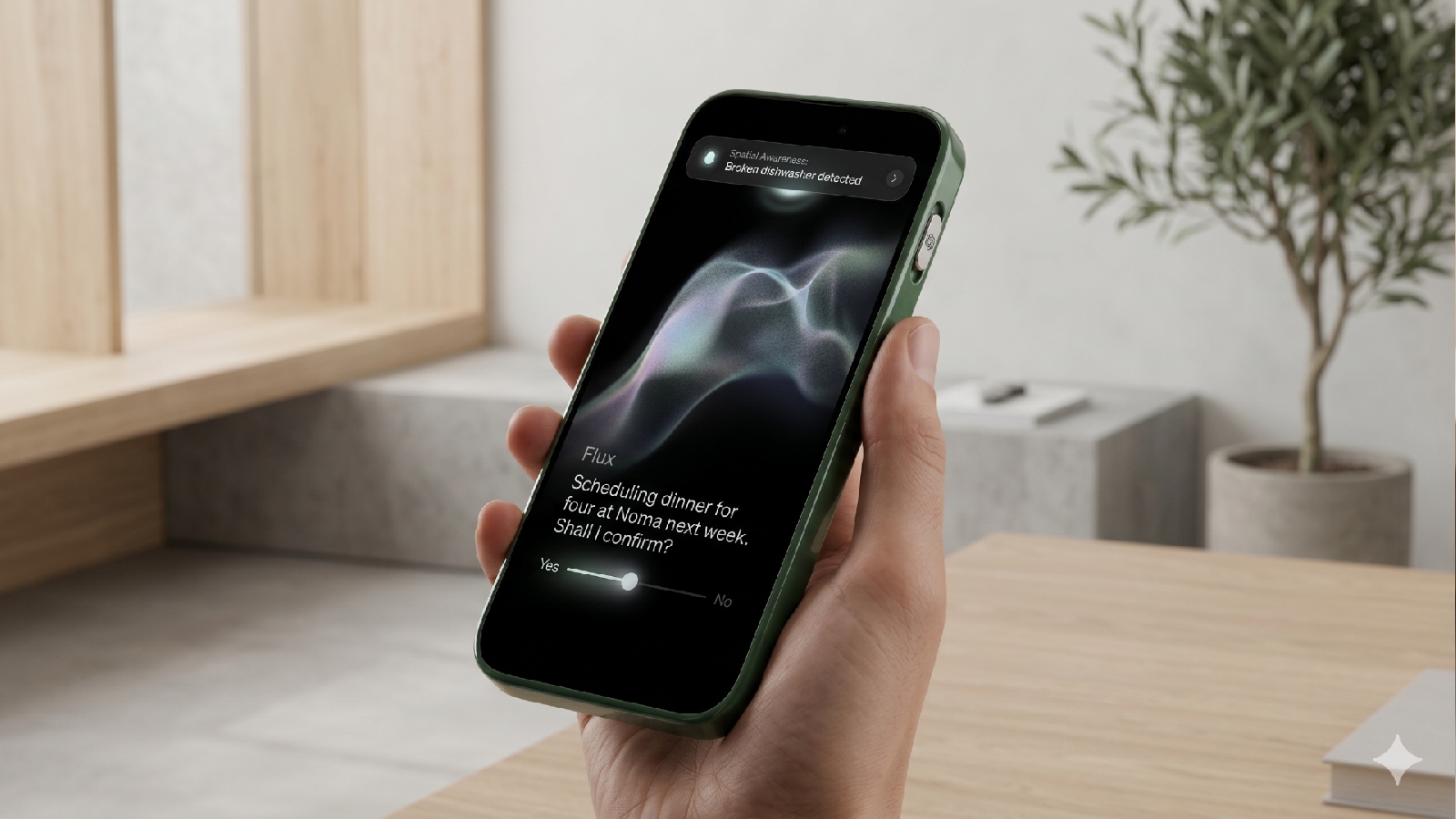
Post Content OpenAI is making a phone, a direct Apple iPhone competitor. (image credit: Gemini)
OpenAI may have plans to launch smartphones, following in the footsteps of Apple, Samsung, and others. A research note from industry analyst Ming-Chi Kuo suggests that Sam Altman-led OpenAI is working on a phone that could place AI agents at the forefront, instead of the app-based model that Apple and Google have championed over the years.
Kuo, who often predicts future products well in advance of their launch and has accurately forecast several Apple products in the past, claims that OpenAI would develop a smartphone chip with Qualcomm and MediaTek, with Luxshare serving as a co-design and manufacturing partner.
Perhaps what makes the research note interesting (and to a large extent, believable) is that the mysterious phone would rely heavily on AI agents and take a different approach compared to Apple, whose iPhone is built around applications developed by third parties, a model that has played a huge role in making the iPhone what it is today.
Also read | Sam Altman and Jony Ive are developing new AI hardware, but matching the success of the iPhone won’t be easy
AI agents are essentially pieces of technology that can perform tasks such as booking a cab, managing schedules, editing files, and sending emails on your behalf automatically, without requiring constant input from you. That’s where the future is headed, and companies like Samsung and Google have already started rolling out AI agents on smartphones, albeit in a limited capacity.
The real question is why a company like OpenAI would want to bring a phone to market when its competitors are already exploring devices that could replace modern smartphones.
Jony Ive (left) and OpenAI CEO Sam Altman. (Image credit: OpenAI)
Well, Ming-Chi Kuo believes that smartphones, no matter what everyone says, are still the best form of personal device for capturing a user’s full real-time state including location, activity, communication, and context, which makes AI agents perform better on phones than on any other device. The Agentic AI interface that everyone is currently is talking about fits perfectly on phones.
Although Kuo’s note offers a preview of what might be coming, it should be taken with a pinch of salt. Neither OpenAI executives nor Sam Altman have publicly confirmed whether the company will launch a smartphone. That said, it doesn’t mean OpenAI isn’t working on a new hardware device. In fact, Altman has been teasing a futuristic AI device for the past year or so. Earlier this year, OpenAI’s chief global officer, Chris Lehane, indicated that the company’s first hardware product is “on track” to launch in the second half of 2026.
Story continues below this ad
The iPhone is the gold standard among smartphones and app economy. (Image credit: Nandagopal Rajan/Indian Express)
Various reports have suggested that OpenAI has been developing several prototypes of small, screenless devices, hinting at a wearable of sorts that would interact with users. Altman has said the device will be more peaceful than a smartphone, and that users will be surprised by how simple it is. The company generated a huge buzz in the industry last year when it acquired Jony Ive’s startup, Io, for $6.4 billion in an all-equity deal. The iPhone designer is heavily involved in the upcoming product.
Also read | Ternus’ major test as Apple CEO: bringing product-first thinking back to the company
It’s no wonder that, like Apple, which maintains tight control over both hardware and software, OpenAI is taking a similar path. However, Apple is the only company that has truly succeeded with this strategy.
So many companies have come and gone, but no one has managed to create a product that eclipses the iPhone’s popularity or build a smartphone that is better than the iPhone. OpenAI may be ahead of Apple in artificial intelligence, but cracking the hardware business will not be easy or likely to rival a model that Apple has built over the years. The iPhone generates billions of dollars in revenue every year, and even without AI, the business is booming. That is an indication that AI is not necessary to sell smartphones.
© IE Online Media Services Pvt Ltd
