

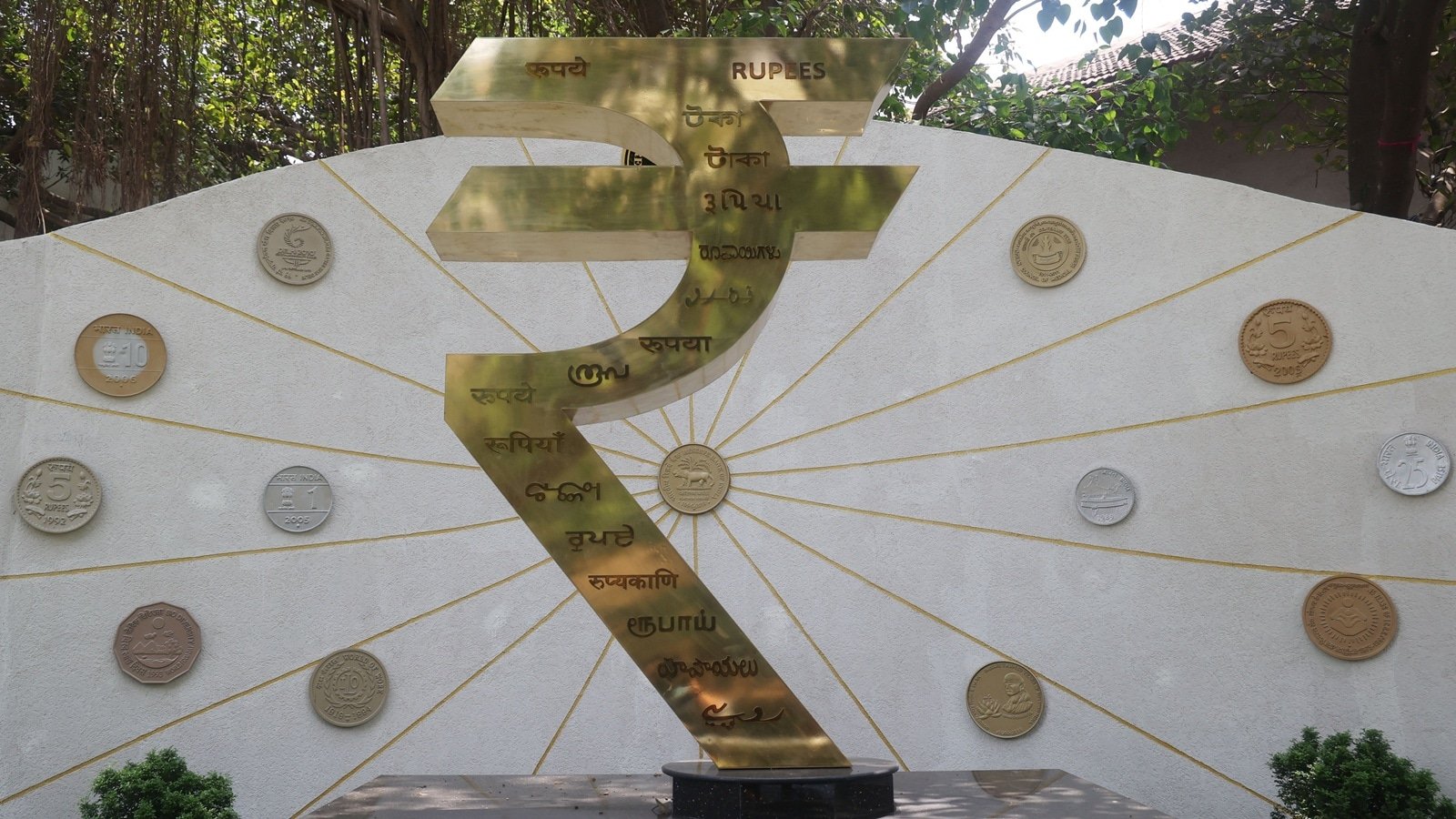
The war in West Asia has exacerbated a key pain point for the country’s economy: the rupee’s value.
After closing around 91-per-dollar on February 27, the rupee fell by as much as 4.5% to 95.24 in March before action by the RBI to curb speculative bets helped it gain some ground. But new RBI data shows that the situation could have been worse if not for a long-term bet placed in mid-2022 by authorities that has begun paying some dividends.
The data shows that Indian traders settled more than Rs 14,000 crore of imports in rupees in February this year — up from around Rs 11,000 crore in January. This amounts to roughly $1.5 billion (Rs 14,057 crore) of foreign exchange being saved by India in February alone. This is not an insignificant sum at a time when the rupee has been under extreme pressure due to foreign investors dumping billions of dollars of Indian stocks and debt, forcing the RBI to defend the currency through a variety of instruments.
Also Read | Prolonged West Asia conflict to raise energy costs, hit trade and markets: RBI’s State of the Economy article
In the first 11 months of 2025-26, Rs 1.39 lakh crore worth of imports — around $15 billion at the current exchange rate — have been settled in rupees, up 45% from Rs 96,154 crore in April 2024-February 2025. In 2024-25 as a whole, imports worth Rs 1.13 lakh crore were settled in rupees, up 13% from Rs 99,596 crore in 2023-24.
As a percentage of total imports, while there has been progress, the numbers remain small: in April 2025-February 2026, only 2.35% of India’s imports were paid in rupees, up from 1.85% in 2023-24 and 1.94% in 2024-25.
To be sure, exports are also being paid for in rupees. In fact, these payments exceed those for imports, although the gap has narrowed sharply. From 57% in 2023-24, imports settled in rupees have risen to 95% of exports settled in the domestic currency in the first 11 months of 2025-26.
In October 2022, months after the RBI announced a framework for the settlement of international trade in rupees, a report by a committee of the central bank said it made strategic sense to settle bilateral trade in rupees, initially with regional partners.
Story continues below this ad
Also Read | Pressure on rupee goes beyond the Iran crisis
“Further, invoicing and settling of international trade transactions in INR with trade partners with whom we have a trade deficit (say, the oil exporting countries) will in general lead to a reduction in the current account deficit denominated in convertible currencies,” it said.
“Commensurately, there will be a reduced need to maintain large foreign exchange reserves in convertible currencies,” it said.
Since then, according to the latest available data, banks from 30 countries, including Germany, Israel, Malaysia, New Zealand, Oman, Russia, Singapore, and UK, have been permitted to open accounts with Indian banks — although opening these accounts does not necessarily mean trade has been settled in rupees.
Further, in 2023 and 2024, the RBI signed agreements with UAE, Indonesia and Maldives to establish a framework to promote the use of their local currencies for cross-border transactions. This is in addition to India’s long-standing rupee arrangements with Bhutan and Nepal, while Sri Lanka in August 2022 added the rupee to its list of “designated foreign currencies”.
Story continues below this ad
Also Read | RBI’s new forex cap to stem rupee slide: Why are banks worried?
As a net buyer of goods and services from abroad, India’s import bill is often at the mercy of the rupee’s performance — if it weakens, it would lead to more money being paid by importers for a fixed dollar amount. In 2025-26, India had a trade deficit of $119 billion. As such, paying for imports in rupees can reduce the outflow of foreign currency and ease the pressure on the exchange rate. This makes rupee trade settlement a more potent tool to stabilise the rupee than the RBI’s recent forex market measures — including a cap of $100 million on banks’ net open rupee positions as against a more liberal limit of 25% of their capital — that were not received well. A senior economist told The Indian Express that the anti-speculation measure was a “backslide” and akin to “putting back reforms”.
The RBI, though, has maintained that the “long-term commitment” to the internationalisation of the rupee “still remains”, Deputy Governor T Rabi Sankar had told reporters on April 8.
The unwinding of these positions also caused banks some financial pain, with an official from a state-owned lender saying ahead of the April 10 deadline to lower the net open rupee positions that “banks are bleeding”.
The RBI did not respond to a request for comment from The Indian Express.
Story continues below this ad
India is not the only country that is trying to popularise its currency, with several countries looking to move away from the US dollar in what has been widely termed as “de-dollarisation”. Leading the charge is China.
The dollar’s status as the world’s “reserve currency” was cemented during the 1970s when oil started being priced in the greenback. According to UBS analysts, the war in West Asia “could accelerate the petroyuan’s adoption”, or the renminbi being used to pay for oil shipments, instead of dollars.
Also Read | West Asia war: Does the growing risk of stagflation narrow India’s policy space?
While talk of the dollar’s demise is vastly exaggerated, its status has taken a beating in recent years, especially after it froze Russia’s dollar-denominated foreign exchange reserves following the invasion of Ukraine in early 2022. That move sparked a shift by central banks around the world towards holding more foreign assets denominated in currencies other than the dollar.
Explained
More leeway
Paying for imports in rupees, and increasing global acceptance and demand for it, can help stabilise the exchange rate and reduce India’s dependence on freely convertible currencies such as the US dollar.
Data from the International Monetary Fund shows that dollar assets accounted for 56.77% of central banks’ forex reserves in the last quarter of 2025, down from 60% in April-June 2022. However, the real decline in the dollar’s share in forex reserves began more than a quarter century ago, with the greenback’s share having stood at more than 72% in 1999.
Story continues below this ad
The objectives of India and China, however, are rather different. China wants a powerful currency that is widely used in international trade, investment, and foreign exchange markets and holds the status of a global reserve currency. And it has made inroads on this front: from 1.65% in January 2020, the renminbi’s share in global payments had doubled to 3.1% in March 2026 (the dollar’s share was 51.1%), as per Swift, while its share in global forex turnover had quadrupled to 8.5% in 2025 from 2.2% in 2013 (dollar’s share:89.2%), according to the Bank for International Settlements.
India, on the other hand, only wants to reduce the exchange rate risk it faces.
