

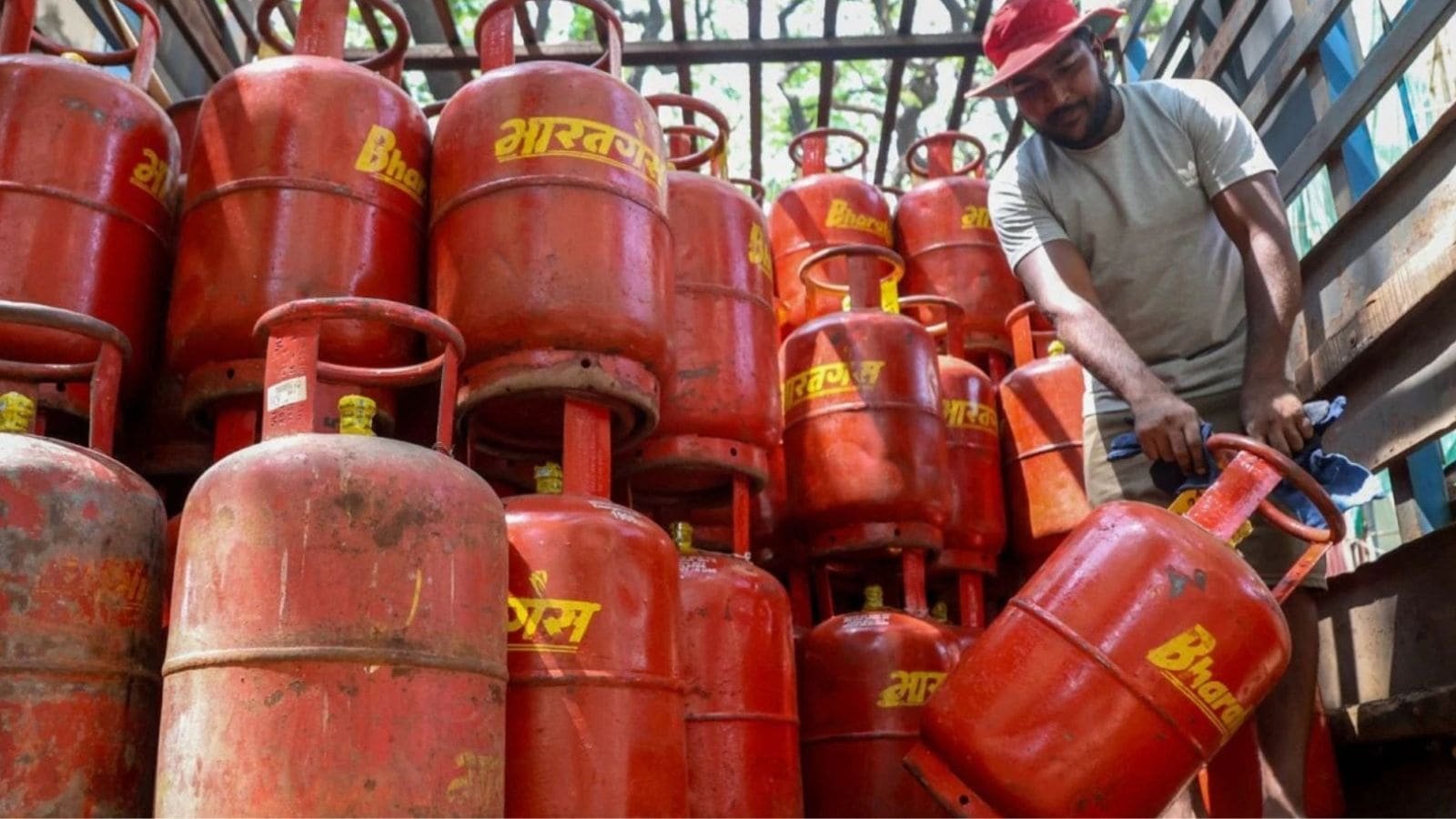
An assessment is underway to identify households that are currently holding both liquefied petroleum gas (LPG) and piped natural gas (PNG) connections, following a March 14 government order that barred household consumers from simultaneously holding both types of cooking gas connections. The order was among the measures announced by the government to encourage households to increase PNG use and reduce pressure off of LPG supplies, which have been badly hit due to the West Asia crisis.
Despite the order having been in effect for one-and-a-half months now, only about 43,000 PNG consumers have so far surrendered their LPG connections. The government expects the number of consumers holding both connections to be much higher, and the assessment is being done to get an accurate estimate of such consumers, a senior Petroleum Ministry official said Thursday.
“It is a low number and we expect it to be more. The government has issued an order as per which it is not advisable to have both the connections…An assessment is being made to see how many people are there who have both (PNG and LPG) connections. Only after that some decision can be taken on this,” said Petroleum Ministry Joint Secretary Sujata Sharma. She did not elaborate on what could be the next steps to better enforce the order.
In a notification issued on March 14, the ministry amended the Liquefied Petroleum Gas (Regulation of Supply and Distribution) Order, 2000, under the Essential Commodities Act. The changes made it mandatory for consumers with PNG connections to surrender their domestic LPG connections. The notification also prohibited public sector fuel retailers and their distributors from giving out LPG connections as well as cylinder refills to consumers who already have PNG supply.
This move is among a series of measures intended to reduce India’s high import dependency for LPG, which has led to a major supply disruption due to the West Asia war and the consequent closure of the critical maritime chokepoint of the Strait of Hormuz. Another notification issued by the Petroleum Ministry in March made it mandatory for households with access to PNG connectivity, but still using LPG, to shift to PNG within three months or lose their LPG connections as well.
Such measures, the government expects, will help free up LPG supplies from areas that have PNG connectivity, allowing those volumes to reach consumers in areas that currently don’t have PNG infrastructure. Some city gas distribution (CGD) companies have also announced incentives like some volumes of free gas and waiver of connection charges to encourage consumers to sign up for PNG connections. The Centre has also urged states to help expedite PNG network expansion, and has even offered additional commercial LPG allocation if they take certain specific measures in this regard.
India depends on imports to meet 60% of its LPG requirement, and 90% of the imports come from West Asia via the Strait of Hormuz, where vessel movements have all but come to a halt. While India’s natural gas supplies have also been hit, the situation is significantly better than in the case of LPG. India’s reliance on imports for natural gas is around 50%, and 55-60% of LNG imports come through the Strait of Hormuz.
Story continues below this ad
In the most vulnerable consumer segment—households—India has a huge LPG consumer base with 33.3 crore domestic connections. Households with PNG connections are far fewer at about 1.6 crore. In the current scenario, priority sectors continue to receive protected natural gas supplies, including 100% supply to the household PNG and CNG for transport segments, while supplies to industrial and commercial consumers are being regulated at around 80%.
The LPG supply constraint has forced the government to heavily cut supplies to commercial and industrial consumers in an effort to ensure uninterrupted supplies to crores of households that use the fuel for cooking. Additionally, the government ordered refiners to maximise LPG production, and directed them to divert propane, butane, and other streams from petrochemical manufacturing to LPG production. These measures have led to an increase of 40% in domestic LPG production vis-à-vis pre-West Asia conflict levels, which means that India’s own LPG production is now meeting roughly 55% of the country’s demand versus 40% earlier.
LPG is more portable as it is supplied in cylinders, while PNG requires pipeline connectivity at the consumer’s doorstep. However, once the requisite pipeline infrastructure is established, PNG scores higher than LPG in terms of convenience for users. This is because the pipeline provides uninterrupted supply and there is no need to store or keep track of the gas stock as in the case of LPG, where cylinders need to be booked and exchanged at regular intervals. PNG supplies are constant and metered, like power supply, and there is no need to make bookings.
PNG is also considered safer than LPG. This is because natural gas is lighter than air, which allows it to disperse quickly in case of a leak. LPG is heavier than air, and therefore tends to sink and accumulate in the air in case of leakage, which makes it a lot more prone to fires and explosions in such instances. Moreover, there are minimal human handling requirements of PNG from the city gas distributor’s facility to the consumer as the entire transmission is through pipelines. As for LPG, each time a cylinder runs out of gas, it has to be manually disconnected and replaced by the refill cylinder.
