

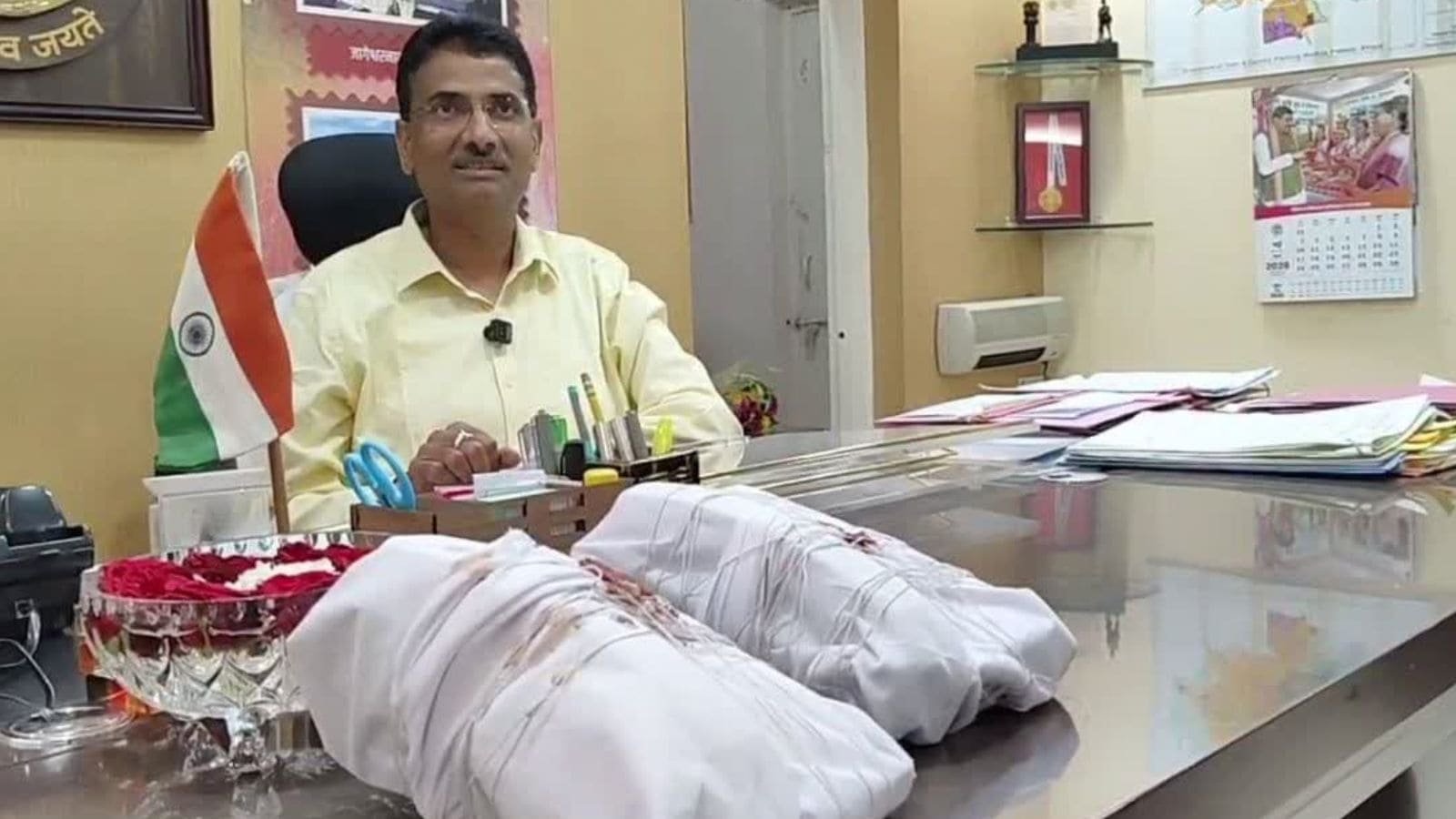
Damoh Collector Pratap Narayan Yadav uncovered an alleged surveillance breach inside his office after using a mobile phone and live news broadcast to detect possible bugging.
It was supposed to be a routine morning inside the Collectorate of Damoh, one of Madhya Pradesh’s quieter administrative districts. Collector Pratap Narayan Yadav had allegedly just settled into his chamber and was huddled with a small circle of officers, planning a surprise inspection of a government department. The doors were shut, and the conversation restricted to his inner circle.
Within minutes, however, the collector got a phone call from the very department he was preparing to inspect. “The caller said, ‘Sir, we heard you are coming to inspect the department’. I did not divulge this to anyone. How could they know about a conversation that hasn’t left the room?” Yadav said. “That immediately raised red flags.”
Yadav, who had been posted to Damoh only recently, realised his office was being bugged. His first thought was that it was an informant, but he also suspected something wired into the walls of his own office. For Madhya Pradesh’s bureaucracy, the case was more than a local embarrassment. Since the Collector’s chamber is, by design, the most secure and confidential space in district administration, the case belied the foundational assumption that those walls keep secrets.
He didn’t panic, call a meeting or issue a memo. What followed was an operation conceived and executed by the Collector himself, using nothing more than a mobile phone and a news channel.
“I turned up the volume on a live news broadcast playing on my phone, placed it inside the chamber, and walked out. Then I made my way to the adjacent PA room, the small anteroom staffed by personal assistants and office attendants that sits just outside every senior officer’s chamber in India’s district administration.”
There, Yadav allegedly picked up a telephone receiver on the desk and could clearly hear the news broadcast – suggesting that the telephone line between the two rooms had been tampered with to listen in on every conversation inside the Collector’s private chamber.
“The same audio could be heard through the receiver in the next room,” a senior official confirmed. “It strongly suggested that conversations were being intercepted and monitored.”
Story continues below this ad
The most chilling detail in this case, according to officials, is the timeline. Yadav believes this covert interception had been running for years, long before he arrived. Staff members in the PA room, it is alleged, had been routinely listening in on confidential meetings, sensitive phone calls and administrative decisions, then quietly passing the information to outside parties, potentially including the very officials being inspected.
“Some employees were sharing confidential information for personal gain or to curry favour with senior officials,” Yadav alleged.
What followed was swift. An Assistant Grade-3 employee, believed to be central to the operation, was suspended with immediate effect. A clerk, who had been posted at the Collectorate for an unusually long period, was transferred back to his parent department, the Sarva Shiksha Kendra, officials said. An office attendant was similarly removed and sent back to his original posting.
Both telephone sets found in the office have been seized and sent for forensic and technical examination to determine precisely how the interception was configured, how long it had been in place and, critically, who else may have been listening at the other end.
Story continues below this ad
The investigation is also examining whether the leak network extended beyond the three employees already in action, and whether information was being passed to specific individuals with vested interests in avoiding administrative scrutiny.
“This is being treated as a serious breach of government confidentiality,” said a senior official familiar with the case.
