

Post Content
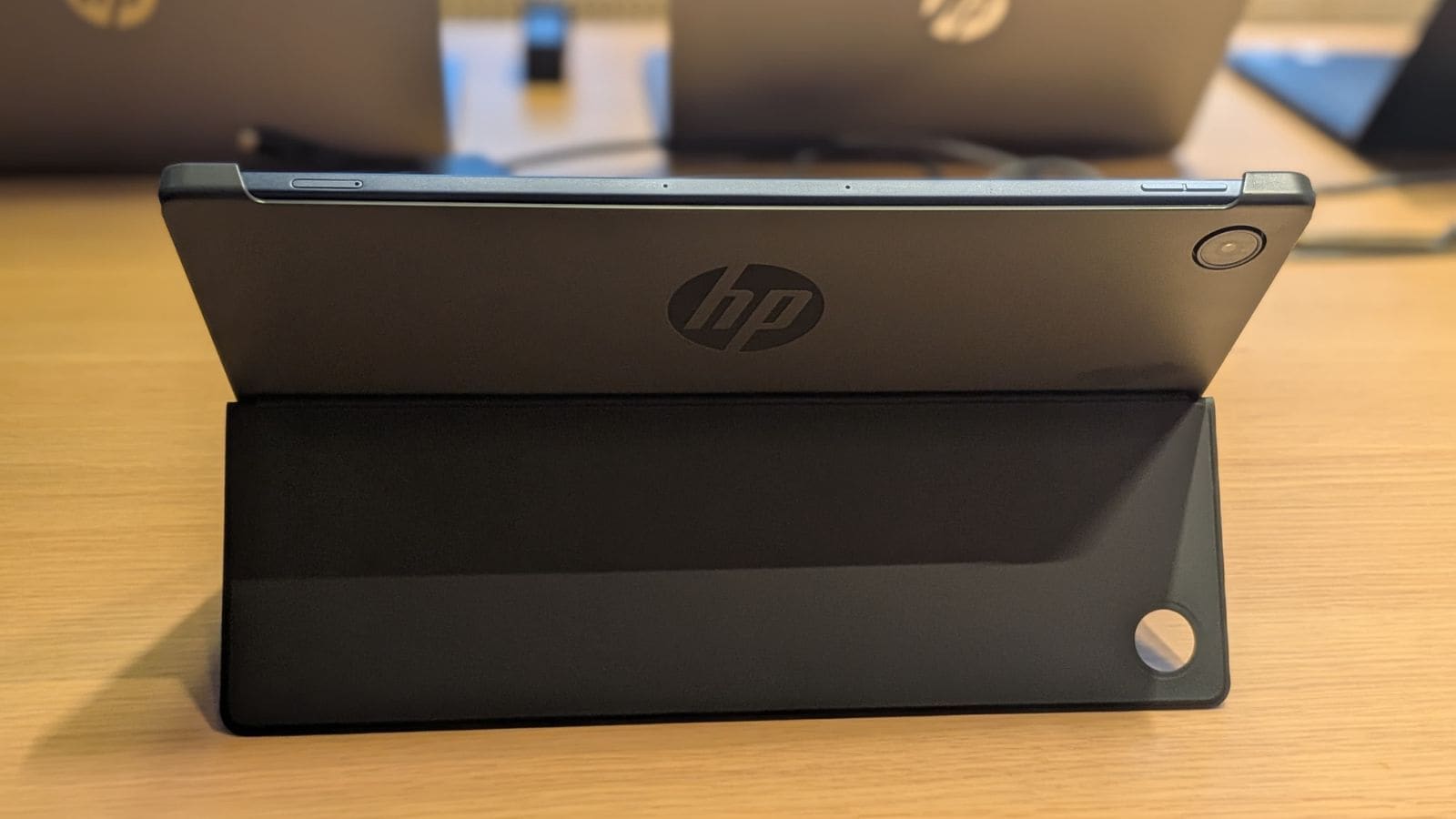
In 2011, exactly 15 years ago, HP decided to exit the tablet market. However, the PC giant is now making a comeback to tablets and has chosen India as the debut market for its OmniPad 12, marking a new category for the company.
Over the years, tablets have matured as products, with some models increasingly blurring the line with laptops. While HP remained focused on PCs, its key competitors continued to offer tablets. This raises the question of why it took HP so long to launch a tablet, especially given the category’s massive growth over the years. HP remains the world’s second-largest PC maker by unit shipments and also leads the Indian PC market.
“The tablet market 15 years ago was about the device. Today, our approach to launching the OmniPad [12] is about the customer,” said Dasgupta. “The OmniPad serves as a natural segway for mobile users who want to begin their journey toward a PC or a more productive device. I would say the device offers both the flexibility of a tablet-like device and the structural capabilities and productivity of a PC,” she added.
The OmniPad 12, which will retail at a starting price of Rs 48,999, has been “conceptualised” in India, said Dasgupta. That says a lot about the vision behind the OmniPad 12, which will compete with Apple Inc.’s Apple iPad, Samsung Electronics’s Galaxy Tab, and Lenovo’s Yoga tab line when it hits the market next month.
Ipsita Dasgupta, Senior Vice President & Managing Director, HP India, Bangladesh, and Sri Lanka, speaks during an event at the company’s in Gurugram. (Image credit: Anuj Bhatia/The Indian Express)
“A lot of time has been spent building use cases around it, including education, skilling, and work-related software, and we will continue to evolve that over time. That’s what makes it really special,” Dasgupta told indianexpress.com in an interview.
‘Tablets are an entry point to PCs’
For PC makers such as HP, which have traditionally relied on Microsoft Corp’s Windows operating system to power their computers, it has been tricky to define what exactly constitutes a computer. If a PC is a computer, then what is a tablet? Even Apple Inc., which offers a Mac and an iPad, has faced similar questions, but the company has maintained a clear stance and has always kept conversations about Macs and iPads separate.
“There are two different segments of customers. One is a customer who is moving toward more productive capabilities and requires more from a device than a phone can offer, and the PC-like nature of the OmniPad [12] caters to that need. The other is someone who is already used to and comfortable with the PC structure,” she said.
Story continues below this ad
Also Read | HP looks at India for its re-entry into the tablet market with OmniPad 12
The OmniPad 12 is powered by Qualcomm Inc’s Snapdragon processor and runs on Alphabet Inc.’s Android, an operating system designed to work on both smartphones and tablets. In fact, Android on tablets has improved a lot and is now much better at multitasking, making tablets close enough to function like a PC.
The OmniPad 12 is powered by a Qualcomm Snapdragon processor and runs Android. (Image credit: Anuj Bhatia/ The Indian Express)
“I think it’s because the user experience we felt from Indian users with phones is much more reliant on the Android experience, and so we felt it was the most seamless transition,” Dasgupta responded when asked about why HP went with Android over Windows to power the OmniPad 12.
There is absolutely no reason why a tablet cannot have PC-like functionality. Tablets offer long battery life, immersive displays, powerful chips, excellent cloud functionality, and apps that seamlessly work across platforms. In addition, tablets now support keyboards and mouse functionality and are improving with better multi-window work modes.
Still, from a hardware and software perspective, a laptop still provides utility that a tablet does not, even if that tablet is catching up with productivity features. However, the two could grow closer together as both products continue to evolve.
Story continues below this ad
HP may be seen as a late entrant to the tablet market, but the timing feels right, especially in India, where tablet sales are booming. India’s tablet market grew by 2 per cent year-on-year in 2025, according to Counterpoint, as more consumers pivot toward premium, productivity-focused devices.
‘GCCs are helping the commercial PC segment grow’
If tablets provide consumers with an entry point to PCs, now supercharged with artificial intelligence, it is the commercial PC segment that has been an important growth driver for HP and has helped the company maintain its number one position in the Indian PC market.
“We were the first market in the world at HP to actually segment our sales leaders and sales teams to focus on specific sets of customers, such as India Inc, which refers to large Indian companies. GCCs were a separate vertical, SMEs were a separate vertical, and government was a separate vertical. We haven’t combined them because engagement with each customer is very different. Even the rhythm of the day for someone interacting with these customers is different, as buying decisions, timing of decisions, and procurement processes all vary,” Dasgupta said.
But as demand for GCCs – which are offshore offices where multinational companies run operations ranging from finance to IT – continues to grow, and more large companies expand their presence in India, demand for commercial PCs will likely increase, directly benefiting PC vendors like HP.
Story continues below this ad
Also Read | HP looks at India for its re-entry into the tablet market with OmniPad 12
India currently hosts over 1,800 GCCs of which nearly half of the world’s total, according to a report published by the Confederation of Indian Industry and Deloitte. Every two weeks, three new GCCs are set up in India, and 60 per cent of existing centres plan to expand.
HP’s EliteBoard G1a is a full-blown computer inside the keyboard. (Image credit: Anuj Bhatia/ The Indian Express)
PC vendors shipped 15.9 million units in India in 2025, according to IDC’s Worldwide Quarterly Personal Computing Device Tracker, of which 8.6 million units came from enterprise shipments, with enterprise growth at 20.9 per cent year-on-year and SMB growth at 8.2 per cent year-on-year. For HP, the commercial segment grew 18.7 per cent year-on-year.
As growth in commercial PCs remains robust, Dasgupta agrees that AI use cases will be developed faster and implemented at scale. Large organisations worldwide are adopting AI to improve efficiency by streamlining processes, reducing costs, minimising errors, improving customer support, managing IT systems, and automating repetitive tasks.
“I think what you may be seeing is more conversation around the commercial segment because it is easier to demonstrate ROI in that space and have conversations about the value of AI more quickly, whereas AI usage by consumers has to become increasingly intuitive for people to see its value.”
Story continues below this ad
Also Read | HP launches EliteBoard G1a in India, next-gen AI PC built into a keyboard starting at Rs 89,900
“We are talking to independent software vendors and bundling many education and skilling software applications onto our devices, all of which are catered towards the individual. I don’t think in India you can build use cases that do not take the individual into consideration, because we have such a large gig and freelance economy that we need to keep the individual in mind,” she added.
While smartphone adoption in India has grown strongly, PC penetration remains relatively low at an estimated 17 to 20 per cent. That is something Dasgupta said HP is trying to change.
“We are building proof-of-concept projects with the Maharashtra government. We have worked with Tamil Nadu and Karnataka. There is no more suitable device than a PC for addressing our education needs,” she said.
For Dasgupta, the focus is on increasing PC access in government schools, with pilot projects aiming to provide students at least five hours of weekly computer usage. Currently, only about 40 per cent of government schools have computer labs, and students in those schools get just 15 minutes of PC time every two weeks.
Story continues below this ad
‘Sailing through the memory crisis’
But pressure is building on HP and other PC vendors as they navigate the memory shortage crisis. Memory chip prices nearly doubled in the first quarter of 2026, driven by strong demand for artificial intelligence servers, forcing companies to increase the prices of laptops and other electronic products that use RAM and to adjust hardware pricing to cover the rising cost of memory chips. For any large tech company, rising memory costs could become a major challenge for both hardware profitability and consumer demand.
“The whole industry is navigating this situation, but I think that, well before this, we have been working on building resilient and flexible manufacturing ecosystems. I believe that will help us get through this period until we reach some stability in pricing,” she said, adding, “We are in unprecedented times in terms of supply shortages. We will just have to wait and see what happens in the industry.”
