

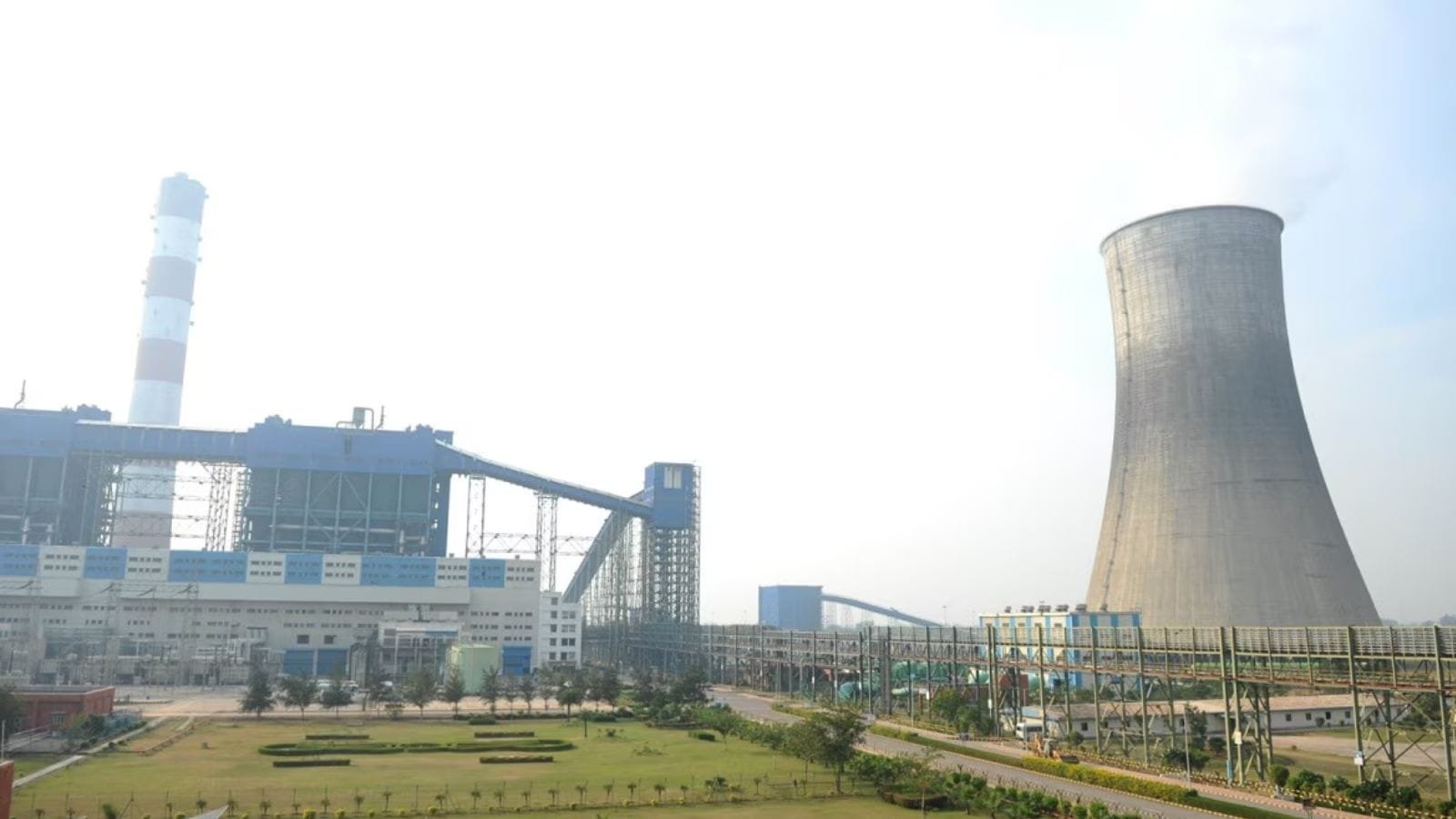
In a significant move to repurpose ageing coal-fired power infrastructure, a government panel has shortlisted at least three old thermal power plant sites for setting up of new nuclear power projects.
Of the three shortlisted sites, two have been found suitable for large nuclear reactors of 700 megawatt-electric (MWe) capacity, while one site is being considered for smaller 220 MWe reactors.
The disclosures were made during a presentation at a high-level workshop on the Sustainable Harnessing and Advancement of Nuclear Energy for Transforming India (SHANTI) Act organised by Central Electricity Authority (CEA) showed.
However, exclusion zone requirements have emerged as one of the key challenges in the broader exercise of repurposing old thermal power plant sites for large nuclear reactor projects.
The site selection exercise was carried out by a sub-committee of the Standing Site Selection Committee formed by CEA in January 2025. The panel included officials from CEA, Atomic Energy Regulatory Board (AERB) and the Nuclear Power Corporation of India (NPCIL).
It was tasked with evaluating the suitability of existing sites of thermal power plants — which are to be retired — for nuclear power projects and preparing a study report on the possibility of converting at least two such thermal power plants into nuclear facilities.
The move comes as India seeks to expand its civil nuclear power capacity from the current 8.8 gigawatt-electric (GWe) to 100 GWe by 2047.
Story continues below this ad
In December, the Parliament passed SHANTI Act, 2025, marking a major shift in how India’s tightly-controlled nuclear power sector will be governed in the coming years. For the first time, the Act enabled private players to enter the operations side of this critical sector as well as areas such as fuel management, which had remained under tight public-sector control for decades.
Ageing coal fleet
There are multiple reasons behind repurposing old thermal power plant sites for future nuclear projects.
They include India’s ageing coal power fleet, rising emissions from older plants, increasingly stringent environmental norms, and the availability of existing land, water and infrastructure at these sites.
Such a transition is also being viewed as an opportunity to support the country’s broader clean energy transition.
Story continues below this ad
The sub-committee initially shortlisted 28 sites based on age and operational status of the thermal power plants. The panel was specifically tasked to identify thermal power plants having either retired units or units older than 40 years.
A detailed 17-point checklist was prepared for evaluation, covering parameters such as site location, accessibility, land and water availability, seismotectonics, site meteorology, and surrounding population details.
Following scrutiny of data and deliberations, 10 sites have been shortlisted for site visits.
One of the key criteria during the process was availability of water. The panel assessed whether the sites could provide 4,800 cubic metres per hour (m³/hour) for two units of 220 MWe reactors and 9000 m³/hour for two units of 700 MWe reactors.
Story continues below this ad
Similarly, a land requirement criteria of 340 hectares was prescribed for a nuclear plant comprising two 700 MWe reactor units. Sites located in an earthquake zone V — a region with the highest level of seismic risk — or those having active faults within a 5-kilometer radius were treated as disqualified.
Subsequently, six sites have been shortlisted while four sites were excluded primarily because of inadequate water availability.
Also Read | Coal-fired plants’ inflexibility jeopardises India’s clean energy push: Can an incentive scheme work?
Exclusion zone hurdles
After further deliberations, three sites were finally shortlisted for possible conversion into nuclear power plants.
While specific details of these three sites were not available, it is learnt that at one site, water availability was found sufficient for two smaller reactor units of 220 MWe capacity. The remaining two sites were each found suitable for setting up two larger 700 MWe reactor units, meeting both land and water availability requirements. However, the respective state governments are yet to approve water linkage for these two sites.
Story continues below this ad
However, both large-reactor sites are facing hurdles related to nuclear exclusion zone requirements.
At present, nuclear reactors in India are required to maintain a minimum exclusion zone of around 1 km radius around the reactor site, within which no habitation or economic activity is permitted.
At one of the shortlisted sites, around 15-20 families reside within the mandatory one-kilometre exclusion zone. At the second site, the project would become feasible only if the exclusion zone is reduced to 700 metres.
A senior official familiar with the exercise told The Indian Express that existing exclusion zone norms are among the biggest constraints in identifying suitable thermal power sites for nuclear projects.
Story continues below this ad
According to the official, such repurposed sites may ultimately be more suitable for Small Modular Reactors (SMRs) and smaller-capacity nuclear projects rather than large conventional reactors.
Notably, the government is also considering a proposal to reduce exclusion zone requirements around future nuclear plants, a presentation made at the workshop showed.
The proposal has already been reviewed by AERB and the Department of Atomic Energy (DAE) from both safety and security perspectives and has received in-principle agreement.
Under the proposal, the exclusion zone for 700 MWe reactors could be reduced from 1 km to 700 metres, while the exclusion zone for smaller 220 MWe reactors could be reduced to 500 metres.
Story continues below this ad
Meanwhile, a second phase of the site selection exercise is currently underway to identify thermal power plants with units aged between 30 and 40 years for possible future nuclear deployment. At least 11 additional sites have already been shortlisted under this phase.
