

Post Content
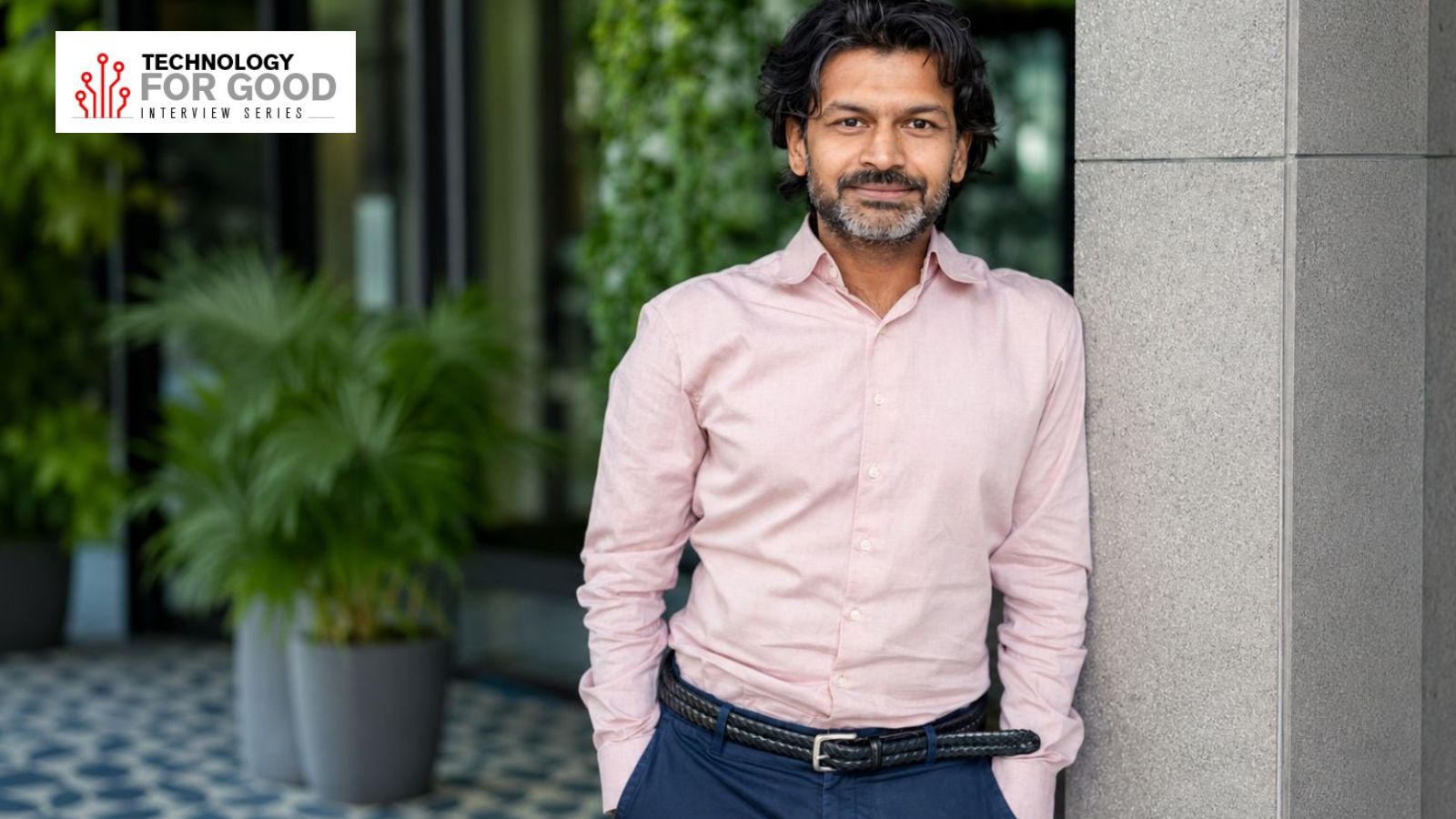
Phani Sama is best known as the founder of redBus and the co-founder of Kakatiya Sandbox.
Based in Nizamabad, Telangana, Kakatiya Sandbox was established in 2013 as an ecosystem for social impact through innovation and entrepreneurship. It provides a place for rural innovators and development practitioners to test ideas and develop scalable solutions.
Founded by Phani Sama along with Raju Reddy, a US-based entrepreneur and impact investor, Kakatiya Sandbox draws inspiration from the Hubli Sandbox in Karnataka, led by the Deshpande Foundation. Phani also plays an active role in the Hubli Sandbox ecosystem.
Between 2017 and 2020, Phani served as the Chief Innovation Officer for the government of Telangana. He is currently an advisor at WestBridge Capital and an angel investor in nearly 100 ventures.
In a conversation with indianexpress.com, Phani discusses the vision behind the Kakatiya Sandbox, rural innovation, growing an innovation culture in rural India, and his experiences in building such a culture in Telangana. Edited excerpts:
Venkatesh Kannaiah: Tell us about your journey from the founder of redBus to an innovation ecosystem builder.
Phani Sama: redBus itself was an innovation. I have always been fascinated by innovation, but during and after redBus, I became very interested in how culture impacts outcomes.
Somebody else may also have a similar idea; you and your competitor may have a similar product. But what differentiates you is the culture — what people believe, what they aspire to, how they do things. That becomes a big differentiator.
I got involved in three different culture experiments.
Story continues below this ad
There is Kakatiya Sandbox, which I set up after exiting redBus. We explore how we could transform Nizamabad, a town in rural Telangana, into a thriving ecosystem of entrepreneurship and innovation.
The second was, in 2017, to make Telangana an economy based on innovation.
Recently, we set up the Kakatiya Rural Innovation and Transformation Initiative (KRITI) at the BITS Pilani campuses. This is about getting students interested in nonprofits. We believe there should be a parallel ecosystem in every university that nurtures social startups, nonprofit institution creation and innovation.
All three of these efforts come from the same underlying passion: how can we create lasting change through culture?
Story continues below this ad
Venkatesh Kannaiah: Tell us about KRITI and how it is structured.
Phani Sama: KRITI is introducing a semester-long Social Venture Course at BITS Pilani starting this academic year. At the end of the course, they go through various models of setting up a social venture. They get practical, hands-on experience.
Students go to villages, understand the challenges there, come back with research, put together ideas, and start creating ventures with support from CSR funds and other sources. BITS Pilani already has a strong entrepreneurial ecosystem. Even in the for-profit startup world, BITS has produced quite a few successful startups.
We were surprised by the appetite among students for social venture startups.
Venkatesh Kannaiah: You have spent time as the Chief Innovation Officer for the Telangana government. What is the learning you bring to Kakatiya Sandbox?
Phani Sama: As the Chief Innovation Officer of Telangana, many of the things we did were intended to create systemic change. For example, governments already have certain rituals — celebrating Independence Day on 15th August, and so on — with formal protocols around them.
Story continues below this ad
We introduced a system where all district collectors would honour five innovators from their district every year on Independence Day. Even today, though I am no longer the CIO, district administrations continue scouting for innovators every year and selecting the best among them.
There was an initiative called Intinta Innovator – Innovator in every home. We integrated it into the celebrations of Telangana Formation Day on 2nd June. It became a state-level celebration of innovators across Telangana — student innovators, rural innovators, urban innovators, and others. Even today, the campaign continues.
We also launched the Government Mentor Programme. One of the biggest asks from startups is: “Can the government buy my product?” When I became the Chief Innovation Officer, startups constantly said the government should help procure their solutions. So instead of approaching it purely from the procurement angle, we flipped the model. We said: let government officers become mentors to startups. That became the Government Mentor Programme.
Another underrated aspect of ecosystem building is community creation.
Take Atal Tinkering Labs, for example. The central government offers these labs to schools across India that apply for them. We realised many Telangana schools were not applying simply because they lacked guidance. So we created WhatsApp communities for school owners across districts, brought them together, and hand-held them through the application process. We did something similar for incubation centres too.
Story continues below this ad
Venkatesh Kannaiah: Tell us about the Kakatiya Sandbox and why you chose Nizamabad to establish it?
Phani Sama: Raju Reddy and I are from Nizamabad. That makes it much easier to build something because we already have strong social networks in the region. Just like Hubli became the base for Deshpande Foundation’s work.
Kakatiya Sandbox focuses on rural entrepreneurship and skill training. There are three verticals: education and skilling, entrepreneurship, and agriculture.
Under education and skilling, we have two programmes. One focuses on taking degree college students from rural India and helping them get jobs. We have over a 90% success rate — almost everyone who comes through the programme gets placed. The second programme works with school students from 5th to 8th grade.
And in entrepreneurship, we have an incubation centre called Kanwal Rekhi Rural Entrepreneurship Centre (KREST), supported by Kanwal Rekhi, the well-known entrepreneur-investor. Incidentally, he invested in both redBus and Raju Reddy’s startup Sierra Atlantic. So he was connected to both founders of Kakatiya Sandbox.
Story continues below this ad
Now the Nizamabad innovation ecosystem is growing. One example is TiE Nizamabad.TiE used to be only in bigger cities. We helped establish a TiE chapter in Nizamabad. It is probably the smallest TiE chapter in the world.
There is also the Nizamabad Angels now, where people from Nizamabad have started investing in local startups. They regularly receive pitches from founders, and they have already invested a few crores. So we are beginning to see a real ecosystem emerge locally.
Venkatesh Kannaiah: Tell us about the global experience of innovation sandboxes like Kakatiya.
Phani Sama: At Kakatiya, we take inspiration from Desh Deshpande’s work on innovation ecosystem building. For example, Desh has a successful programme that he built in the US, called I-Corps.
Desh became successful by taking deep-tech research and commercialising it. He recognised that universities produce enormous amounts of research, but most of that research never translates into products. And if research does not translate into products, it ultimately does not create societal impact.
Story continues below this ad
Under I-Corps, university professors should partner with an entrepreneur, usually a student and a mentor and apply for a grant.
Once selected, they receive funding. They are required to speak to 100 people and understand whether there is a real-world need for the research they are developing — how it could be applied in people’s lives, whether there is demand for it, and so on. By the end of those 100 conversations, they gain clarity on whether their research is actually relevant to society.
Today, I-Corps has become a nationwide programme across universities in the US. It has led to the creation of around 2,500 startups. These kinds of ecosystem models have already been proven successful in places like the US and Canada, and now similar approaches are beginning to be replicated in India as well.
Venkatesh Kannaiah: Your thoughts on those who use these rural incubation ecosystems?
Phani Sama: From my experience, I see three kinds of people getting attracted to rural incubators.
Story continues below this ad
First are those who have a personal insight into a problem, and they look to tech for a solution. They are the inventors for rural India.
Then, there are those who see that it is cheaper to experiment in rural India and work out of there.
And finally, there are entrepreneurs in rural India, inventing for urban India.
If this is the scenario, one might ask why rural incubators are needed at all. Take the case of Gud Gur from our Hubli sandbox. The founder is a woman from a small town in Karnataka, producing liquid jaggery from organically grown sugarcane. It is a small but healthy business, but if you put such innovators in a Bengaluru-like ecosystem, they are likely to feel demoralised. The rural innovators need an ecosystem where there is an appreciation of their output and their scale.
Venkatesh Kannaiah: Tell us about your investments from an impact perspective.
Phani Sama: There is Eka.Care, a digital health platform helping users manage medical records, prescriptions, and doctor consultations in one place. It also works closely with India’s health-tech ecosystem and Ayushman Bharat Digital Mission initiatives.
Stamurai is a speech therapy and fluency app designed for people who stammer, using AI-assisted exercises and coaching. It focuses on accessibility and mental confidence alongside speech improvement.
There is Innovaccer, India’s first healthtech Unicorn, which is a healthcare data platform company that helps hospitals and insurers unify patient data and improve care delivery.
There is also YourDOST, an online emotional wellness and mental health platform offering counselling, coaching, and self-help support. It works with colleges and companies to improve student and employee well-being.
Goodera is a CSR and volunteering platform that helps companies run and measure employee-driven social impact programmes. It works with global enterprises and nonprofits across multiple countries.
DrinkPrime is an interesting example. It is a subscription-based water purifier company offering IoT-enabled purification systems for homes. It uses a pay-per-use model aimed at making drinking water more affordable.
Venkatesh Kannaiah: What are the kinds of innovations that could emerge from ecosystems like the Kakatiya Sandbox?
Phani Sama: I can only speak from first-hand experience within our ecosystem, so I’ll talk about examples from our Hubli sandbox too.
From Kakatiya Sandbox, we have Local Narratives, a company which is essentially like an Airbnb for rural tourism. It builds accommodation facilities where rural farmers become hosts and guides. Visitors can eat local food, visit farms, and experience village life.
One interesting startup that came out of our Hubli ecosystem is nanoPix. It is now doing around Rs 100 crore in annual revenue. They have automated the sorting of cashew nuts. They now export that machine too. Bigger cashews fetch a higher price, smaller ones fetch less, and traditionally, this sorting used to be done manually in rural India.
There is Wide Mobility Mechatronix, which does automated sorting with Gherkins.
There is Grid Flow working on urban mobility. Their idea is somewhat similar to Hyperloop. They want to create automated pods moving through a grid network in cities, allowing people to travel from one point to another. To build and test such prototypes, they require large areas of land, which are expensive in urban centres. So they set up operations in our incubation centre.
There is Scout Better, which is part of our Nizamabad ecosystem. They cater to US customers. When someone in the US applies for jobs, they would need to apply across multiple websites and slightly customise their resume for each role. Scout Better has a product to help applicants customise their resumes.
When we were setting up KREST in Nizamabad, I used to wonder: Will we even find startups in a place like Nizamabad? Where will they come from? But I was pleasantly proven wrong.
Venkatesh Kannaiah: Are you planning to create Kakatiya Sandboxes in multiple towns across Telangana?
Phani Sama: No. That’s not really the model. KREST is essentially like a T-Hub-style incubation centre. For it to work, we need a steady supply of people who want to become entrepreneurs and solve problems.
To create that pipeline, we work with local universities and help establish incubation support there. Startups emerging from those universities can then flow into KREST. So we are essentially building the supply side.
The focus is more on creating a startup pipeline through universities and local institutions.
A few such sandboxes were started by others around the same time as ours. But they did not take off or sustain over time.
Venkatesh Kannaiah: How well is the research and academic world connected with such rural sandbox initiatives, or is it in the realm of philanthropy?
Phani Sama: Right now, a lot of this is still being driven through philanthropy. But I think one encouraging development is that central government startup grants are now channelling serious money into incubators.
Venkatesh Kannaiah: What is your idea of a successful impact innovation?
Phani Sama: I am all for solar drying machines and pomegranate peeling machines. These are innovations from people who face problems in their daily lives and are using tech to resolve them in a creative manner. We need to celebrate them. But, we also need to see if they are getting adopted on a large scale, since the key to impact is large-scale adoption.
But there are stories like Nirma washing powder, which revolutionised the sector with a frugal innovation and provided washing powder at a low cost. I like such projects which are adopted at a large scale.
There are so many tech interventions, like reusable rockets, which create a huge impact. I am partial to these.
