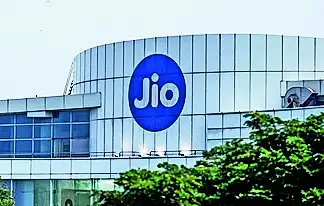
Mukesh Ambani’s ability to raise billions of dollars and win over investors has endured for decades. He showed it once again with Jio Platforms Ltd., which pulled off India’s biggest-ever initial public offering and a strong trading debut despite a difficult market backdrop.
Shares of the telecom and digital-services arm of Reliance Industries Ltd. closed 27% higher in Mumbai after the company raised $3.1 billion in the offering. That was the second-best start among large Indian IPOs that raised at least 150 billion rupees ($1.6 billion), trailing only Coal India Ltd.’s 40% listing pop in 2010.
The Ambanis, a dynasty whose wealth and influence are nearly unparalleled in India, pulled out all the stops to make the deal a success. They changed the deal structure, lowered the valuation ask, lined up anchor investors, and tapped their business empire’s vast workforce to drum up interest. The result reflected a familiar pattern: careful preparation, flexibility on price and an ability to complete large deals in difficult markets.
“It’s exactly what the Ambanis do,” said Stephen Richard Evans, Chairman at Red Lions Capital in Dubai. “They give companies the best chances of success. That’s why they’re such astute investors. This is all in line with what we’ve come to expect from the Ambanis.”
The backdrop makes the deal even more notable. Indian stocks are headed for their first annual drop in 11 years, global funds have pulled record amounts and several of the country’s mega IPOs have stumbled.
For longtime Reliance watchers, the timing also has echoes of 2020. At the depths of the pandemic, the company completed a 530 billion-rupee rights offering as markets around the world were reeling, which remains India’s biggest fundraising.
“The group tends to prepare well ahead of time,” said Deven Choksey, managing director at DRChoksey FinServ in Mumbai. “The preparation was again visible with Jio.”
Reliance spent close to five years readying the IPO and waited until the business was generating strong free cash flow before bringing in public-market investors, Choksey said. During the earlier investment-heavy years, he said, the promoters carried the burden.
The group was also flexible on valuation as market sentiment weakened. Jio’s eventual valuation fell short of some earlier expectations, but it helped balance the dual goals of achieving a record fundraise while still generating a debut pop.
“Getting the right valuation was important, but the group also wanted to leave some gains on the table for investors,” Choksey said. “They were very flexible on pricing.”
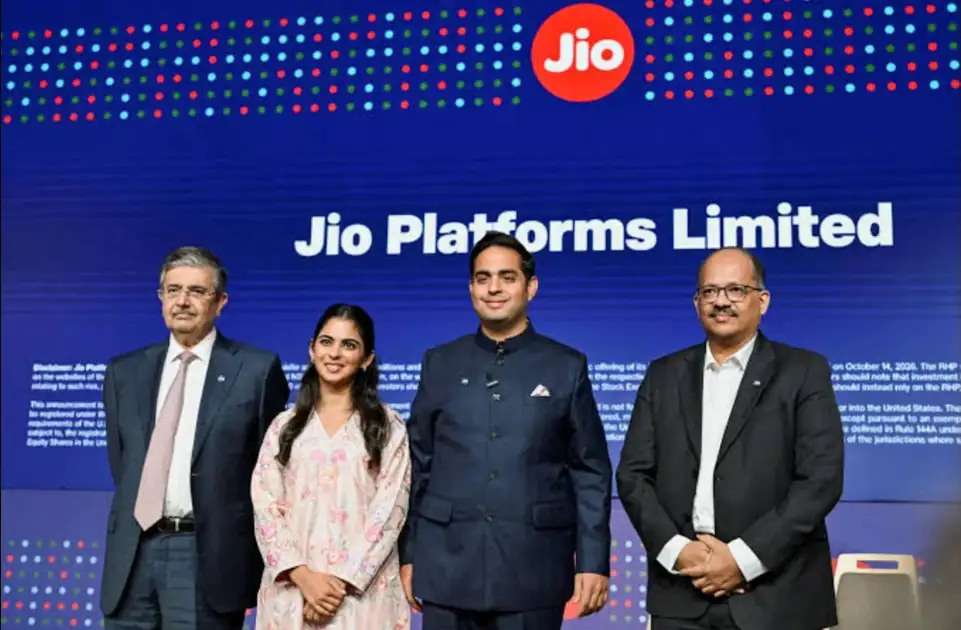
For the Ambani family, the listing was also a personal milestone. Mukesh Ambani appeared emotional at the ceremony, according to a live feed streamed on the NSE’s YouTube channel. The patriarch looked like he was holding back tears as his three children took the stage to thank investors after the offering was fully subscribed within 100 minutes.
The deal marks a first major test for the third generation of the Ambani dynasty. Mukesh’s elder son Akash led the IPO process and faced investors on the roadshow, decades after Mukesh helped with Reliance’s first public offering at the age of 20.
Jio’s first-day rally pushed its market value above $130 billion, making it India’s second-most valuable listed company and the world’s fifth-largest telecom firm by market cap, just behind AT&T Inc. and a hair ahead of Deutsche Telekom AG.
The focus now shifts to whether Akash and his team can turn more than 500 million subscribers into higher earnings and cash flow while expanding in broadband, cloud computing and artificial intelligence.
Nomura expects the listing to add pressure for steady tariff increases that rivals could follow, while Bloomberg Intelligence says Jio’s premium valuation raises the bar for monetization and cash generation. Its average revenue per user still trails rival Bharti Airtel Ltd.
“It’s possible that the average revenue will have to go up to meet the demands of a listed company,” said Nirgunan Tiruchelvam, head of consumer and internet at Aletheia Capital. “The next step is to monetize this further.”
With Jio in the books, IPOs in India have raised more than $18 billion this year, the third-most ever and within striking distance of the $22.4 billion record set last year, according to data compiled by Bloomberg.
Meanwhile, the IPO also highlights a widening divide in India’s $4.8 trillion equity market. Even as Jio’s shares soared, the broader market sold off, underscoring the challenge investors face in navigating the world’s fastest-growing major economy.
The split is stark: global investors have poured $7 billion into India’s primary market this year while pulling a record $38 billion from cash equities.
“Global money may be underweight India’s index, but not its growth story. Foreign money is becoming a lot more selective, but it’s not leaving,” Red Lions’ Evans said. “This is the Indian century and the India growth story is intact.”