

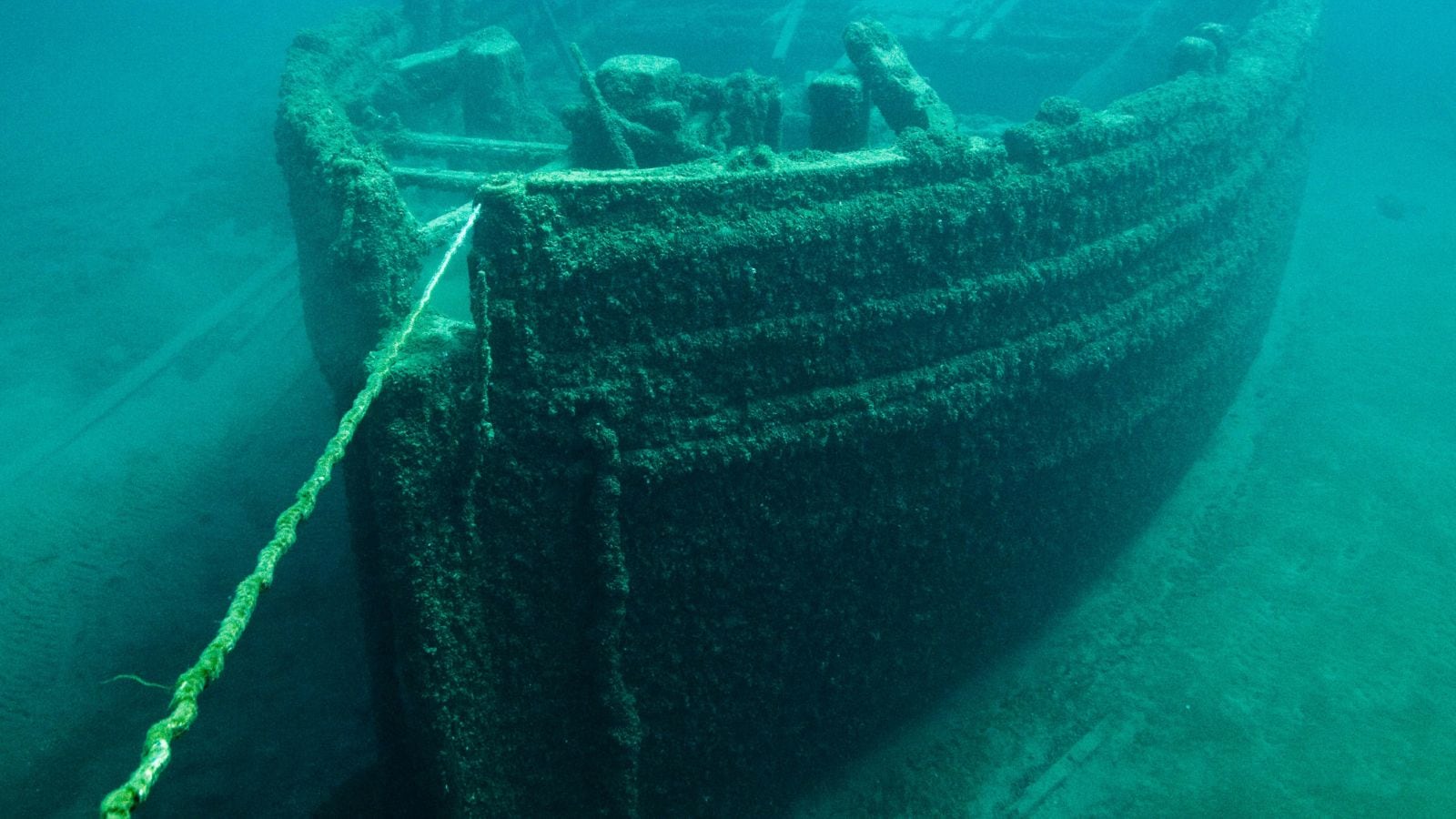
Post Content The newly identified vessel, known as Ship No. 3, was first located in 2023 using acoustic seabed scanning. It lies about 65 feet underwater and is buried under layers of sediment. (Image for representation: unsplash)
Archaeologists working off the coast of Takashima Island in Japan have uncovered a 745-year-old shipwreck believed to be part of a massive Mongol invasion fleet that met a dramatic end in the 13th century. The find, located in Imari Bay, is the third such vessel discovered in the area in the past 15 years.
The wreck has also uncovered a variety of objects, including a short sword that was still in its scabbard, bundled arrows, and even engraved chopsticks. These objects have been underwater for centuries and have been preserved since a powerful storm sank the fleet during its mission.
A failed invasion
The ship is linked to the 1281 Mongol invasion of Japan, led by Kublai Khan. The campaign, known as the Koan War, was one of the largest naval operations of its time.
Sadakatsu Kunitake and Elena E Voytishek presented the research of a group of academics from Kokugakuin University in Tokyo and Nara National Research Institute for Cultural Properties in an article published in the journal Yearbook Japan.
Historical records suggest that around 1,40,000 soldiers were sent aboard roughly 4,400 ships. The fleet was divided into two forces: the Jiangnan Army from southern China and the Eastern Army from the Korean Peninsula. The plan was for both fleets to meet and launch a combined attack.
Also Read | Hidden for 136 years: Winter storms just unearthed a 19th-century ship on a New Jersey beach
However, delays disrupted the coordination. By the time the fleets gathered near Takashima, a violent typhoon struck. The storm, later referred to as a “kamikaze” or “divine wind,” destroyed a large part of the fleet. Many ships sank, and those that reached shore were defeated by Japanese forces.
Finding the shipwreck
The newly identified vessel, known as Ship No. 3, was first located in 2023 using acoustic seabed scanning. It lies about 65 feet underwater and is buried under layers of sediment. The wreck is also near another vessel that was discovered in 2014, while the first discovery in the area occurred in 2011.
Story continues below this ad
Excavation of the wreck between 2023 and 2024 has revealed essential information about the vessel. The wood, which was used to construct the vessel, was cut in 1253, nearly 30 years before the invasion.
The vessel was constructed in the south of China, specifically in Zhejiang province. The ceramics discovered on the vessel match those from Jiangsu province, which confirms that the vessel belonged to the Jiangnan Army.
Clues from life on the vessel
In addition to the weapons and cargo, the wreck has given scientists a look at what life was like on the vessel. The team discovered soil from above the wreck, which contained organic materials.
Also Read | 3 centuries after ‘Holy Grail of shipwrecks’, precious artefacts recovered from San José galleon
The organic materials included fish bones from the crew’s meals, leather, wood, and lacquer. Such findings help paint a picture of what life was like for soldiers and crew members before the ship was lost.
Story continues below this ad
Across all three wreck sites, archaeologists have also found helmets, quivers filled with arrows, stone cannonballs, anchors, and even bronze Buddhist statues.
Artifacts from the site are now being studied and preserved in museums across Japan. However, experts believe this is only the beginning.
With just three shipwreck discovered out of a fleet of thousands, much of the story still lies hidden beneath the seabed.
© IE Online Media Services Pvt Ltd
