

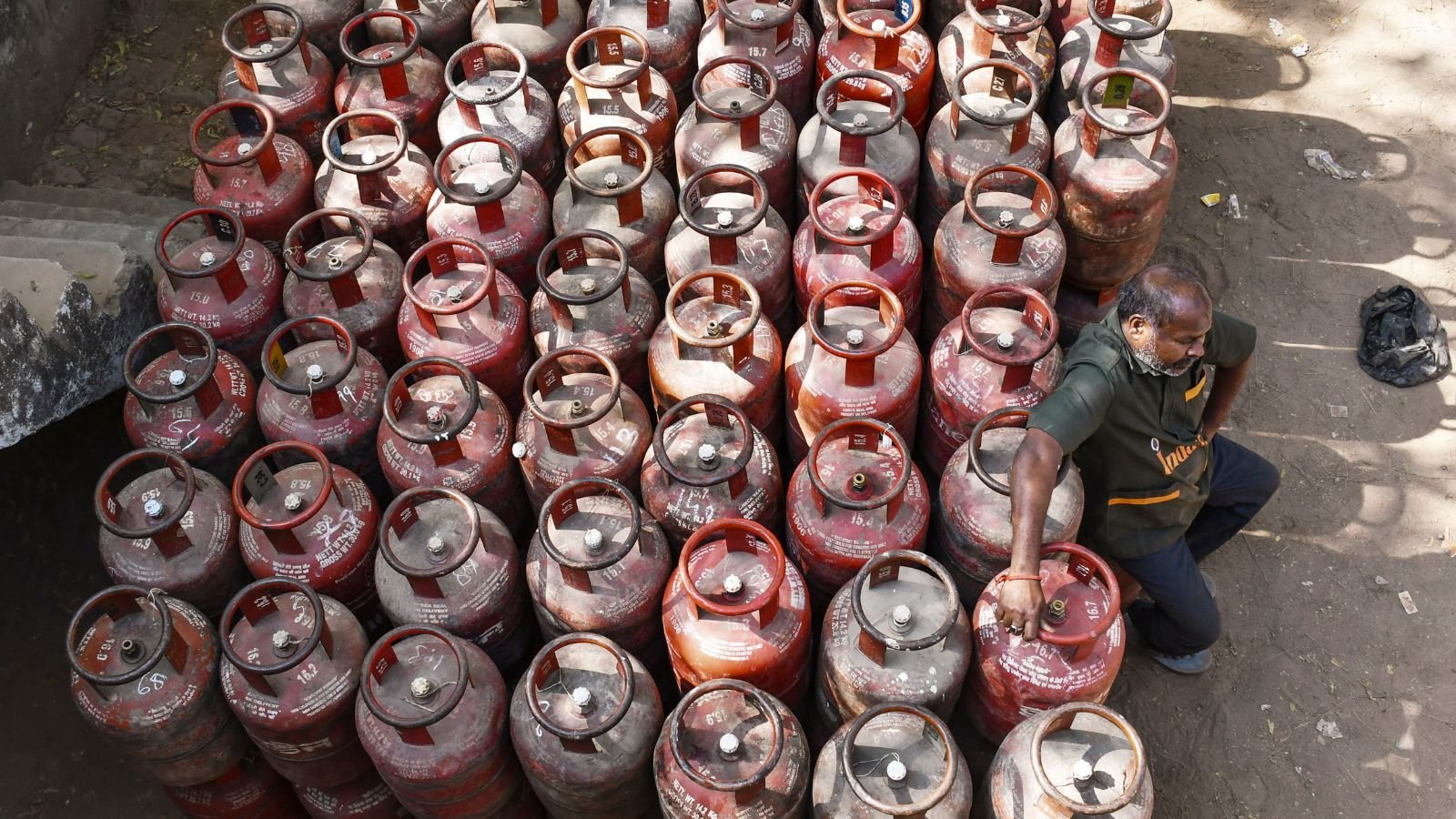
The government has increased commercial LPG allocation to 70% of pre-crisis levels. (File Photo)
With the massive cut in commercial supplies of liquefied petroleum gas (LPG) hitting commercial establishments and certain industries, the government on Friday increased the allocation of commercial LPG to states and union territories to up to 70% of their pre-crisis requirement from up to 50%. The increase in domestic production of the fuel along with increasing imports of LPG from regions other than West Asia are being seen as the key reasons for the increased allocation of commercial LPG to states.
The additional 20% allocation shall be given to industries with priority to steel, automobiles, textiles, dyes, chemicals, and plastics, “which are labour intensive and provide support to other essential sectors”, Petroleum Secretary Neeraj Mittal wrote in a letter to the chief secretaries of all states and union territories. Mittal added that even among these industries, priority shall be given to process industries or those requiring LPG for specialised heating purposes that cannot be substituted by natural gas.
With this additional allocation, commercial LPG allocation to states can be up to 70% of the pre-war requirement. The government had earlier allowed 20% allocation to states for commercial LPG consumers, and then offered an additional 10% if states took certain specific measures to help expedite PNG infrastructure. Then on March 21, it raised the commercial LPG allocation by another 20% of the requirement, specifically for restaurants, dhabas, hotels, industrial canteens, food processing and dairy sectors, subsidised canteens or food outlets run by state governments and local bodies, community kitchens, and commercial cylinders used by migrant labourers.
Moreover, the government made it mandatory for commercial and industrial consumers of LPG to register with public sector fuel retailers, and also apply for a piped natural gas (PNG) connection to become eligible to get commercial LPG. That condition continues to be in place for the additional 20% allocation announced on Friday. The only exceptions will be industries where LPG is used for special processes or purposes and cannot be replaced by natural gas.
LPG supply to commercial and industrial consumers was cut in a bid to shield households that use LPG as kitchen fuel. This was done as a large chunk of India’s LPG supplies were disrupted due to the effective closure of the critical maritime chokepoint of the Strait of Hormuz amid the West Asia war. India depends on imports to meet about 60% of its LPG demand, and 90% of its LPG imports came from West Asia through the Strait of Hormuz.
Apart from prioritising LPG supplies to households over commercial and industrial consumers, the government ordered refiners to maximise LPG production, and directed them to divert propane, butane, and other streams from petrochemical manufacturing to LPG production. These measures have helped raise domestic LPG production by around 40% vis-à-vis the pre-war levels, which translates to around 16% of the country’s overall LPG demand.
The government has also been appealing to LPG consumers—commercial and industrial users as well as households—to shift to piped PNG, wherever feasible. Although natural gas supplies to India have also been hit due to the Strait of Hormuz’s closure, the situation is not as concerning as in the case of LPG. India depends on imports to meet roughly half of its natural gas needs, with 55-60% of the imports coming through the Strait.
Story continues below this ad
On Thursday, the government said that there was no LPG shortage for households, and the supply situation was improving with additional domestic production of the fuel, along with additional LPG cargoes coming in from non-West Asian suppliers. It said that around one month of LPG supply was “firmly arranged” through imports from non-West Asian suppliers, and additional procurement was being tied up on a continuous basis.
The government said that domestic production is now meeting over 60% of India’s current daily requirement of 80,000 tonnes, which is predominantly household demand. The average daily LPG demand in the country was around 90,000 tonnes, but with commercial LPG supplies heavily curtailed, the daily requirement has fallen. “The net daily import requirement has consequently come down to only 30 TMT (thousand metric tonnes) — meaning India is now producing much more than it needs to import. Over and above domestic production, 800 TMT of assured inbound LPG cargoes are already secured and en route from the United States, Russia, Australia, and other countries… Approximately one full month of supply is firmly arranged, with additional procurement being finalised continuously,” the Petroleum Ministry said Thursday.
According to the government, despite LPG supplies to India being affected by the West Asia war and the Strait of Hormuz closure, the OMCs are maintaining supplies to households at the pre-conflict level of over 50 lakh cylinders a day, and no dry-out has been reported at any LPG distributorship across the country. “Cylinder demand had gone up to 89 lakh cylinders due to panic ordering by consumers and has now come down to 50 lakh cylinders again. Commercial cylinder allocations have been raised to 50% in consultation with state governments to avoid hoarding or black marketing,” the ministry said.
© The Indian Express Pvt Ltd
