

Union Minister for Social Justice and Empowerment Dr Virendra Kumar introduced the Transgender Persons (Protection of Rights) Amendment Bill, 2026, in the Lok Sabha on March 13, and it is currently under consideration. Since then, members of the trans community, allies, and activists have been demanding the withdrawal of the Bill. On March 18, there were major protests in several parts of the country, including Hyderabad, Chennai, Bengaluru and Kochi.
ALSO READ | We, the transgender people of India, reject the erasure of our identity
The second round of protests on Sunday came after a group of trans persons tried to meet minister Virendra Kumar on Saturday. “In this meeting, bureaucrats told us that the suggestions we have put forth cannot be considered as they do not fall within the ambit of the Bill,” Pune-based Sagnik Puri, who identifies as non-binary, told The Indian Express.
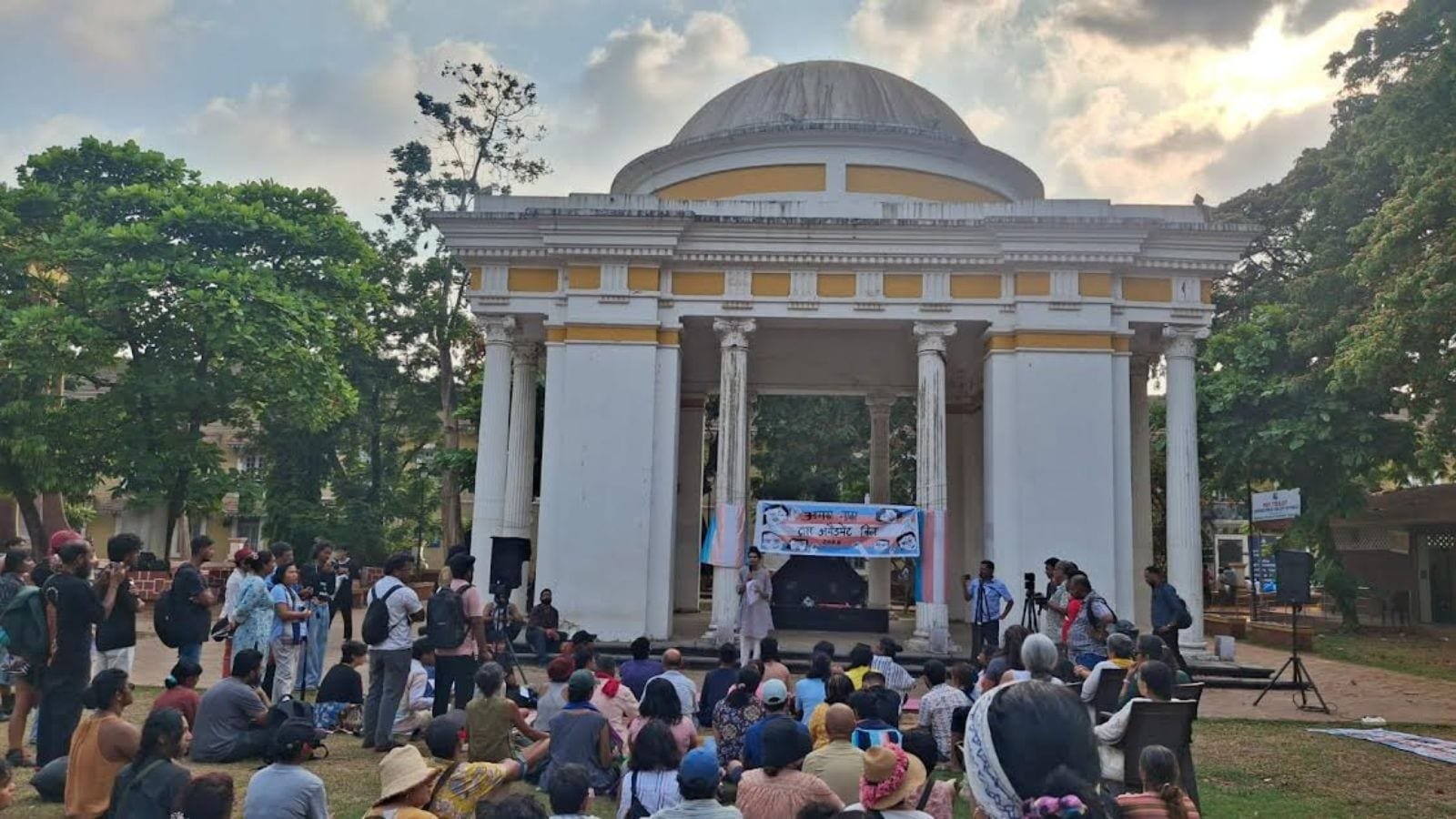
Members of the trans community, allies, and activists have been demanding the withdrawal of the Bill. (Express Photo)
The new amendment proposes major changes to the Transgender Persons (Protection of Rights Act), 2019, including removing the right to gender self-identification recognised by the Supreme Court in the landmark National Legal Services Authority v Union of India (NALSA) case in 2014, and introducing medical certification for identity recognition.
The NALSA judgment is a landmark decision by the Supreme Court that formally recognised transgender persons as the “third gender”. The ruling affirmed that the fundamental rights granted under the Constitution apply equally to transgender individuals.
Activists said the amendment Bill recognises only a few socio-cultural groups, while excluding others, despite all transgender persons having the same constitutional right to self-determination.
Zena Sagar, a trans woman who was at a protest in Goa, at Panaji’s Azad Maidan on Sunday evening, said the Bill creates an arbitrary classification within transgender persons without any scientific basis, relying on vague standards.
Story continues below this ad
“The Bill undermines our autonomy. It is completely arbitrary and undemocratic… the way the Bill has been drafted without any consultation with the National Council for Transgender Persons. The core idea of self-determination guaranteed to us in the NALSA judgment is completely taken away. It criminalises our existence,” Sagar told The Indian Express.
Activists said the Bill shifts the foundation of gender recognition from self-perceived gender identity to state-controlled medical certification, placing transgender persons under invasive scrutiny by administrative and medical bodies. They said the proposed legislation narrows the definition of “transgender” to exclude transwomen and transmen, trans-masculine and trans-feminine persons, erases genderqueer and non-binary identities, and conflates intersex variations with gender identity, reflecting a lack of scientific and social understanding.
“The Bill systematically shrinks our rights by allowing the state, via the police, invasive medical scrutiny and administrative institutions to regulate our identities and bodies. The amendment makes for a significant overreach of state power, moving beyond transgender and queer rights, extending into a broader erosion of civil liberties and personal autonomy,” a statement read out by community members at the protest in Goa said.
Sagar said the Bill reduces lived realities to biological criteria while ignoring the complex intersections of caste, class, religion, culture, disability and region that shape gender marginalisation in India.
Story continues below this ad
In Tamil Nadu, a protest was held at the Chennai Press Club on Sunday. One of the protesters, Grace Banu, a transwoman, told The Indian Express: “The amendment violates the fundamental rights guaranteed under the Constitution of India and contradicts the historic Supreme Court judgment NALSA vs Union of India (2014), as well as internationally recognised healthcare standards”.
Banu said the Bill “also makes hormone treatment, medical procedures and surgeries mandatory for recognition, while enabling surveillance over private medical records by requiring them to be submitted to district authorities”.
“Apart from this, the amendment risks criminalising Hijra-Aravani community structures, transgender families, activists, NGOs and allies, by reviving harmful stereotypes that transgender persons force others to become transgender. These provisions can easily be misused to harass community leaders, support networks, organisations and individuals who assist transgender persons in living with dignity,” Banu said.
