
A Democratic sweep of the US Congress jolted global markets, pulling down Asian tech stocks and the dollar while boosting Treasuries as investors braced for tougher scrutiny of President Donald Trump’s policies.
The prospect of a divided Washington is spurring investors to rethink trades built around Trump’s policy agenda, which has favored deregulation and the rapid buildout of AI infrastructure. Democratic control of Congress is expected to bring investigations and greater oversight of his spending plans, even if an exercise of his veto powers limits lawmakers’ ability to push through sweeping legislative changes.
“A Democratic Congress and Democrat-run states mean more scrutiny on data centers, power use and local approvals,” said Anna Wu, an investment strategist and founder of Floodlines Research. “Sentiment right now is fragile and self-feeding, so investors cut AI first and ask questions later.”
Read More: US midterms may help D-Street break free from geopolitical overhang
The global AI trade came under renewed pressure, with a slump in Nasdaq 100 futures pointing to another weak session for US tech stocks. Nvidia Corp. fell in overnight trading on the Blue Ocean platform, extending a selloff that hit Asian chipmakers hard.
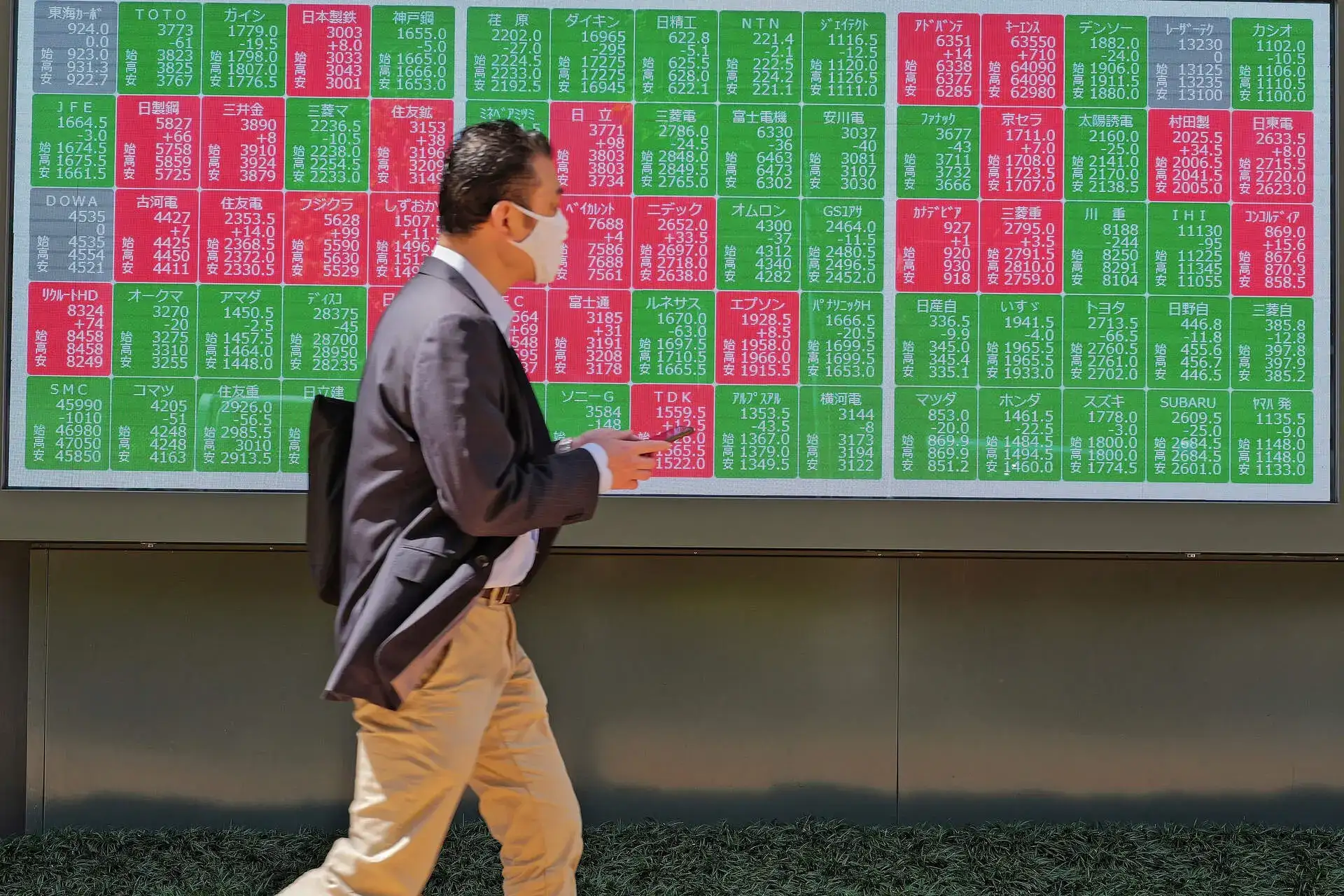
South Korea’s Kospi fell as much as 4%, with Samsung Electronics Co. and SK Hynix Inc. down more than 5% each, before paring declines. Japan’s tech-heavy Nikkei 225 gauge sank close to 5%, while Taiwan’s benchmark slid as much as 3.4%.
Investors are weighing greater scrutiny of the tech sector and potential delays to US data-center construction. Candidates from both parties have made data centers an election issue, adding to existing concerns over the scale and returns of AI spending.
“The blue wave may have been anticipated, but its scale has forced a reassessment of risk,” said Chris Weston, head of research at Pepperstone. “For now, the equity market is carrying the greatest burden of political uncertainty, with technology and AI at the centre of the adjustment.”
Solar stocks jumped as investors bet a Democratic sweep may slow or reverse some of Trump’s measures targeting clean-energy projects, potentially benefiting Asian solar, battery and grid suppliers with US exposure.
South Korea’s Hanwha Solutions Corp. advanced as much as 17%, while HD Hyundai Energy Solutions Co. and OCI Holdings Co. also gained at least 8% each.
US solar shares rallied on the Blue Ocean alternative trading system. Enphase Energy Inc. and SolarEdge Technologies Inc. rose as much as 12%, while First Solar Inc. and Sunrun Inc. climbed 11% and 8.7%, respectively.
The dollar slid against all Group-of-10 peers on concern that a Democratic sweep could chip away at the US exceptionalism story, particularly if greater scrutiny of AI investment weighs on growth.
A Bloomberg gauge of greenback fell as much as 0.4%, the most in a month, while the Swiss franc and Japanese yen rallied as investors sought haven-like assets.
Treasuries also surged, with yields falling across the curve as investors bet a Democratic Congress could constrain Trump’s tax and spending agenda, reducing the prospect of fiscal stimulus and additional borrowing.
Five-year yields dropped as much as nine basis points to 4.68%, while the 10-year yield fell seven basis points to 4.89% before paring the decline.
Read More: US bond yields fall; Nasdaq, Dow Jones futures slip 2% as Democrats set for big win in US midterm elections
Cryptocurrencies fell alongside other risk assets as the US midterms results cast doubt over the path for industry-backed legislation.
Trump has been a vocal supporter of the sector, pledging to make the US the “crypto capital of the world,” establish a strategic Bitcoin reserve and ease regulatory pressure — fostering a friendlier environment for digital assets.
Bitcoin fell as much as 2.8% to below $76,000 as election results cam in, while Ether and Solana also declined. Crypto was already under pressure from outflows from Bitcoin spot exchange-traded funds and the fallout from last week’s record Binance hack.
Oil extended its decline as investors weighed renewed US-Iran peace efforts.
Brent traded near $103 a barrel, offering some relief to energy-importing Asian economies after weeks of elevated prices. Fresh diplomacy between Washington and Tehran drove the latest decline, though the threat of renewed US strikes after the midterms continued to hang over the market.
A Democratic-controlled Congress could increase pressure on the Trump administration over the war, but would not dictate US military or foreign policy. That leaves oil a major wildcard for Asian markets, particularly import-dependent economies such as India.
Read More: US midterm elections: Early Democratic wins rattle Wall Street
Copper extended its recent decline as the results fueled risk aversion and raised questions over two pillars of this year’s rally: the AI investment boom and Trump’s tariff plans.
The metal fell as much as 1.5% on Wednesday as investors reassess the spending boom on data centers and power grids. Traders are also weighing the outlook for Trump’s proposed tariffs on refined copper, which have pulled huge volumes of metal into the US and helped drive prices to records this year.
Gold traders, meanwhile, are assessing whether a strong Democratic showing could constrain Trump’s fiscal agenda and curb expectations for further spending. Worries over widening deficits and US government finances have been a major force behind bullion’s rally. Prices rose as much as 0.9% to above $3,960 an ounce, erasing a modest retreat in the previous session.