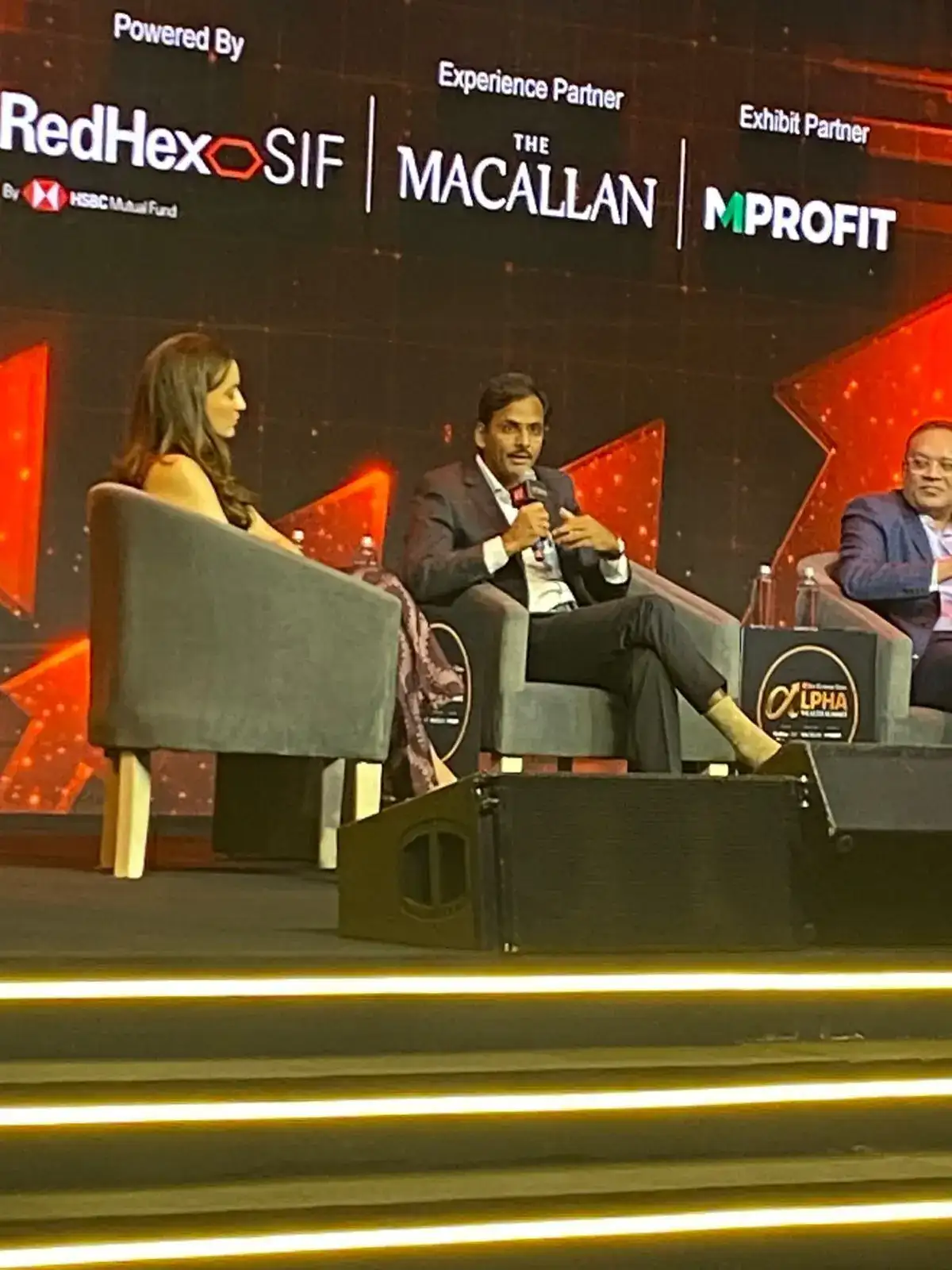
India's recent stock market underperformance should not distract investors from the country's strong long-term track record, according to veteran investor Vikas Khemani. Speaking at the ET Alpha Wealth Summit during a panel discussion, Khemani said the current pessimism surrounding Indian equities is largely a reflection of recency bias rather than a deterioration in the country's structural investment case.
"India has delivered far better returns in the last 5, 10 or even 15 years within the emerging market space. It's just that in the last one-and-a-half years, we have underperformed. It is just recency bias regarding the mundane mood surrounding the Indian market," Khemani said.
His comments come at a time when Indian equities have faced mounting headwinds. The Nifty has struggled over the past year and is down about 10% amid slowing corporate earnings growth, elevated crude oil prices, persistent foreign investor outflows and concerns over global trade.
Investor sentiment has also been weighed down by the conflict in West Asia, which pushed oil prices sharply higher and raised fears of inflationary pressures. At the same time, renewed tariff-related uncertainty in global markets and a shift of capital toward artificial intelligence-linked opportunities in markets such as Taiwan and South Korea have reduced foreign investor appetite for India.
The result has been a period of relative underperformance for Indian equities after years of strong returns.
However, Khemani argued that investors should not lose sight of the bigger picture. Over longer time horizons, India has consistently outperformed most major emerging markets, supported by strong domestic demand, improving corporate balance sheets, financialisation of household savings and a growing formal economy.
His remarks also come amid an ongoing debate over whether generating alpha has become more difficult as markets become more efficient and information becomes widely available.
Also read: ET Alpha Wealth Summit: S Naren shares blueprint for investing in a boring market
While near-term challenges remain, Khemani's message was that investors should avoid extrapolating recent market weakness into a long-term trend and instead focus on India's structural growth opportunity. For long-term investors, he suggested, temporary periods of underperformance are often less important than the broader earnings and economic growth trajectory that has historically driven returns.