
Volatility has been the defining theme for Indian equities over the past three years, with investors grappling with elections, tariff concerns, and geopolitical tensions.
Yet, MoneyGrow PMS has managed to outperform its benchmark by staying focused on businesses with strong earnings growth potential rather than attempting to time the market.
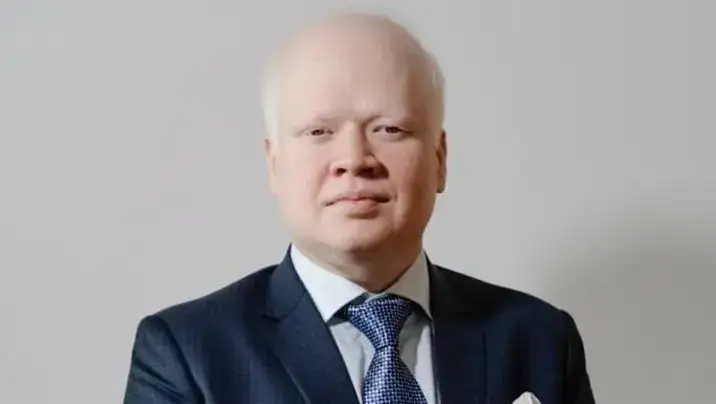
In this edition of ETMarkets PMS Talk, Manish Gupta, Managing Director, and Viraj Mahadevia, Portfolio Manager & Partner at MoneyGrow Asset, discuss their investment philosophy, the opportunities they see in financials, manufacturing and capital market plays, and why they remain optimistic about India's long-term growth story despite global uncertainties. Edited Excerpts –
Q) Your MoneyGrow PMS has completed 3 years and has outperformed the benchmark over last 1 year as well as since inception. What are the biggest drivers behind the performance?
A) Last 3 years have indeed been extremely volatile with Indian general elections, US tariffs and Middle East geopolitical situation. We have been able to outperform the benchmarks as we have focused on investing in domestic-oriented businesses that have grown Revenues/Earnings consistently, and very focussed on valuations. Our investee companies have resilient business models and have been able to pass-on the increase in input prices.
In most cases, we have seen that our investments have demonstrated a significantly higher EPS growth in the last 3 years (compared to their share price appreciation). We continue to see a lot of room for EPS growth for our portfolio companies and expect the share price appreciation to continue over the next 2-3 years.
We have largely remain fully invested in the last 3 years and our focus has been on identifying companies with strong EPS growth outlook, as opposed to trying to time the market. This strategy has helped us outperform the benchmarks.
Q) As a fund house, you have very high allocation to Small Caps: About 96% allocation in Small Midcap PMS and 31% allocation in Large Midcap PMS. In a volatile market environment, how do you balance growth opportunities with risk management?
A) Risk can be defined in two ways: (1) Volatility, and (2) Loss of capital invested. Many finance textbooks, especially Quant Finance oriented literature, defines risk as Volatility and measure it using Standard Deviation as a parameter. If we were to also define risk as volatility, our Small Midcap PMS journey has been quite volatile. In our quest to find winners with high EPS growth (30-40% EPS growth), we have seen a bumpy ride, especially around Apr 25 (US Tariff announcements), Mar 26 (Middle East war), but the stocks have bounced back as market realized that the direct impact of such macro developments is very limited. The volatility has been a result more of risk-off and sentiment rather than direct meaningful impact on the underlying businesses.
We focus on defining risk as “Loss of Capital invested”. We keep assessing the fundamental performance of our portfolio companies and remain reasonably confident. As such, we were able to hold them with conviction through this volatility.
Q) Could you share the emerging sectors that you believe could create the next generation of wealth creators in India?
A) We feel very positive on India’s growth potential. The fall in markets as well as INR is largely because of outflow of foreign portfolio investors. As per our understanding, they have been sellers because of negative headline macro, excessive equity taxation (relative to other jurisdictions) and relatively lower EPS growth (relative to sectors/countries exposed to AI value chain).
As a fund house, we are bullish on financials, capital market themes, gold/rare earth mining plays, industrials (grid upgradation, stainless steel pipes, smart meters), recycling and discretionary consumption.
Q) The PMS follows a bottom-up, PE-style investing approach. What are the key indicators you track while identifying potential multi-bagger opportunities?
A) The main indicators we track are size of market opportunity, ability and integrity of management, revenue growth potential, operating leverage in the business and valuation. We assess each of these parameters very close. Some of these can be assessed objectively, while others are subjective. That is where our extensive experience of almost 20+ years each in capital market comes in handy!!
Q) Governance remains a major concern in the small-cap universe. How do you assess management quality and corporate governance before investing?
A) As you have rightly mentioned, governance is key. In our 4P framework, P1 refers to promoter quality and we give very high importance to it. It is very hard for minority investors to make money in a stock if the promoter’s ability or intention is sub-par. We do extensive reference checks for our portfolio companies. Also, we keep a close track of management commentary and evaluate their performance vis-à-vis their own historical commentary. We keep altering the portfolio weights of our companies dynamically as we absorb new information. Unfortunately, this part of the assessment remains quite subjective.
Q) Your investment framework highlights cash-flow generation and high RoCE businesses. In the current cycle, which sectors are best positioned on these parameters?
A) We see high ROCE potential in capital market plays, recycling, certain manufacturing plays that have good pricing power, and gold/rare earth mining plays. More than just focusing on absolute level of ROCE, we feel it is important to own companies that can deliver an expansion in ROCE. Many companies with very high ROCE have not delivered good returns in the market in the past 4-5 years e.g. paints or IT services companies.
Q) Given the current geopolitical situation and heavy selling by foreign institutional investors, which sectors/themes are currently under-owned by institutional investors, but could emerge as strong performers over the next 3-5 years?
A) We feel that financials, telecom, capital market plays, and manufacturing sectors to emerge as strong performers over the next 3-5 years. In particular, financials (especially private banks and select NBFCs) have seen heavy FII selling in the last 1-2 years. For instance, in the top 3 private banks, there has been a meaningful reduction of FII ownership in last 2 years by 20-30%.
We remain extremely constructive on the market as headline equity indices e.g. NIFTY 50, SENSEX 30 etc have all consolidated over the last 2 years and returns have been sub-par. Valuations have become reasonably attractive, and it is easier to find good opportunities as compared to two years ago.
(Disclaimer: Recommendations, suggestions, views, and opinions given by experts are their own. These do not represent the views of the Economic Times)