India's wealth landscape is undergoing a structural transformation, with the next wave of millionaires emerging from Tier II and Tier III cities, alongside the rapid rise of family offices and growing global diversification among affluent investors.
As wealth creation accelerates beyond the metros, client expectations are also evolving, driven by technology, AI-powered insights and demand for personalised financial advice.
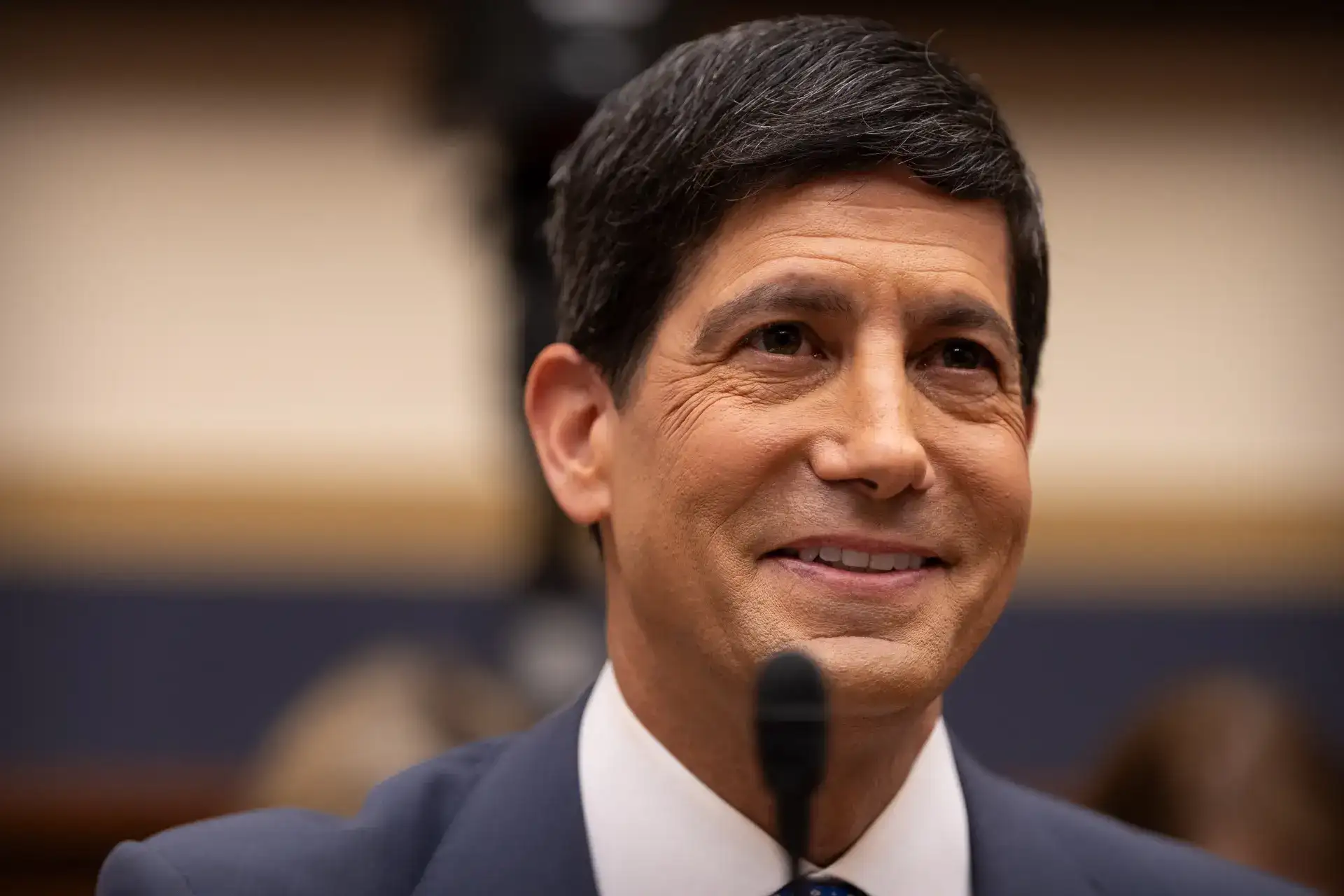
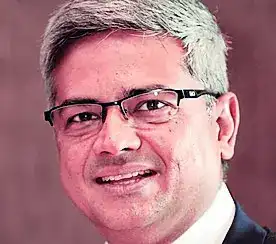
In an interaction with Kshitij Anand of ETMarkets, Sandeep Das, MD & CEO of Centrum Wealth, shares how regional wealth creation, cross-border investing, behavioural finance and alternatives are reshaping the future of wealth management, while explaining why trust and human judgement will continue to remain at the heart of the advisory business. Edited Excerpts –
Kshitij Anand: Thank you so much for joining me for this Meet & Greet series and this special interview on how the wealth management industry is shaping up. Over the past four to five years, we have seen significant transformation, whether it is technology or the advent of AI. How do you see these trends evolving over the next five years?
Sandeep Das: I think there are three major shifts happening in the wealth management industry over the last few years.
One is that the number of clients moving from affluent to high-net-worth is doubling. Similarly, the number of clients moving from high-net-worth to ultra-high-net-worth is also doubling. Very rapidly, over the last two to three years, you have seen the pace at which clients are getting wealthier. This is happening beyond the six metros, extending into Tier II and Tier III cities as well. So, you are seeing a much broader regional dispersion of wealth, and I believe this trend will continue.
Second, you are seeing a rise in the number of family offices. Until about two years ago, there were around 300 family offices. That number has grown significantly. These include both single-family and multi-family offices, bringing in stronger corporate governance, investment policies, and a more structured approach to how families manage their wealth. I believe this trend will continue as well.
Third, you are seeing a significant increase in cross-border wealth. There are two aspects to this. The first is that you are seeing a large number of NRIs returning to India or leading cross-border lives. For example, many professionals in the technology sector may be NRIs for a few years, become resident Indians for a year, and then move back to NRI status depending on their projects. You are also seeing many returning NRIs because of the growth in Global Capability Centres (GCCs). GCCs are employing a large number of people, and opportunities in India are increasing, which is encouraging NRIs to return.
Managing the finances of an NRI is complex because they have to file tax returns in multiple jurisdictions, including the countries where they are based and in India.
The second aspect is that resident Indian clients have traditionally concentrated most of their wealth in India. However, over the last two years, you have seen greater geographical diversification of wealth into both developed and emerging markets through the Liberalised Remittance Scheme (LRS) and other available avenues. I believe this trend will also continue over the next few years.
So, these are the three major developments that I see unfolding in the wealth management industry.
Kshitij Anand: Do you feel that the LRS limit might be increased in the near future, given the growing curiosity among Indian investors? Many investors have already exhausted their limits, especially through mutual fund investments.
Sandeep Das: I do not think so. The short answer is no.
Kshitij Anand: Perhaps the pressure on the rupee is one of the reasons?
Sandeep Das: Yes. At the moment, I do not think the LRS limits will be increased in the near term or short term.
Kshitij Anand: The rupee is already under pressure.
Sandeep Das: Yes.
Kshitij Anand: Also, what differentiates, let's say, Centrum Wealth's advisory philosophy from the product-led wealth models that have traditionally dominated the industry?
Sandeep Das: If you look at it, one differentiator is our longevity in the business. We have been around for more than 12 years. When you have longevity, you have already gone through the early pangs of messiness and chaos in the firm's evolution. We have moved past that stage. We are now over 12 years old. We have also delivered steady growth and, third, we are profitable. This allows us to think very long term and remain client-first.
I will give you some examples. It is easy to say "client first" and "long term," but if you look at the proof points—12-plus years of longevity, steady growth, and profitability—they give you confidence that these are the principles we pursue for our customers.
Second, our RM scorecard—the way a Relationship Manager is measured and compensated—is completely agnostic to any product, whether it is an in-house product, an external product, or any other product. If an RM generates 100% of his revenue and AUM through a single product, there is no problem. Of course, we will try to help him cross-sell, introduce clients to our full range of offerings, and showcase all our products. But we do not have any gating mechanism or force our RMs to push a particular product.
I think there are two important aspects here. One is that you have to address the "rice bowl" issue—how the RM is incentivised. We have addressed that, so there is no conflict. It is truly client first.
The second is the culture and the tone of the organisation—what you stand for and what you do not stand for. Longevity and profitability give you the confidence to set that tone and build that culture. You can clearly say, "This practice is not acceptable. Please do not engage in it." People see that. Similarly, we celebrate and showcase those who follow the values we appreciate.
Kshitij Anand: No, absolutely. I think that is the right way to push talent to a higher level because, normally, we have seen biases creep in, especially product bias, which is what I am referring to. That is what eventually impacts customer sentiment as well.
But let's say we are now in 2026, starting a new year and a new phase. People's expectations are also changing very rapidly because, as you rightly pointed out, a lot of wealth is being created in Tier II and Tier III cities, and many new millionaires are emerging. I am sure their mindset, the way they think, and the way they approach wealth creation are very different from the traditional way their parents created wealth. How are you dealing with that?
Sandeep Das: In the portfolio of clients that a wealth manager handles, there are generally three cohorts of clients. Let me explain these three cohorts.
The first is the traditional first-generation client, where the patriarch or matriarch continues to make all the financial decisions.
The second is the new wealth segment. These are people such as IIT graduates who have started startups, experienced liquidity events, and suddenly become very wealthy.
The third comprises people who lead cross-border lives—NRIs, resident Indians investing overseas, returning NRIs, and NRIs with increasing investment interests in India.
So, within a single wealth manager's portfolio, there will typically be all three types of clients. The wealth manager has to understand which cohort he is dealing with and adjust his approach accordingly. The first step is awareness—recognising the type of client and preparing accordingly. That means understanding what the client needs and deciding which specialists from the team should join the meeting.
For example, let us imagine I am meeting an NRI client as a wealth manager. The first thing I would look at is which country the NRI belongs to, because a lot depends on the regulatory framework...
Kshitij Anand: Is it the US, Canada, or Australia?
Sandeep Das: Yes. Let us say he is from the US because the most recent and the wealthiest Indian diaspora is in the US. However, managing investments for a US-based individual is quite complicated. So, I would take along a tax advisory expert, a succession planning specialist, and an investment solutions or investment specialist. The four of us would meet the client to address his requirements.
Now, let us say I am meeting a traditional first-generation patriarch who has created the family's wealth. Firstly, I would have done enough research or managed him for a while, so I would have sufficient knowledge and keep myself updated. I know what he likes, what he does not like, and the kind of people whose opinions he values. Accordingly, I would bring the appropriate specialists from my team.
I would also include a succession planning and estate planning expert because that is a conversation many such clients prefer to postpone. It is a behavioural bias. At least within this cohort of clients, they often defer discussions around succession planning. However, it is important for us to include the succession planning expert in the conversation so they can understand the patriarch's or matriarch's intentions. We are not pushing the succession planning discussion; rather, we want our specialist to understand what the client wants so that we can revisit the topic at an appropriate time later.
Kshitij Anand: We have spoken about HNIs and ultra-HNIs. Has their profile evolved over the years? You have been in banking for, what, nearly three decades now. How has that profile changed, especially as we look at it in 2026?
Sandeep Das: Clients are much more aware today. It has become very democratic. A client in a Tier III city knows almost as much as a client in a Tier I city. So, awareness has increased significantly in terms of information and expectations.
Clients are also using AI to analyse their portfolios and gain insights. Therefore, when you meet them, you know they are equally well prepared. As a result, discussions become much more value-added. Clients are also more demanding. They may say, "I want this consolidated report of my investments. By when can you provide it?" The longer you take, the more impatient they become. At the same time, you need sufficient time to ensure the report is accurate. So, the challenge is to strike the right balance between timeliness and accuracy.
On your question about fund managers, we also have our own fund managers because we manufacture our own PMS products. Therefore, when they invest in mid-cap and small-cap stocks, they also evaluate factors such as corporate governance, succession planning, key-man risk, and similar considerations.
Kshitij Anand: Personalisation has really become important. One could argue that it all started when Siri was introduced. That was Apple's key selling point—you could simply say, "Hi, Siri," and it would respond. If you wanted to organise your tasks, Siri could help you do that. From that point onwards, personalisation really gained momentum.
Whether you are an HNI, an ultra-HNI, or just an ordinary individual, people now prefer personalised experiences. It is similar to what you experience at a five-star hotel. You stay there for a day, and they greet you by saying, "Hello, Mr. Das. How are you? Your dinner is ready," and whatever your preferences are, they are already taken care of. So, how is this trend shaping the wealth management industry, especially now that people expect personalisation everywhere?
Sandeep Das: That's true. There are two aspects to personalisation.
The first is the personalisation of portfolios. We have something called model portfolios, which we use for both our non-discretionary PMS business and our third-party products business. Based on my interactions with Kshitij, I may know that he does not like certain kinds of products and prefers others. That understanding is part of my personalisation.
However, Kshitij also pays me for my high-conviction advice. So, there may be times when I disagree with him. He may not like certain products, but I may believe they are important for his portfolio's asset allocation. My role as a Relationship Manager is that of a relationship steward or portfolio architect. I am in the business of crafting portfolios. Therefore, there will be occasions when I have to disagree rather than simply agree with everything the client says. He may be unhappy at that moment, but later he will respect the advice. That is the kind of portfolio personalisation we strive to deliver.
The second aspect is personalisation in client engagement. Engagement happens much more frequently than portfolio construction. A portfolio review may happen once a month at best, whereas engagement is an ongoing, day-to-day process.
AI acts as a co-pilot in this process. Today, AI can provide information such as the fact that Kshitij runs a company, has four independent directors and two executive directors on his board, is a member of the Delhi Gymkhana Club and the Rotary Club of Vasant Kunj, and identify his broader circle of influence and interests. AI can gather a great deal of such information.
We then use that information effectively. We equip our Relationship Managers with these insights. They may know some of it already, but AI helps them build a more complete picture.
Our repository for storing client information is Salesforce. So, if one RM moves on or a product specialist joins a client meeting, they can easily look up Kshitij's profile and access the relevant information.
So, we see AI as a co-pilot, not as the decision-maker. Portfolio decisions are ultimately made by the team supporting the Relationship Manager.
Kshitij Anand: Even if, let's say, you assume a situation where you come fully prepared for a meeting and know that these are the best products for the client, there are often behavioural biases that creep in. The client might say, "Arre nahi yaar, yeh theek nahi lag raha mujhe," or, "I don't feel comfortable with this," even though it may be the best solution for them. How are you training your Relationship Managers to deal with these kinds of behavioural biases?
Sandeep Das: I think all Relationship Managers need to go through a behavioural finance programme. We try to bring in certain aspects of behavioural finance. There are many behavioural biases, and it is not practical to immerse every RM in all of them at once. Instead, we focus on the ones that are most relevant.
For example, over the next three months, we may cover recency bias, confirmation bias, geographic bias, concentration bias, and so on. Then, in the following quarter, we move on to another set of biases.
Now, how do you address these with customers? The customer is just like me. I also think with recency bias—it affects everyone. So, we train our people on how to counter such biases.
The most difficult one to deal with is concentration bias. A client's wealth may be concentrated in promoter shares, inherited real estate, or other emotionally significant assets. They are emotionally attached to promoter shares and emotionally attached to real estate. But you have to remember that everything is not just about money; it is also about emotions.
Sometimes, you have to cut them some slack and acknowledge that these assets are close to the client's heart. For example, my father bought ITC shares for me when I was seven years old. I am emotionally attached to those shares. So, unless something dramatic happens, I would not want anyone to do anything with them. That emotional attachment matters.
Similarly, you mentioned that you have been banking with one particular bank for many years. Some of us simply do not change certain things. That is also a form of behavioural bias.
The third is geographic bias, which is something we have been working on. Clients have gradually realised that if 100% of their financial wealth is in India, their business is in India, and their real estate is also in India, then they are not truly diversified. Therefore, we encourage diversification across both emerging and developed markets.
Also, many clients' children have gone abroad for higher education. Once clients begin remitting money overseas for education and maintenance, they often start thinking, "Why don't I also build an investment portfolio for them overseas?" That trend has definitely picked up.
Kshitij Anand: We spoke about family offices earlier in the conversation, and their numbers have increased significantly over the past four to five years. Many large business families have established their own family offices to manage their wealth. How has that space evolved?
Sandeep Das: Today, you have both single-family offices and multi-family offices. The larger business families typically have their own dedicated family offices, and they represent another important client segment for us.
High-net-worth individuals, ultra-high-net-worth individuals, corporate treasuries, and family offices are all distinct client segments, each with different requirements.
When you are dealing with a family office, it has to be a team approach. You bring together all the specialists from your organisation because this is not a situation where one Relationship Manager alone can engage with the family. The entire team interacts with the family office.
Family offices have diverse requirements and often work with multiple wealth managers. For example, one wealth manager may handle succession planning and trusts, another may manage cross-border wealth, while another looks after onshore investments. Therefore, you need to clearly understand the role you are expected to play.
It is also perfectly reasonable for family offices to diversify their relationships. A single-family office will typically work with at least three wealth managers, while a multi-family office will generally have at least two.
Our objective is to gradually increase our share of the client's wallet through thought leadership and continuous engagement. We lead with high-conviction ideas because family offices value quality information and differentiated investment views. If you consistently provide those through a strong team, you naturally earn a larger share of the relationship.
Kshitij Anand: Now that we are talking about family offices, HNIs, and ultra-HNIs, we cannot leave alternatives out of the discussion. In fact, alternatives have evolved from being niche products to becoming much more mainstream. What role do alternatives such as private credit, REITs, and InvITs play in client portfolios today?
Sandeep Das: Times have changed. Today, alternatives are a strategic allocation within a client's portfolio. Earlier, they may have been treated as satellite investments, but now they are a core strategic allocation.
As we speak today, private credit is definitely an important part of a client's portfolio because it is not highly correlated with listed equities. Therefore, having an allocation to private credit makes sense.
Clients should also have some exposure to private equity. Of course, every customer is different, so you cannot prescribe the same asset allocation for everyone.
That said, I believe private credit should be part of every client's portfolio. Yes, it comes with a longer lock-in period and lower liquidity. Therefore, the allocation has to be balanced with other investments in the portfolio that provide liquidity and do not have lock-in periods. But despite those characteristics, it deserves a place in the portfolio.
Kshitij Anand: But there is an appetite for it now?
Sandeep Das: Yes, there is. Because it is inversely related to listed equities, it plays a different role. It is not directly correlated with listed markets, so it operates in a different space. The same applies to private equity.
So, private credit and private equity are doing well in the alternatives space. At the same time, investors should continue to maintain exposure to gold and silver. Ideally, you should always have around 5-7% of your portfolio allocated to gold and silver, rather than buying gold only after prices have already risen significantly. Whenever there is a correction, it is a good opportunity to accumulate and ensure that you maintain at least a 5% allocation to gold in your portfolio.
Kshitij Anand: Gold has at least come off its highs, so there is some respite. We do not want gold to glitter that much.
But we have talked about many things, and one area we must touch upon is global investing. Interest in international investing has picked up considerably because India has, to some extent, underperformed, while several global markets have attracted attention recently—whether it is Taiwan, South Korea, or, of course, the US, which has continued to perform well.
How is investor interest evolving? I am sure you must be receiving a lot of queries about international investing, whether it is investing in Nvidia, the Magnificent Seven, or whatever people choose to call them. How are you addressing that demand?
Sandeep Das: As I mentioned earlier, Indian wealth has traditionally been concentrated in India, whether in financial assets, businesses, or real estate. Therefore, it is very important for clients to diversify.
Diversification should include both emerging markets, such as Korea, and developed markets such as the US. (Japan, of course, is not an emerging market.) There are several investment instruments available that help clients achieve this.
Naturally, investors have to stay within the prescribed regulatory limits. These limits do not get carried forward, so investors need to be disciplined and invest every year rather than waiting until the end of March before the limits expire. It should be approached much like an SIP. Just as you invest regularly through an SIP, you should also invest regularly in global funds.
There are still a few mutual funds open for offshore investments, and there are several investment structures available through GIFT City. We are helping clients explore these GIFT City structures to invest in both developed and emerging markets.
Kshitij Anand: So, do stocks or ETFs receive more attention?
Sandeep Das: It depends on the client's risk appetite.
For the core allocation, ETFs are generally preferred. However, if a client has the interest and the risk appetite, then investing in individual stocks also becomes an option.
One thing to remember is that our time zones are completely different. By the time markets in India have closed and people have gone home, Nvidia may start making news in the US. Therefore, clients need an execution mechanism that allows them to participate in those opportunities, even late at night. They need both the risk appetite for individual stocks and the execution platform, which we can help provide.
Kshitij Anand: Lastly, how is technology changing the wealth management industry?
Sandeep Das: Rapidly.
Technology and AI are now a given. However, AI should always be used as a co-pilot.
The key is to ensure that everyone—both colleagues and clients—is comfortable adopting technology. For example, if a client asks for a physical report every few days, we can certainly send it, but we will also email it so they do not have to wait two or three days before seeing the information.
Similarly, our colleagues are encouraged to use CRM systems such as Salesforce, where there is a comprehensive repository of client information.
We also have training videos for Relationship Managers to help them improve both IQ and EQ. These cover product knowledge as well as how to manage more complex and elevated client conversations.
Technology and AI are absolutely essential. We have migrated our core technology platform to Wealth Spectrum. Salesforce is already in place, and we continue to invest significantly in technology. We are implementing several AI initiatives, always within the regulatory framework, focusing on what enhances either the client experience or the employee experience.
For example, AI is extensively used to reduce the administrative workload of both operations teams and Relationship Managers. It is also used for portfolio construction and internal product due diligence. For instance, if a fund manager needs to analyse the quarterly results of 500 companies, a task that earlier took around 14 days can now be completed in less than a day. We use AI to improve efficiency across the organisation.
Kshitij Anand: One trend that seems to be shaping the wealth management industry—I am sure there are ten different trends—but what is that one trend that is right at the top of your mind?
Sandeep Das: I think it is the regional dispersion of wealth.
You would be amazed by the level of wealth creation taking place in Tier III and Tier IV cities. When you travel to meet these clients, you often find that while they own homes in Mumbai or Delhi, their businesses or ancestral homes are located in smaller towns. Reaching those places is not always easy—you may have to fly to one city and then travel overnight by train or drive for several hours.
Yet, their aspirations are exactly the same. They are highly educated, travel frequently to Mumbai and Delhi, and, in many cases, you may meet them more often in your Mumbai office than at their hometown in, say, Kishangarh.
However, there is an important regional nuance. The way you interact with clients in Rajasthan may be quite different from how you interact with clients in Coimbatore. You have to understand those regional differences.
Ultimately, our business is a combination of IQ and EQ. Products help you acquire clients, but relationships are built on trust. That is why we travel to meet them. To build trust and long-term relationships, you have to understand regional nuances.
Similarly, as I mentioned earlier, there are different client cohorts. Suppose the third generation of a business family has just returned from studying in the US after four years. They will naturally have a different perspective. You have to manage both generations separately and align their financial aspirations accordingly.
(Disclaimer: Recommendations, suggestions, views, and opinions given by experts are their own. These do not represent the views of the Economic Times)