

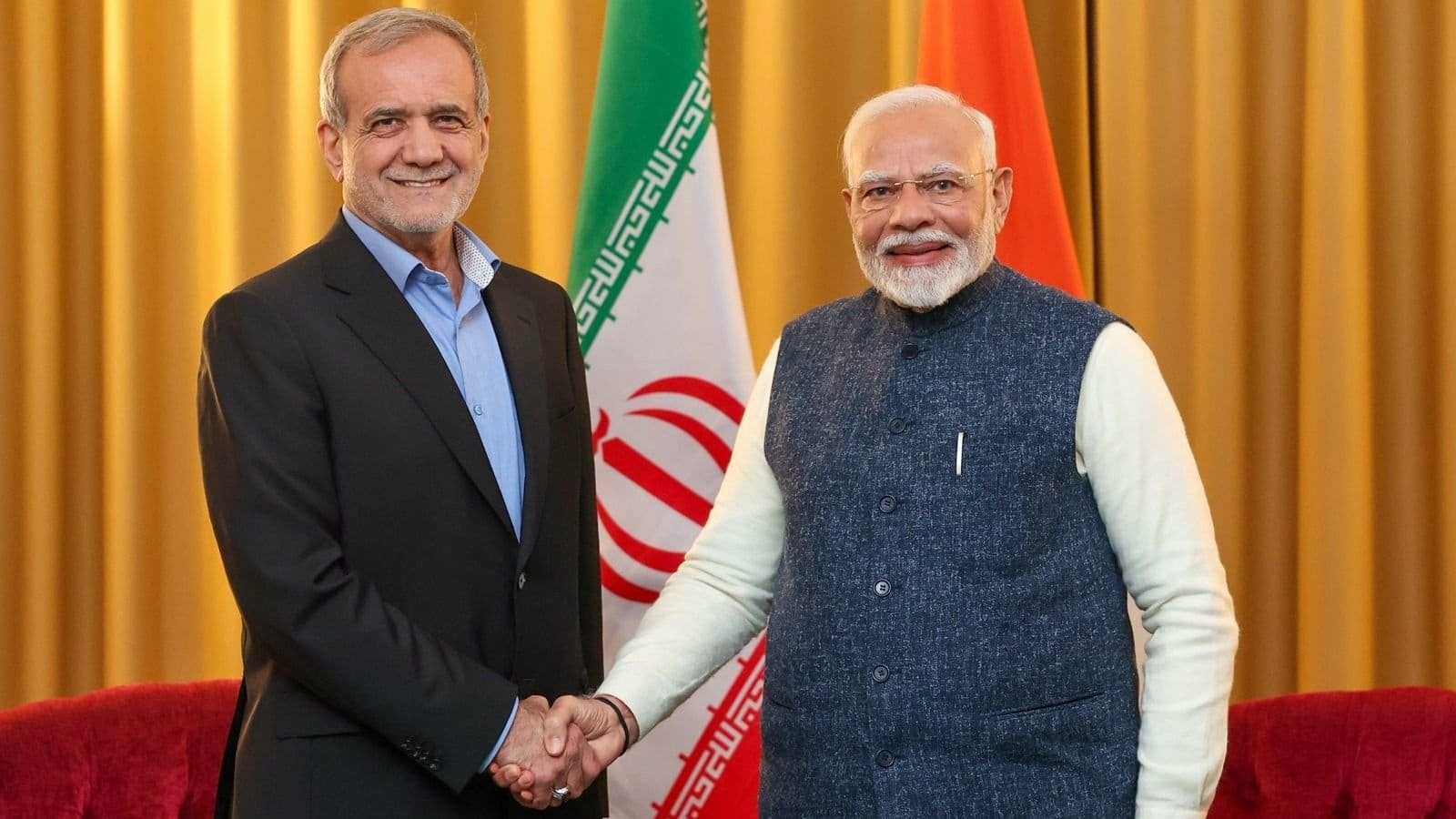
Prime Minister Narendra Modi said he spoke to Iranian President Masoud Pezeshkian (Archive Photo)
AS the war in West Asia entered its third week with no signs of a let-up, Prime Minister Narendra Modi spoke to President of Iran Masoud Pezeshkian Saturday and flagged growing concerns over attacks on “critical infrastructure” in the region and the importance of safeguarding freedom of navigation.
Both these elements are crucial – “critical infrastructure” is a reference to the attacks on oil and gas facilities in the region and freedom of navigation alludes to the Strait of Hormuz currently under Iranian chokehold.
This is Modi’s second phone conversation with Pezeshkian since the war broke out on February 28, when the US and Israel attacked Iran. Since then Tehran has attacked Israel and US bases and personnel in the Gulf Arab countries.
After the phone conversation, PM Modi said on X, “Spoke with President Dr. Masoud Pezeshkian and conveyed Eid and Nowruz greetings. We expressed hope that this festive season brings peace, stability and prosperity to West Asia.”
“Condemned attacks on critical infrastructure in the region, which threaten regional stability and disrupt global supply chains. Reiterated the importance of safeguarding freedom of navigation and ensuring that shipping lanes remain open and secure.”
Earlier this week, the Ministry of External Affairs had called attacks against energy installations in the region “deeply disturbing” and “unacceptable.” This was after Iran intensified its attacks on oil and natural gas facilities in the Gulf Thursday. The strikes were in retaliation for an Israeli attack on a key Iranian gas field.
India has been engaged with Iran at the diplomatic level for the safe passage of Indian ships through the Strait of Hormuz, which helped its two LPG tankers — Shivalik and Nanda Devi —to transit the strait. It currently has 22 merchant vessels stuck in the Persian Gulf, and a majority of those are oil and gas tankers.
Story continues below this ad
“Appreciated Iran’s continued support for the safety and security of Indian nationals in Iran,” Modi said, after his call with the Iranian President. There were about 9,000 Indians in Iran, before the war started. The Indian Embassy in Iran has facilitated the movement of 913 Indian nationals from Iran to neighbouring countries, including 793 to Armenia and 120 to Azerbaijan. All 284 Indian pilgrims from Iran have returned to India safely, officials have said.
In his first conversation on March 12 with Pezeshkian since the war began, Modi had discussed the “serious situation” in the region and expressed “deep concern” over the escalation of tension and the loss of civilian lives as well as damage to civilian infrastructure. He had urged for dialogue and diplomacy and had raised concerns over security of Indian nationals and the movement of maritime traffic.
External Affairs minister S Jaishankar has spoken to Iranian Foreign Minister Seyed Abbas Araghchi four times since the US and Israel attacked Iran.
So far, Prime Minister has personally spoken to: President of UAE Mohamed bin Zayed al Nahyan; Amir of Qatar Tamim bin Hamad bin Khalifa Al Thani; Crown Prince of Saudi Arabia Mohammed bin Salman; Crown Prince of Kuwait Sabah Al-Khalid Al-Sabah; King of Bahrain Hamad Bin Isa Al Khalifa; Sultan of Oman Haitham bin Tariq Al Said; King of Jordan Abdullah II and Prime Minister of Israel Benjamin Netanyahu. He condemned attacks by Iran on these countries.
Story continues below this ad
These conversations frame the diplomatic tightrope that Delhi has been navigating since the war started. Dependent on Israel for defence supplies and with a 1-crore diaspora in the Gulf, it’s drawing on its strategic partnerships with many Gulf countries and historical ties with Iran to secure its interests in the region.
Stay updated with the latest – Click here to follow us on Instagram
© The Indian Express Pvt Ltd
