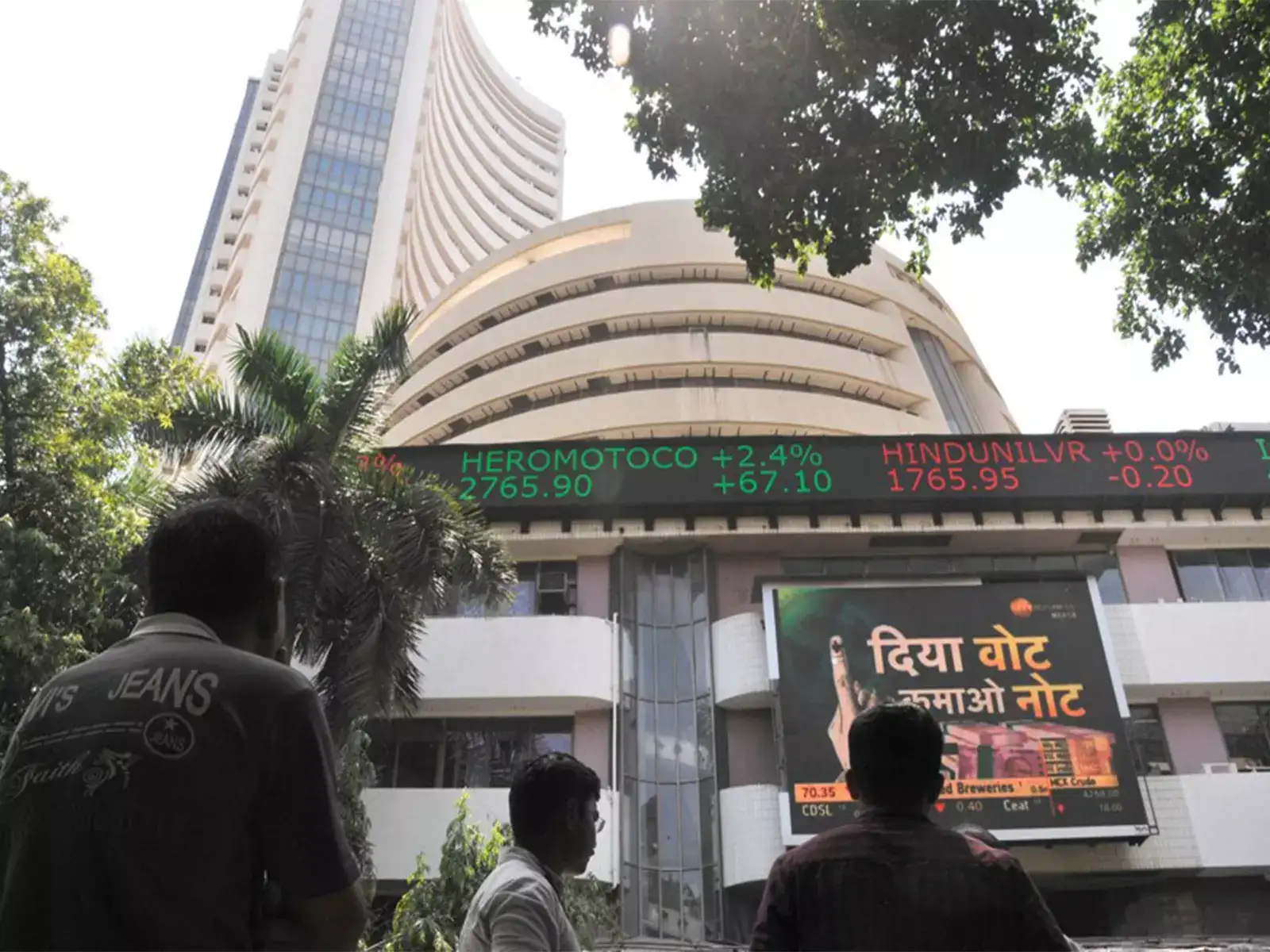

Mumbai: Foreign investors' derivatives bets continue to signal caution on Indian equities despite a slowdown in their cash-market selling, as uncertainty around the fragile US-Iran peace deal, a weak rupee and more attractive opportunities in other Asian markets keep sentiment subdued.
The Nifty gained 1.65% last week. However, the long-short ratio of foreign portfolio investors' positions in Nifty futures-a measure of bullish bets relative to bearish ones-stood at 12.95% on Friday. While the increase in the ratio from 8.1% two weeks earlier shows some reduction in short positions, the reading remains far too high to conclude that foreigners have turned bullish.
In the cash market, foreign investors were net buyers in four of the five trading sessions last week, purchasing shares worth a net ₹7,778 crore.
"The long-short ratio has improved marginally due to some short covering alongside fresh long additions by FIIs following the US-Iran peace deal. However, the benchmark Nifty index has not shown an over-optimistic reaction to the peace deal," said Vipin Kumar, AVP- derivatives and technical research at Globe Capital Market.
Analysts say equities yet to become attractive relative to Asian peers; weak rupee, Iran deal uncertainty also weigh
Iran said it was once again closing the vital Strait of Hormuz on Saturday over Israeli attacks in Lebanon ahead of the weekend negotiations between Washington and Tehran to end the West Asia conflict, underscoring the fragility of the talks.
Analysts said Indian equities are yet to become compelling enough for overseas investors.
"While crude has been correcting, levels of $80 are still high. A dip to $70 or pre-war levels can be a tailwind driving covering from funds that are running short positions in India," said Sriram Velayudhan, senior vice president, IIFL Capital Services.
Velayudhan also said that other regions like South Korea and Taiwan have not yet seen a meaningful reversal or underperformance.
South Korea's Kospi is up 110% in 2026 so far, while Taiwan's Taiex Index has gained 58% this year, compared with the Nifty's decline of 8.2%.
Kumar said the rupee's underperformance against the dollar and the risk of higher inflation due to a below-average monsoon forecast remain key concerns.
Where will the markets go?
The Nifty ended the previous week at 24,013.10.
Kumar said the index continues to trade within a range, with positional resistance around the 24,600 level.
"A positive weekly breakout in the Nifty index above the 24600 spot level on a closing basis, alongside improvement in the concerned areas, might trigger significant short covering by FIIs," he said.
Velayudhan said that while the Nifty has been trading in a broad range of 23,800-24,500 for some time, it could test the upper end of that band in the near term.