
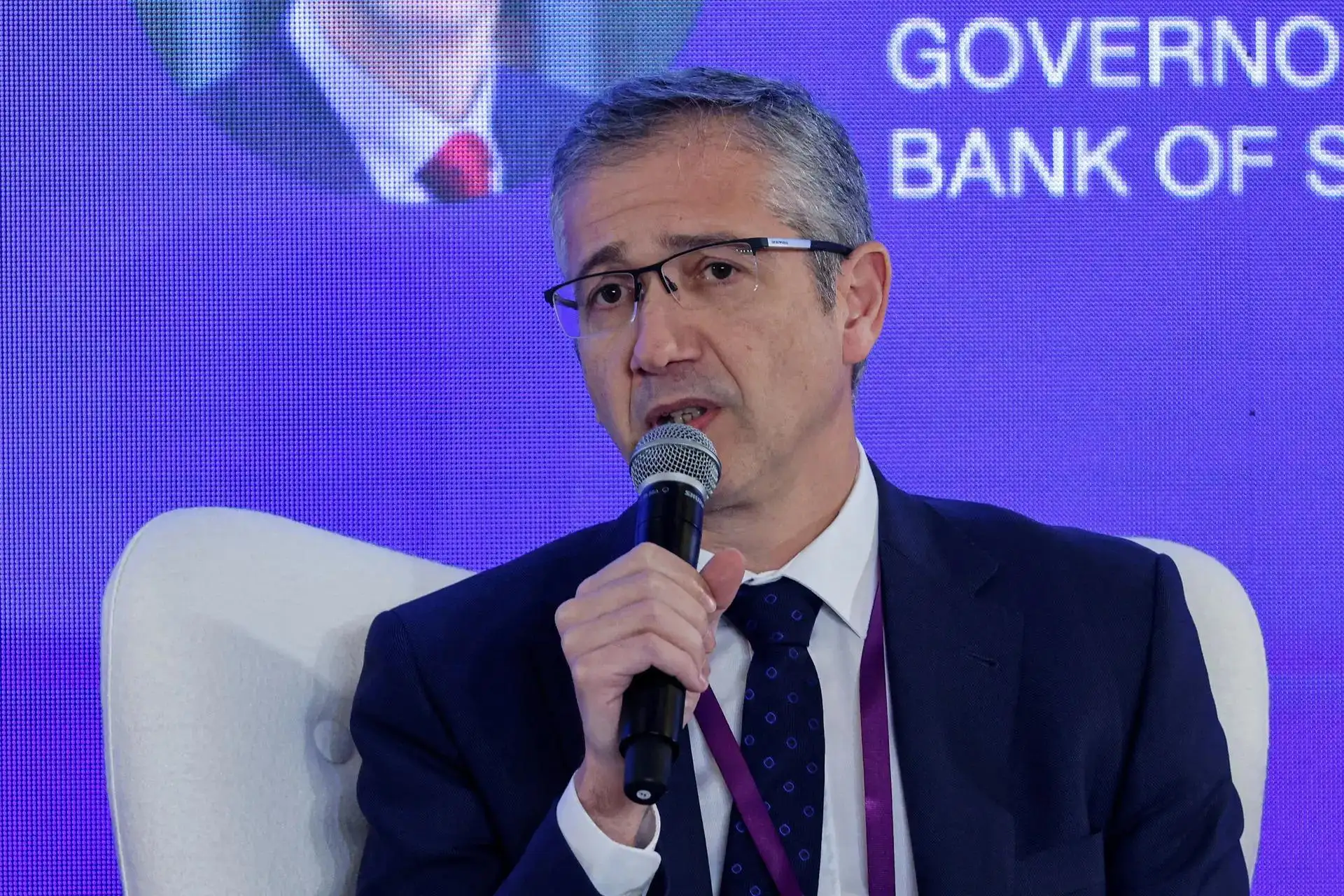
Central banks will remain central to managing future financial crises, but soaring public debt, large fiscal deficits, and rapid changes in financial markets could make their interventions harder and more politically controversial, Bank for International Settlements (BIS) chief Pablo Hernández de Cos said, according to a report by Reuters.
Speaking in Vienna, Hernández de Cos, one of the frontrunners to succeed Christine Lagarde as president of the European Central Bank next year, said the crises of the past two decades had highlighted the importance of swift central bank action in containing market turmoil, the report stated.
However, he warned that the environment surrounding the next financial crisis is changing rapidly. Public debt in many economies is close to levels last seen after World War Two, while government deficits remain elevated and fiscal pressures are expected to persist.
Also Read | US stocks: Nasdaq gains 1% at close as investors focus on earnings
According to Reuters, the BIS chief said this could make it increasingly difficult for central banks to determine whether market stress requires intervention or reflects legitimate investor concerns about the sustainability of government finances.
Bond markets add to concerns
The warning comes as global bond yields have risen sharply and the gap between French and German government bond yields has widened, reviving memories of the eurozone debt crisis.
Hernández de Cos also pointed to the growing role of non-bank financial institutions, including hedge funds, pension funds and asset managers, which have become major holders of government debt.
These institutions can support market liquidity during normal periods, but leverage and reliance on market-based funding can amplify stress during periods of severe volatility, he said.
The report stated that the March 2020 "dash for cash" in US Treasury markets and Britain's 2022 gilt market crisis showed the risks these institutions pose during market stress.
Also Read | Why is France at the centre of a bond market storm?
Lessons from UK gilt crisis
Hernández de Cos highlighted the Bank of England's response to the 2022 gilt market turmoil as an example of how central banks could use asset purchases as a crisis-management tool.
Limited purchase windows and amounts, combined with clear communication and governance arrangements, helped make the intervention effective.
However, he cautioned that such commitments could become less credible during a larger and more prolonged crisis, the report stated.
Technology could accelerate future crises
The speed at which financial crises develop could also increase because of online banking, social media, stablecoins and artificial intelligence.
Rapid online withdrawals and the instant spread of information, including misinformation, could force policymakers to respond much faster than in previous crises.
Hernández de Cos said stronger regulation of non-bank financial institutions and emerging financial technologies would be necessary to contain moral hazard and ensure that central banks retain effective crisis-management tools.
He also stressed that governments and regulators would have to play a greater role alongside central banks.
According to Reuters, he said international cooperation would remain critical, particularly during periods of acute financial stress, when central bank currency swap arrangements can help stabilise the global financial system.
(Disclaimer: This article is based on inputs from agencies. These do not represent the views of The Economic Times)