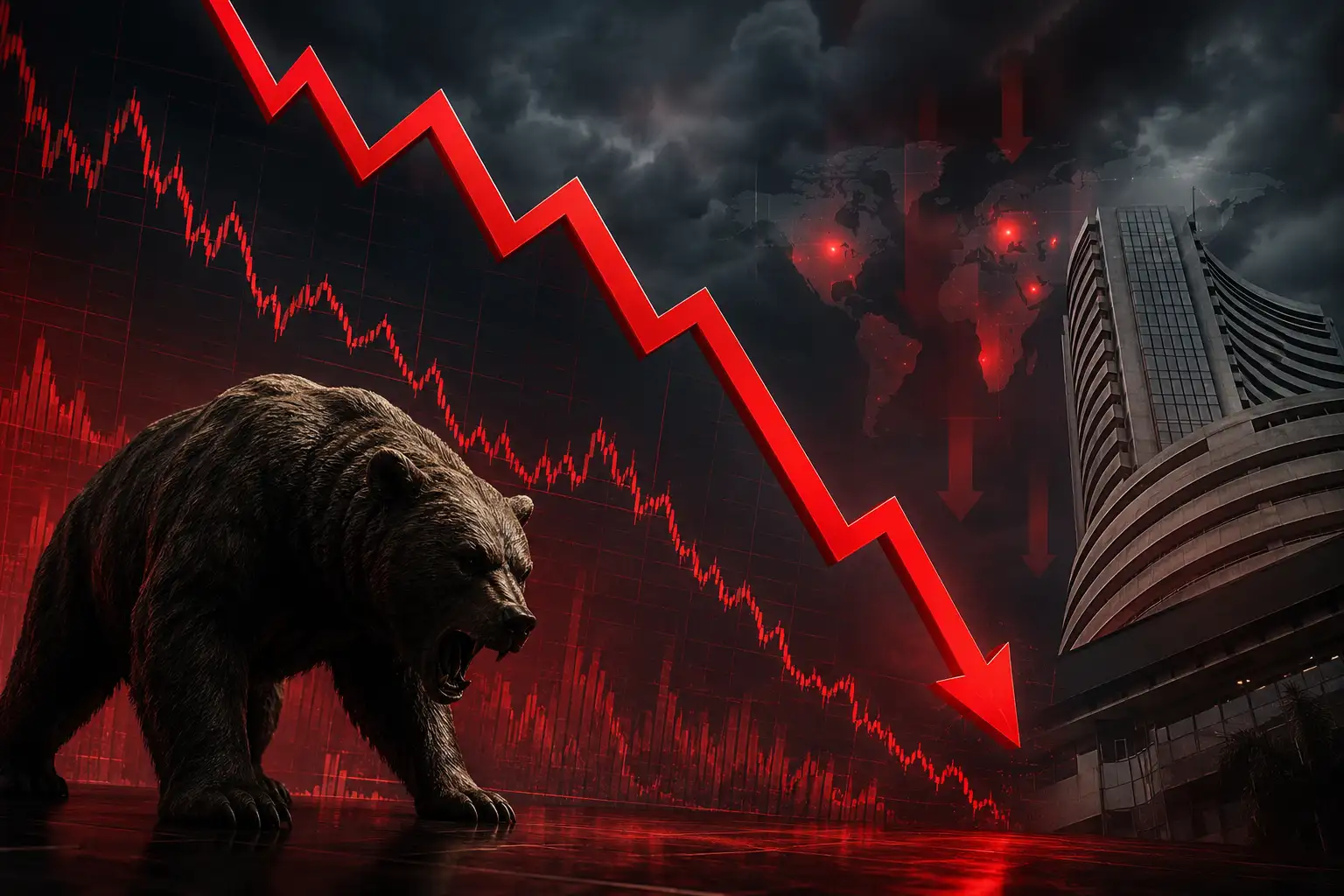
China and Hong Kong equities declined on Friday as a sharp rise in crude oil prices intensified inflation worries and weakened investor sentiment across Asian markets, as per a Reuters report.
China’s blue-chip CSI300 index and the Shanghai Composite Index fell 1.2% by the lunch break, while Hong Kong’s benchmark Hang Seng Index dropped 1.7%. The Hang Seng Tech Index also declined 1.7% as investors remained cautious amid rising geopolitical risks and concerns over market liquidity.
According to Reuters, Brent crude prices surged above $100 a barrel after U.S. President Donald Trump warned of major military action against Iran and its Houthi allies, raising concerns over potential disruptions in global energy supplies. The jump in oil prices has added pressure on regional markets by increasing fears of higher inflation and tighter monetary policy conditions.
Market sentiment was also impacted by concerns surrounding the upcoming listing of Chinese memory chip manufacturer CXMT. Investors are worried that the mega initial public offering could absorb liquidity from the equity market at a time when confidence remains fragile.
Despite broader weakness, semiconductor and aviation stocks gained during the session, while most other sectors traded lower. Technology shares received some support from expectations of continued policy backing for strategic industries.
Morgan Stanley analysts highlighted that investors remained cautious ahead of the July Politburo meeting and CXMT’s anticipated IPO, even as government-backed market stabilisation efforts have continued in recent weeks.
China’s securities regulator has pledged to strengthen risk management measures and build policy reserves to address potential global market volatility and cross-border financial risks, according to a meeting readout cited by Reuters.
Investors are closely watching next week’s Politburo meeting for signals on possible policy changes and additional stimulus measures. Analysts said weaker second-quarter economic data has increased expectations for further support from Beijing.
DBS analysts noted that recent economic indicators point towards the need for additional policy assistance to sustain growth momentum.
In broader markets, the Shenzhen index declined 1.96%, while the start-up focused ChiNext Composite index fell 1.78%. Shanghai’s technology-heavy STAR50 index bucked the trend, rising 0.27% by midday.
Rising energy costs, geopolitical uncertainty and concerns over liquidity pressures from new listings are expected to remain key factors influencing Chinese and Hong Kong equities in the near term.