
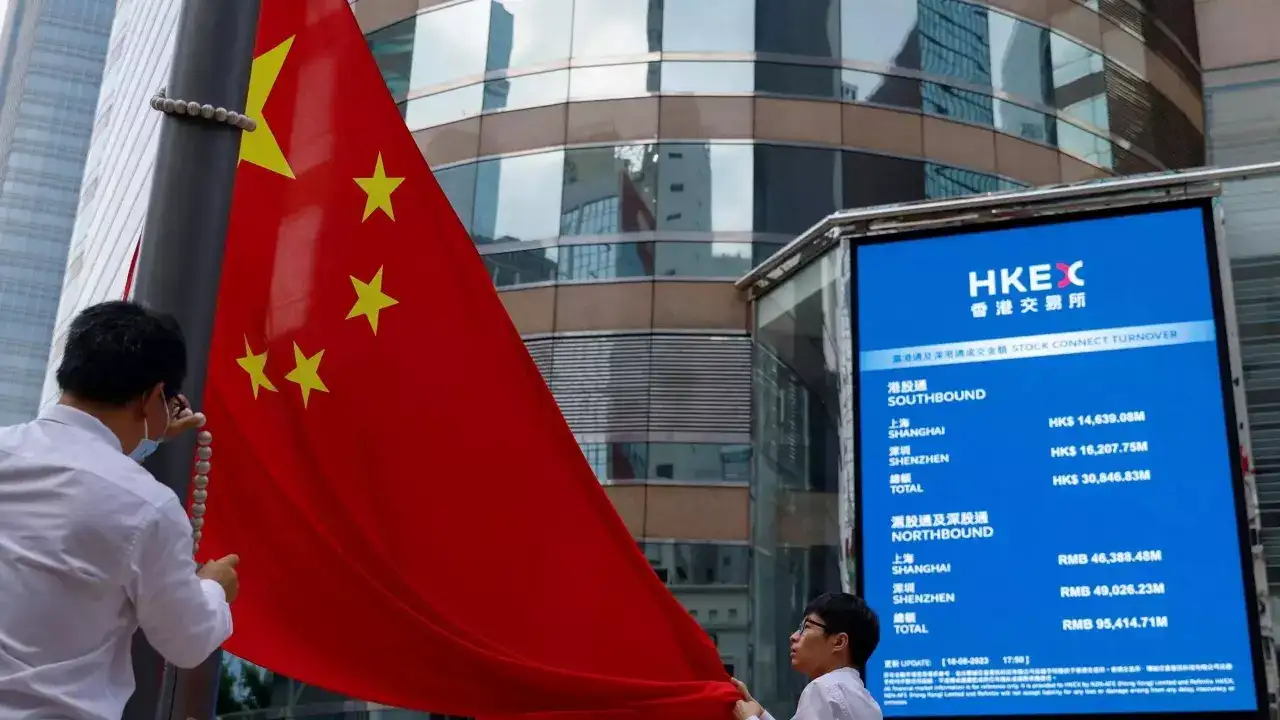
Chinese equities traded lower on Thursday, weighed down by continued selling in artificial intelligence and semiconductor stocks as investors rotated away from high-valued technology names. According to Reuters, defensive sectors such as banking, rare earths, and gold-related stocks helped cushion the broader market's decline.
At the midday break, the Shanghai Composite Index was down 0.2% at 3,859.69, while the blue-chip CSI300 Index also slipped 0.2%.
Technology-focused stocks remained under pressure, extending their recent correction. Reuters reported that the STAR 50 Index, which tracks China's technology companies, fell 4.1%, while the CSI Semiconductor Index tumbled 5.1%. The AI sector also declined 2.7%, reflecting continued profit booking in previously high-flying technology shares.
Despite the weakness in technology, several defensive and cyclical sectors posted gains. The banking sector rose 0.4%, while rare earth-related stocks advanced more than 2%. China's new energy vehicle sector gained 2.5%, providing support to the broader market.
Gold-linked shares also outperformed after bullion prices rallied. The CSI Shanghai-Shenzhen-Hong Kong Gold Industry Equity Index climbed nearly 3%, benefiting from increased investor demand for safe-haven assets, Reuters reported.
According to Reuters, analysts at Datong Securities said the recent decline in China's A-share market largely reflected a passive response to external risks. They noted that the correction had eased leverage-driven pressure and negative market sentiment, while technical indicators suggested that stocks were approaching oversold levels.
The analysts also pointed to supportive policy measures, noting that Chinese regulators have been holding frequent meetings to reassure markets, while listed companies have stepped up share buybacks and increased insider holdings. Reuters reported that these measures could help improve investor confidence over time.
In Hong Kong, markets outperformed their mainland counterparts. The Hang Seng Index rose 1.3% to 25,227.06, while the Hang Seng Tech Index gained 0.8%.
Tencent Holdings rebounded around 2% after suffering a decline of more than 7% in the previous trading session, contributing to the recovery in Hong Kong's technology sector.
Across Asia, equities generally moved higher after major U.S. technology companies reaffirmed significant capital expenditure plans, a development expected to support demand for semiconductor manufacturers across the region. However, Reuters noted that escalating conflict in the Middle East pushed oil prices to six-week highs, keeping investors cautious despite the positive sentiment surrounding the global technology sector.