

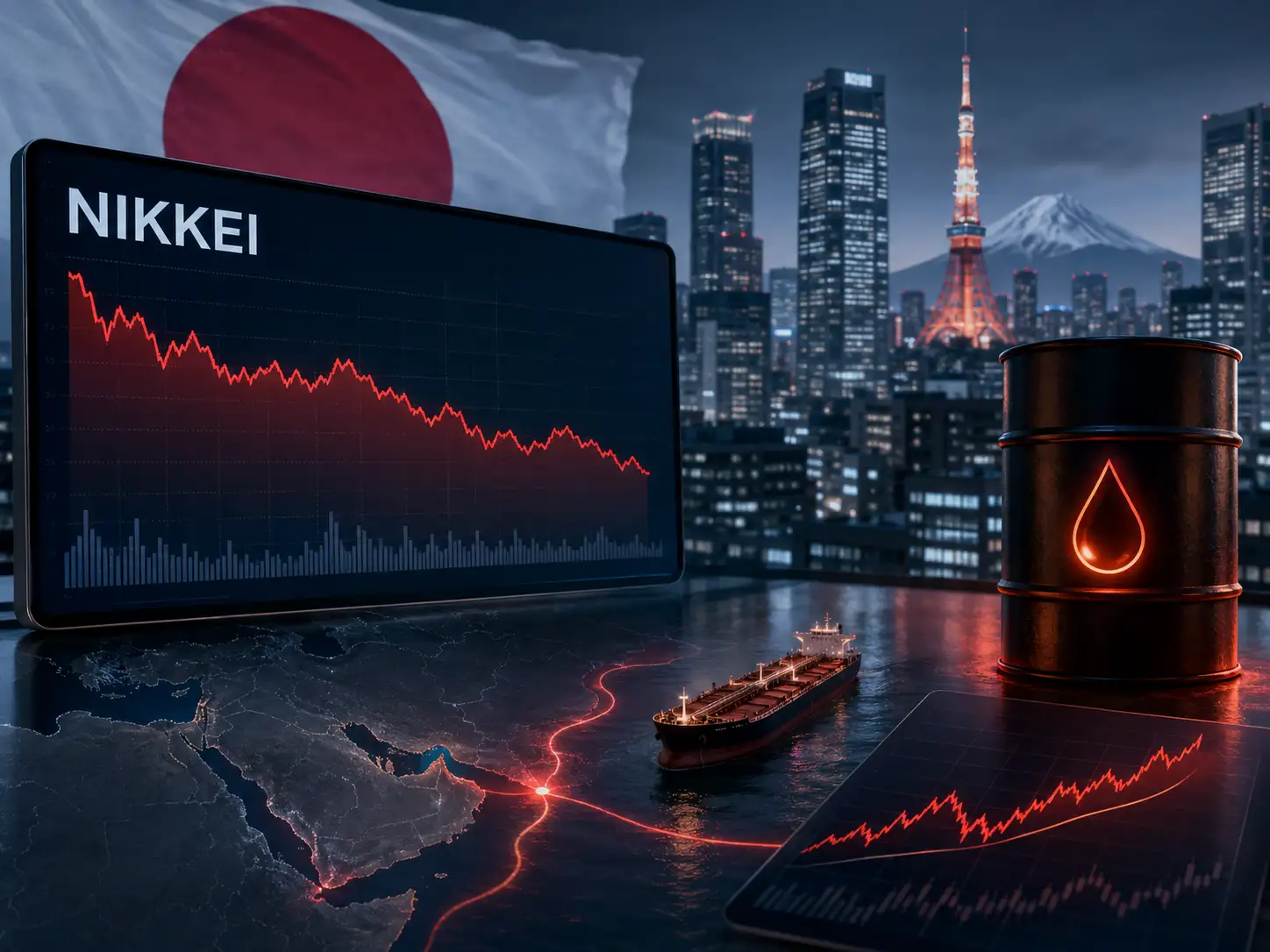
Japan’s Nikkei share average slipped on Friday, putting the benchmark on track for its steepest weekly decline in more than a month as rising oil prices and uncertainty over the Middle East conflict heightened concerns about inflation.
The Nikkei was down 0.3% at the midday break, leaving it set for a 4% weekly decline, its biggest since the week ended July 17. The broader Topix fell 0.1% and was heading for a 3.4% weekly loss.
Read more: US Treasury's Bessent says upsized bond buybacks could increase further
Crude oil prices jumped about $2 overnight after the United States stepped up economic pressure on Iran. U.S. Treasury Secretary Scott Bessent said Washington would impose tough sanctions on Tehran, intensifying efforts to bring the nearly six-month-old conflict to an end, according to Reuters.
The rise in oil prices added to inflation concerns in Japan and pushed government bond yields higher. The yield on the benchmark 10-year Japanese government bond climbed 3 basis points to 2.875% on Friday.
Investors also appeared cautious ahead of the weekend, with higher energy prices and bond yields weighing on risk appetite. Reuters reported that profit-taking was likely as oil prices and bond yields remained elevated amid uncertainty surrounding the Middle East.
Fast Retailing, operator of the Uniqlo clothing chain and a heavily weighted Nikkei component, fell 4%, making it one of the biggest drags on the index. SoftBank Group, a major investor in artificial intelligence-focused startups, declined 1.3%.
Market breadth was relatively balanced, with 119 of the Nikkei’s 225 components falling, while 103 gained and three were unchanged.
Shipping stocks were the strongest performers among the Tokyo Stock Exchange’s 33 industry groups, rising 2.8%. The sector benefited from expectations of higher freight rates as disruptions around the Strait of Hormuz kept the key shipping route effectively closed.
The combination of elevated oil prices, rising domestic bond yields and geopolitical uncertainty is likely to keep Japanese equities under pressure as investors assess the potential impact on corporate earnings and inflation.
(Disclaimer: Recommendations, suggestions, views, and opinions given by experts are their own. These do not represent the views of The Economic Times.)