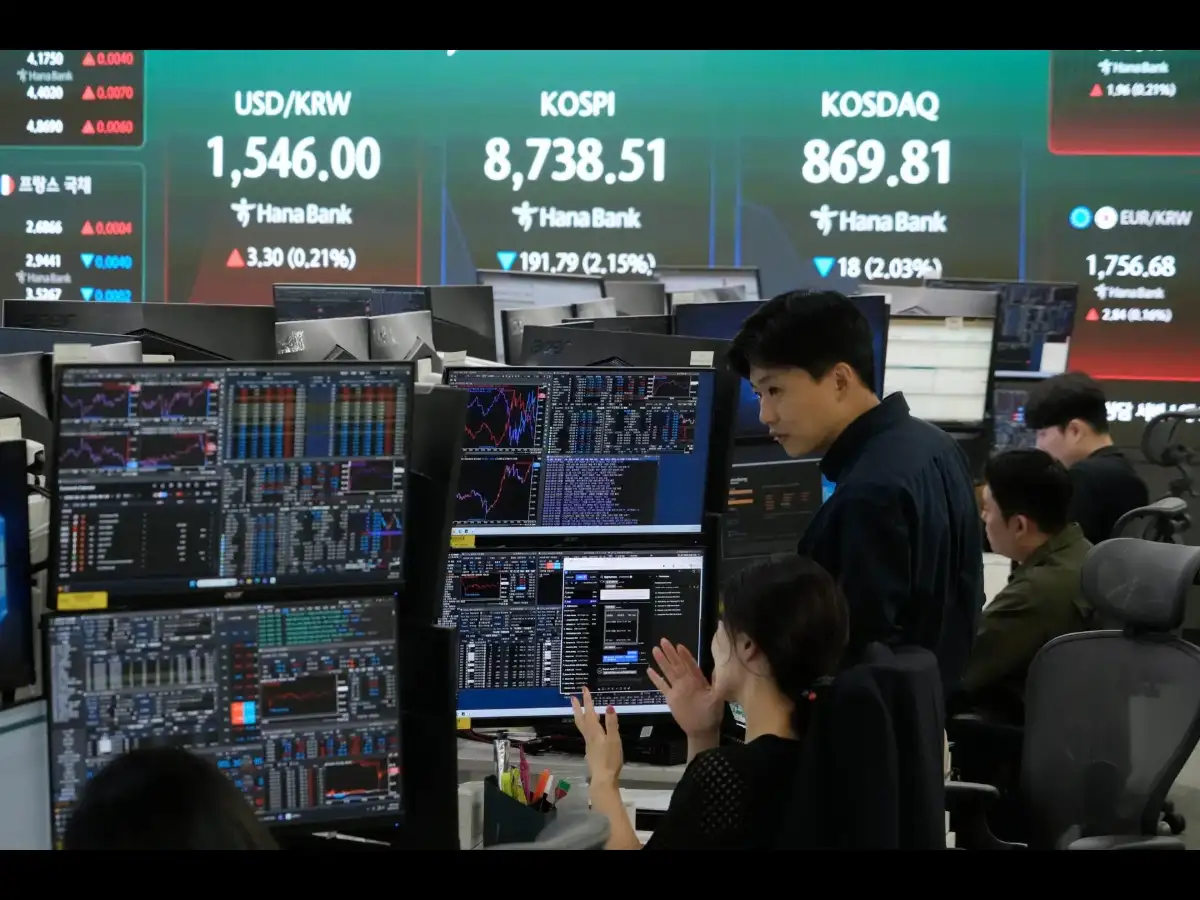
South Korean shares were on track to snap a seven-week losing streak on Friday, with the benchmark Kospi climbing to a three-week high as chipmakers rallied on optimism surrounding artificial intelligence, according to a Reuters report.
The Kospi was up 55.55 points, or 0.82%, at 6,868.89 as of 0132 GMT, after gaining as much as 2.9% earlier in the session. The index pared some gains as investors turned cautious ahead of a public holiday on Monday.
The tech-heavy index marked its fifth consecutive session of gains, rising 9.4% during the period after losing nearly 31% over the previous seven weeks. Market volatility has also eased, with the volatility index at 56 on Friday, down sharply from a record high of 98 in late June.
According to Reuters, South Korean stocks were also supported by gains in U.S. technology shares after the S&P 500 closed at a record high on Thursday. A softer-than-expected U.S. producer inflation reading strengthened expectations that the Federal Reserve will leave interest rates unchanged at its September meeting.
Among major KOSPI stocks, SK Hynix gained 3.01%, while Samsung Electronics slipped 0.37% after rising more than 2% earlier in the session. LG Energy Solution declined 1.37%.
Auto stocks were among the stronger performers, with Hyundai Motor rising 5.73% and Kia Corp gaining 1.97%. POSCO Holdings advanced 1.08%, while Samsung BioLogics fell 1.09%.
Of the 903 stocks traded, 453 advanced and 420 declined. Foreign investors were net buyers of South Korean shares worth 780.2 billion won ($550.81 million).
The South Korean won strengthened 0.16% to 1,416.3 per dollar from its previous close of 1,418.6.
In the bond market, September futures on three-year Treasury bonds gained 0.04 point to 103.33. The yield on the most liquid three-year Korean Treasury bond fell 0.6 basis points to 3.774%, while the benchmark 10-year yield declined 1.1 basis points to 4.282%.
The report stated that the broader improvement in sentiment comes as investors weigh easing inflation pressures in the United States against the prospect of continued gains in technology and AI-related stocks.