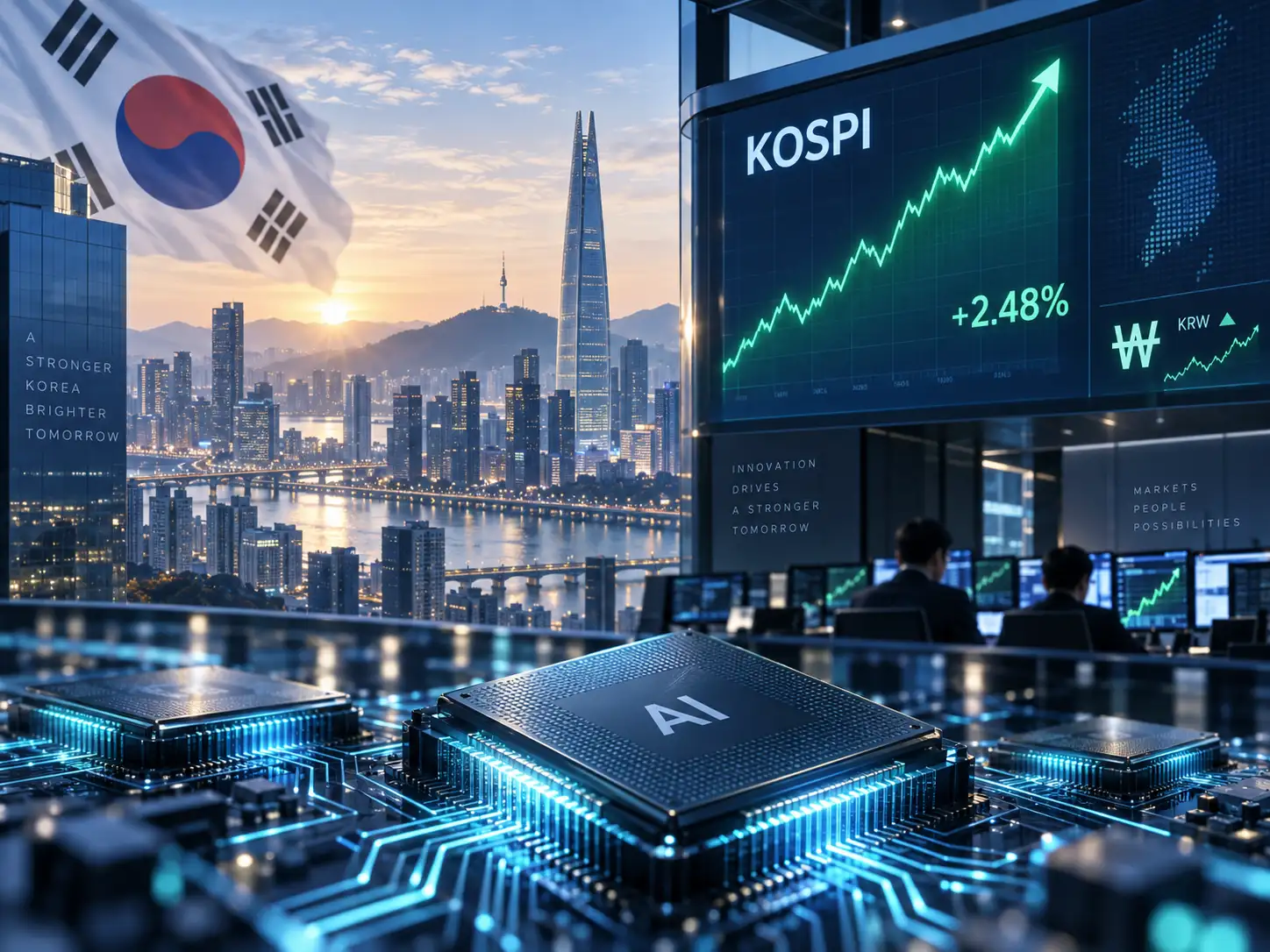
South Korean shares surged on Monday, led by chipmakers, as optimism over sustained artificial intelligence investment and strong demand for AI-related semiconductors lifted investor sentiment. The South Korean won also strengthened sharply, reaching its highest level against the U.S. dollar in nearly two years.
The benchmark KOSPI gained 196.57 points, or 2.94%, to 6,883.78 as of 0123 GMT. The index had climbed as much as 3.5% earlier in the session, touching its highest intraday level since August 27.
The rally came despite a weaker finish on Wall Street on Friday. According to Reuters, the Philadelphia Semiconductor Index stood out among U.S. equities, rising 3.4%, reinforcing optimism toward the global chip sector.
South Korea's export performance has added to the positive outlook for semiconductor manufacturers. The country's exports so far this year have already exceeded the full-year record set last year, with booming global demand for chips used in artificial intelligence applications providing a major boost to the economy.
Samsung Electronics advanced 3.72%, while SK Hynix jumped 6.01%, making the two major chipmakers among the biggest contributors to the KOSPI's gains.
Other heavyweight stocks also moved higher. Battery maker LG Energy Solution rose 0.14%, while Hyundai Motor gained 1.69% and Kia Corp increased 0.32%. Steelmaker POSCO Holdings, however, fell 1.19%, while Samsung BioLogics edged up 0.14%.
Market breadth was relatively balanced, with 438 of the 909 traded stocks advancing and 406 declining. Foreign investors were net buyers of South Korean shares worth 789.2 billion won ($590.45 million).
The won strengthened 1.07% to 1,335.8 per dollar on the onshore settlement platform, compared with Friday's close of 1,350.1. Reuters reported that the currency reached its strongest level since October 2024, supported by expectations of continued dollar selling by major South Korean exporters.
In the fixed-income market, September futures on three-year Treasury bonds rose 0.07 points to 103.24. The most actively traded three-year Korean Treasury bond yield declined 0.8 basis points to 3.875%, while the benchmark 10-year yield fell 2.7 basis points to 4.334%.
The combination of robust semiconductor demand, strong export momentum and expectations of further dollar selling by exporters provided a broad boost to South Korean financial markets at the start of the week.
(Disclaimer: Recommendations, suggestions, views, and opinions given by experts are their own. These do not represent the views of The Economic Times.)