
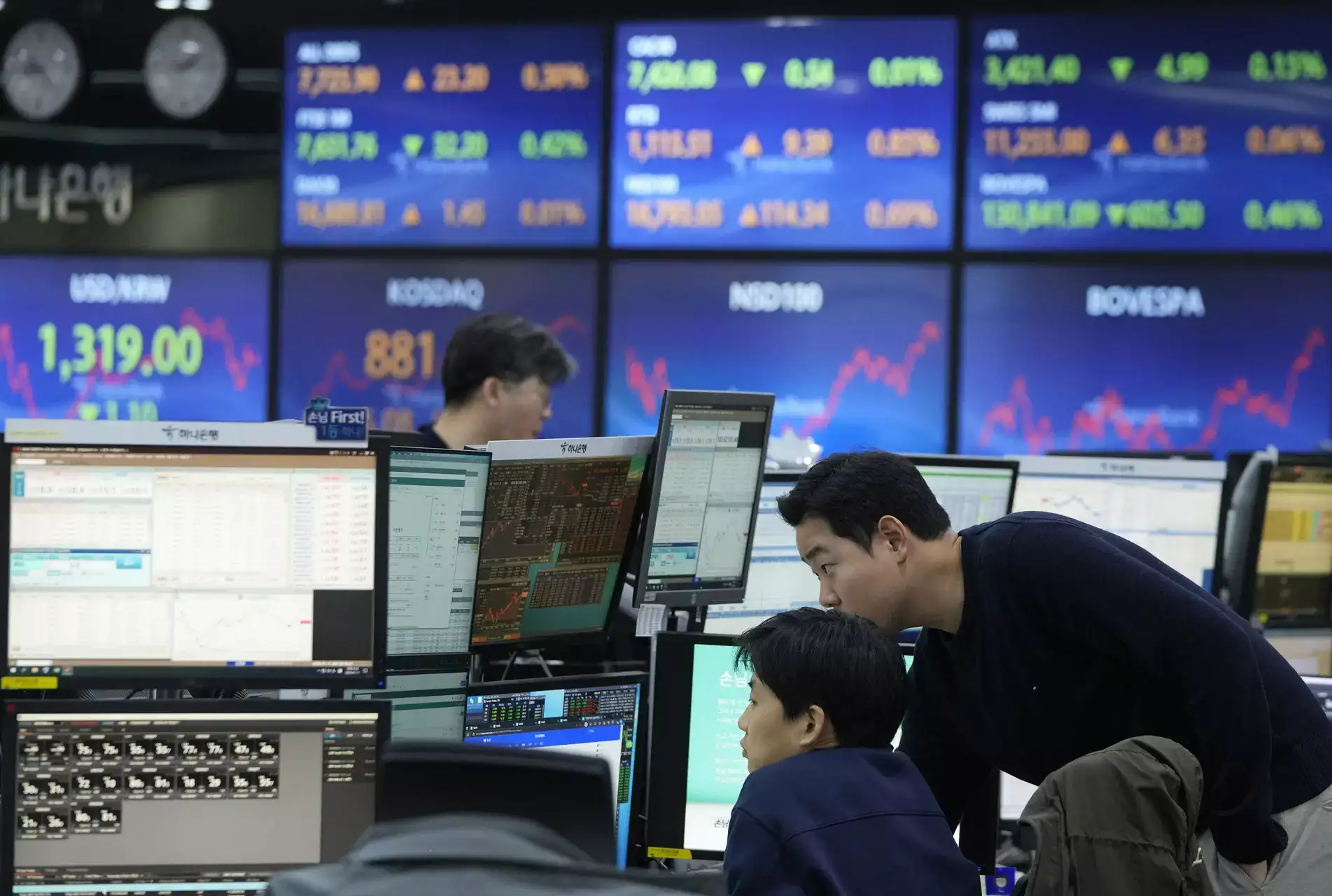
SYDNEY: Asian share markets were hesitant on Monday as the escalating conflict in the Gulf lifted oil prices and fanned fears of inflation, while a packed week of major tech earnings will further test investor faith in the AI trade.
Brent crude climbed 3% to cross $90 a barrel for the first time in more than a month as the U.S. military started a ninth straight day of attacks against Iran, which in turn struck targets across the region.
The jump in fuel costs has revived worries about inflation even as U.S. consumer price data surprised on the downside last week, leading futures markets to price in 29 basis points of Federal Reserve rate hikes by year-end.
"Our forecast is for a more gradual turn toward a Fed hike in 2027, but the balance of risks is shifting in the direction of an earlier hike than expected," said Bruce Kasman, chief economist at JPMorgan, noting a recent hawkish tilt in Fed policy rhetoric.
Futures imply a 60% chance of a rate rise as early as September, pushing yields on 30-year Treasuries back above the psychological 5.0% barrier. This is a level that tends to attract funds away from equities and toward fixed income, while lifting the valuation bar for future corporate earnings.
The shift has come just as investors question sky-high valuations for chip and AI stocks, which has seen the Philadelphia Semiconductor Index shed 10% last week to leave it 20% down from June's record high.
Markets took an added blow on Friday when Chinese AI firm Moonshot said it had a new open weight model, Kimi K3, that it says delivers performance approaching U.S. giant Anthropic's frontier Fable model.
All of which raises the stakes for this week's rush of profit results, which include Alphabet, Intel and Tesla.
HIGH EXPECTATIONS FOR EARNINGS
BofA analyst Savita Subramanian remains upbeat on the earnings outlook, tipping a 5% beat versus consensus, or 28% growth. Tech is expected to drive over half of growth, with semiconductors expected to rise around 130% year-on-year.
Such forecasts helped S&P 500 futures edge up 0.2% in early trading, while Nasdaq futures firmed 0.4%. In Europe, EUROSTOXX 50 futures and DAX futures both rose 0.2%, while FTSE futures were flat.
Japan's Nikkei was closed for a holiday, having shed 6.4% last week in a tech-led rout. MSCI's broadest index of Asia-Pacific shares outside Japan dipped 0.3%.
South Korea's chip-heavy market lost 0.6%, after diving almost 9% last week in wild trade as retail investors were squeezed out of leveraged positions.
The latest spike in oil will be a headache for the European Central Bank which meets on Thursday and is considered likely to hold rates at 2.25% following June's hike.
Markets are almost fully priced for a rise at its September meeting and rates of 2.75% early next year.
The euro was flat at $1.1433, having spent more than a week trading between $1.1377 and $1.1482. The dollar was steady at 162.41 yen, just below the recent 40-year peak of 162.84 as Japanese authorities flag the threat of intervention should the yen weaken quickly.
In commodity markets, the rise in yields pressured non-interest-paying gold which fell 0.6% to $3,993 an ounce .