

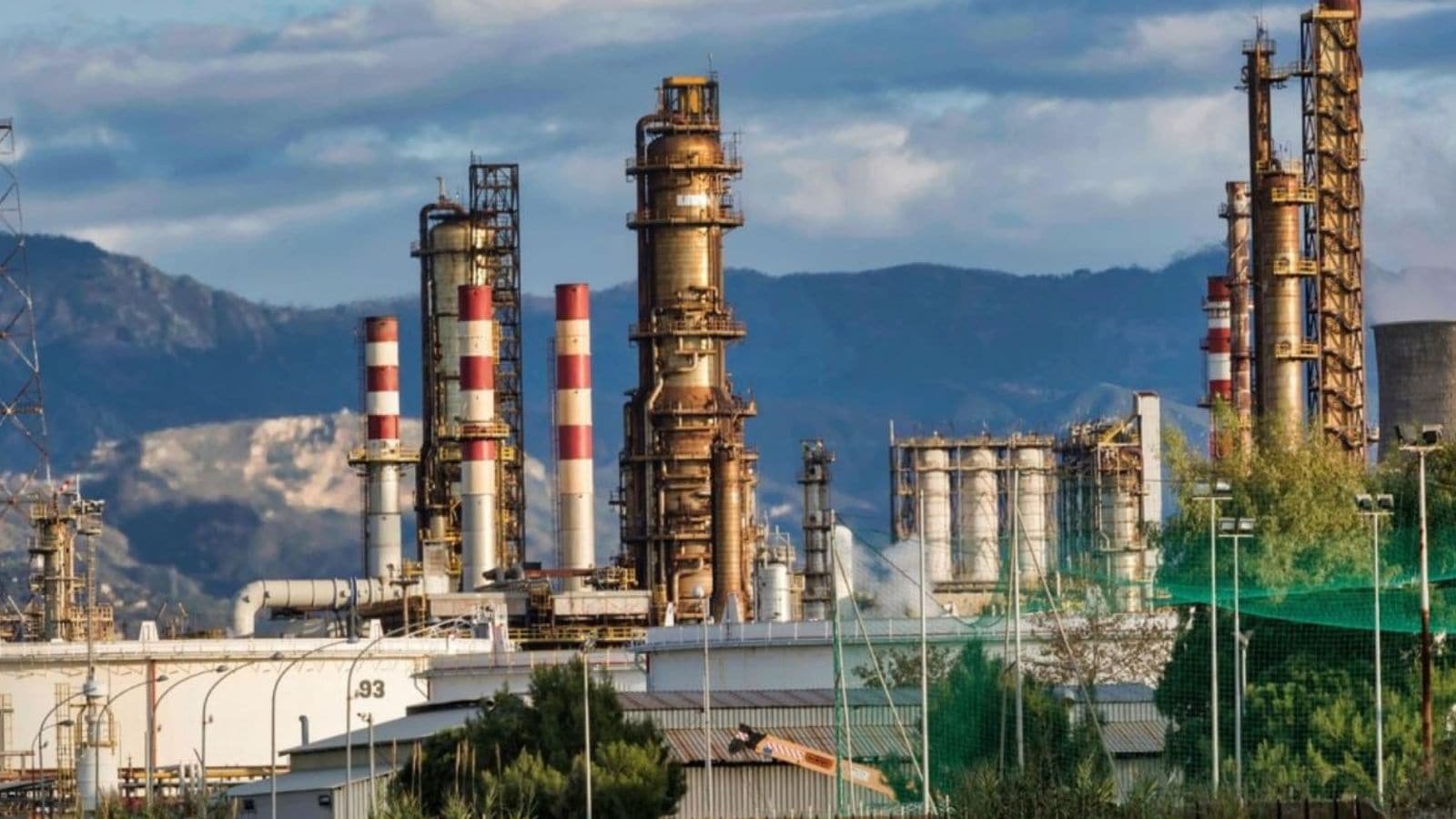
The government has announced a customs duty exemption on petrochemicals till June 30. (Representative Photo)
With an aim to reduce cost pressure for downstream sectors and key industries using petrochemical products as primary inputs amid the ongoing West Asia war, the government has given full customs duty exemption on critical petrochemical products till June 30.
“In light of the ongoing conflict in West Asia and the consequent disruptions in global supply chains, the Government of India has decided to provide full Customs Duty exemption on critical petrochemical products till 30th June, 2026,” the Ministry of Finance said in a statement.
This measure has been taken as a “temporary and targeted relief” in order to ensure continued availability of critical petrochemical inputs for domestic industry, reduce cost pressures on downstream sectors, and safeguard supply stability in the country, the Ministry said.
Exemption is expected to be helpful for sectors dependent on petrochemical feedstock and intermediates such as plastics, packaging, textiles, pharmaceuticals, chemicals, automotive components, and other manufacturing segments. “This will also provide relief to consumers of final products,” the Ministry said.
The customs duty exemption for petrochemical products for three months is expected to have a revenue loss of Rs 1,800 crore for the government, an official said. Since the global geopolitical and economic situation is dynamic, the revenue implication figure is not final and needs to be seen in that context, the official added.
About 40 petrochemical products have been given the customs duty exemption including anhydrous ammonia, toluene, styrene, dichloromethane, methanol, acetic acid, ammonium nitrate, polypropylene, polyvinyl chloride (PVC), polyols, polycarbonates, polyurethanes, and poly butadiene, styrene butadiene.
With an increase in crude oil prices following the Israel-US strikes on Iran on February 28 and the continuing conflict, industries have faced cost pressures and sourcing gaps for ensuring smooth supplies for production. From shortage of gas availability for car paint shops to technical grade urea in the automotive value chain to increase in price of sulphuric acid — a critical input in fertilisers — to glass and other packaging materials, the supply chains for many industries have been disrupted.
Story continues below this ad
Domestic petrochemical production has been hit due to the government-mandated diversion of important feedstock streams—butane and propane—to maximise the production of LPG, a critical fuel on which crores of Indian households depend. Moreover, the government has also restricted natural gas supplies to petrochemical plants and refineries in a bid to ensure that high-priority sectors get adequate natural gas supplies. As much as 90% of India’s LPG imports and around 60% of liquefied natural gas imports came from West Asia via the Strait of Hormuz.
The government has been taking a series of measures to address the supply-chain bottlenecks. On Friday, the Centre had increased the allocation of commercial LPG (liquefied petroleum gas) to states and union territories by another 20%, bringing the total to 70% of the pre-crisis level, to meet the requirements of industries.The additional allocation was meant for labour-intensive industries and those providing support to other essential sectors, with priority to steel, automobiles, textiles, dyes, chemicals and plastics. Special priority is being given to process industries or those requiring LPG for specialised heating purposes that cannot be substituted by natural gas.
Also Read | House panel urges Petroleum ministry to maintain 90-day crude oil stock
Also, the government has made it mandatory for commercial and industrial consumers of LPG to register with public sector fuel retailers, and also apply for a piped natural gas (PNG) connection to become eligible to get commercial LPG, with exceptions for industries where LPG is used for special processes or purposes and cannot be replaced by natural gas.
On Wednesday, the government announced a one-time concessional measure for manufacturers in Special Economic Zones (SEZs) for one year allowing eligible manufacturing units in SEZs to undertake sales to the Domestic Tariff Area (DTA) at concessional rates of duty.
Story continues below this ad
Before that, the Reserve Bank of India extended an earlier concession for exporters by allowing pre- and post-shipment export credit to run for up to 450 days for all disbursements made till June 30. In November last year, the RBI had extended the credit window from 270 to 450 days for loans sanctioned up to March 31, 2026 in view of the impact due to the US tariffs.
© The Indian Express Pvt Ltd
