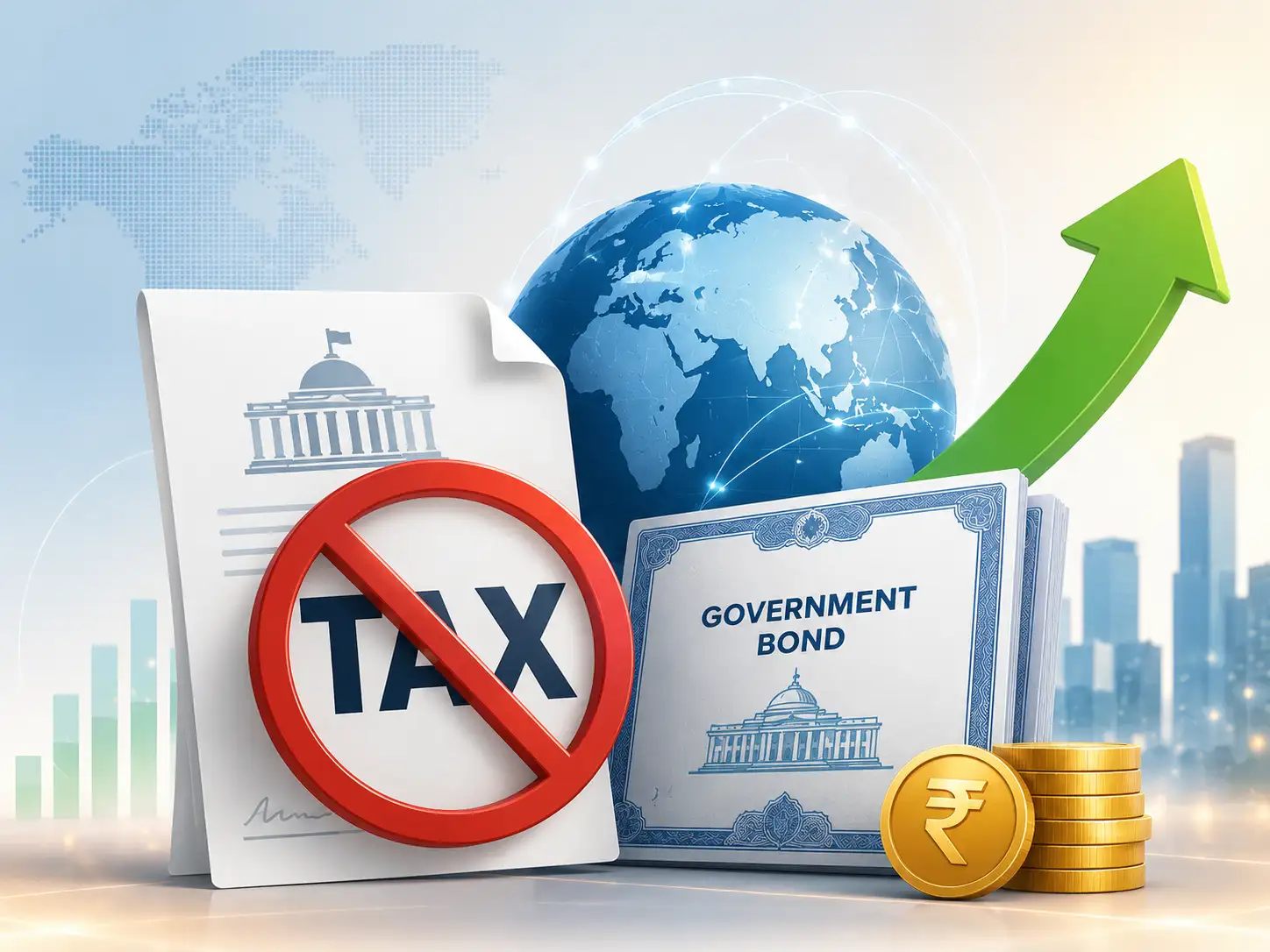
To boost foreign capital inflows, India has scrapped long-term capital gains tax on investments by foreign institutional investors (FIIs) in government securities through an Ordinance issued on Friday. The move is aimed at making Indian debt markets more attractive to overseas investors and supporting the rupee amid rising crude oil prices and geopolitical uncertainties.
The Union Cabinet, chaired by Prime Minister Narendra Modi, approved the ordinance to amend the Income Tax Act and enable the exemption. At present, foreign investors pay a 12.5% long-term capital gains tax on listed equities and bonds held for more than a year, while interest earned on government securities is also subject to a 20% withholding tax.
The government has now exempted FIIs from tax on any interest income from government securities, as well as capital gains arising from their sale, exchange or transfer, according to an official gazette. The exemption will apply retrospectively from April 1, 2026.
These steps are aimed at attracting overseas capital and stabilising the rupee, which has been under pressure from higher oil prices and persistent FII outflows from equity markets.
Separately, while announcing the MPC decision, RBI Governor Sanjay Malhotra also unveiled a series of measures to boost FPI investments, including expanding the Fully Accessible Route (FAR) to cover new issuances of 15-, 30- and 40-year government bonds.
He also said limits on investments by NRIs and OCIs in equity instruments without Sebi registration are being raised, allowing them to invest larger amounts without regulatory registration. The facility is also proposed to be extended to all Persons Resident Outside India (PROIs), bringing them on par with NRIs and OCIs.
On monetary policy, the RBI unanimously kept the repo rate under the Liquidity Adjustment Facility unchanged at 5.25%, after assessing evolving macroeconomic and financial conditions. The Standing Deposit Facility (SDF) rate remains at 5.00%, while the Marginal Standing Facility (MSF) rate and Bank Rate stay at 5.50%. The MPC also retained a neutral policy stance.
2026 has seen a sharp FII selloff amid strong tech-led gains in South Korea and Taiwan driven by the AI rally, alongside geopolitical tensions in the Middle East that pushed up oil prices and triggered rupee depreciation, weighing on sentiment toward Indian equities. The Nifty 50 index is down about 10% YTD, extending its underperformance and pushing India out of the world’s top five stock markets.