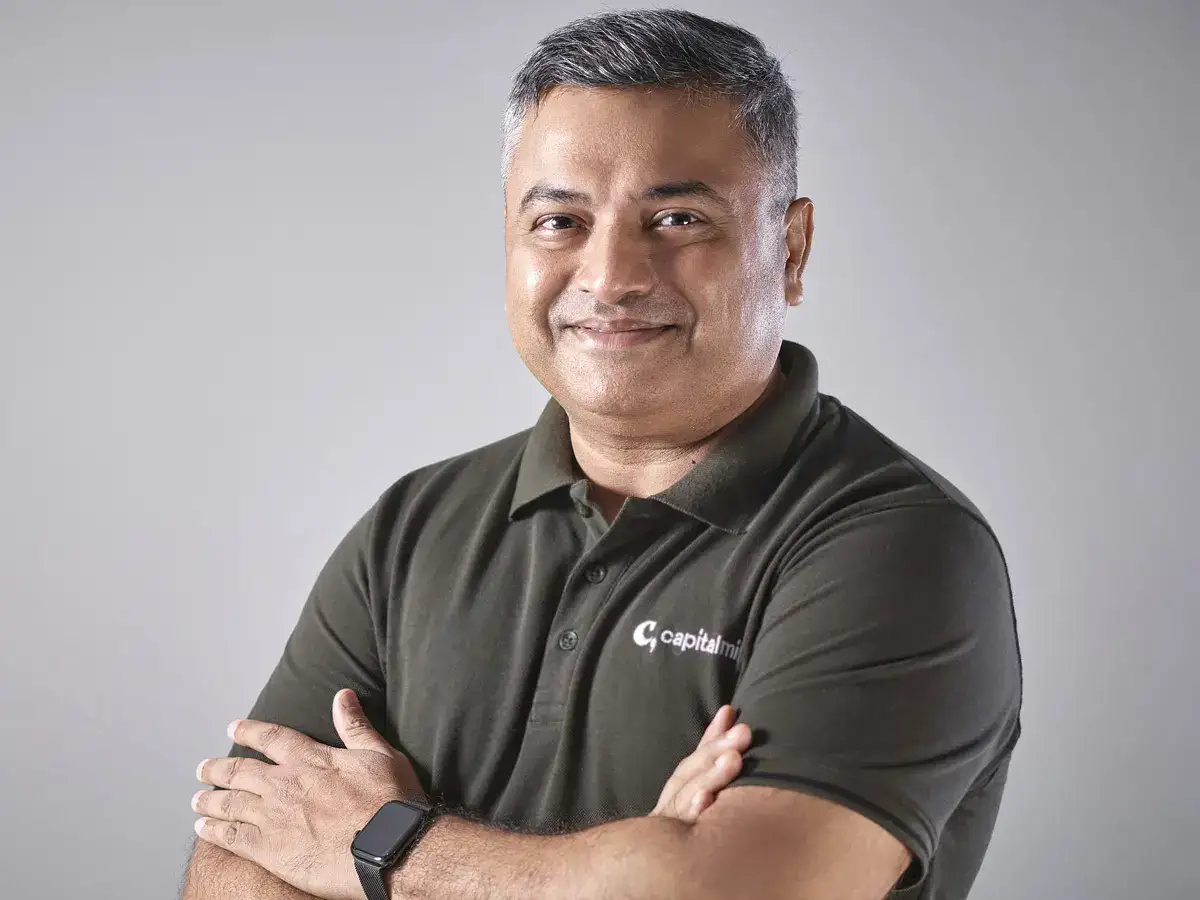
Global markets continue to grapple with geopolitical tensions, trade uncertainties, and volatile commodity prices, leaving investors searching for clarity in an increasingly unpredictable environment. While concerns over international developments remain elevated, Rajeev Agrawal from DoorDarshi India Fund believes India's domestic economy is relatively well-positioned to weather the turbulence.
Speaking to ET Now, Agrawal said uncertainty has become a defining feature of the global landscape, making it difficult for investors to predict how events will unfold. However, he noted that market volatility can also create opportunities for long-term investors by allowing them to acquire quality businesses at attractive valuations.
"Absolutely, the last few months every day we get some new news and so there is a lot of uncertainty. But the good news with uncertainty is that sometimes you have volatility which allows you to get good stocks at good prices, so that is a positive way of looking at it. But unfortunately, every day you are glued to trying to figure out what would happen next."
Trust Deficit Likely to Prolong Uncertainty
Agrawal believes that even if diplomatic agreements are reached in the coming weeks, uncertainty is unlikely to disappear anytime soon. According to him, a deep trust deficit between major global powers could continue to fuel instability and create fresh challenges.
"Even if there is a deal, I feel that if and when the deal goes through, even after that I am not certain that the deal will hold, how long it will hold, and maybe new developments will come. So, what I am predicting at this point is that even if there were to be a deal in the next few weeks, the uncertainty is likely to continue for a much longer period because there is a clear trust deficit between the two nations."
Focus on Businesses Less Exposed to Global Shocks
With multiple geopolitical flashpoints and shifting global alliances creating noise in financial markets, Agrawal said his investment approach is focused on sectors that are less vulnerable to external disruptions.
He highlighted domestic-oriented businesses as a preferred area of investment, arguing that India's economic fundamentals remain reasonably healthy despite concerns over inflation. While inflationary pressures could persist, he expects domestic demand to continue supporting growth.
Agrawal also pointed out that the depreciation of the rupee has improved India's export competitiveness, potentially creating opportunities for exporters once global conditions stabilize.
"The key thing that we are doing is trying to look in areas which are not going to be as impacted from a business perspective or from an economy perspective. So, a lot of domestic sectors in India, we think, while there might be a little bit higher inflation, in general the economy seems to be doing alright."
Real Estate, Financials and Renewables Stand Out
Among sectors that currently appear attractive, Agrawal identified real estate as one of the strongest opportunities. He said that despite concerns linked to the information technology sector, many property developers have reported robust pre-sales performance and continue to project healthy demand going forward.
Banking and financial services also remain appealing, supported by strong credit growth and healthy balance sheets across households and businesses. According to Agrawal, continued economic expansion should sustain demand for loans in the coming years.
A third area of interest is renewable energy. He believes recent geopolitical developments have reinforced the importance of energy security, making investments in solar and wind energy increasingly important for India's long-term strategy.
"Real estate continues to look reasonable. Banking and finance have also seen strong credit growth. And then the third sector that I will say is renewable energy. Clearly, if this war is telling us anything, it is clear that India has to take on more areas of becoming energy independent."
Foreign Flows Remain a Challenge
Despite India's long-term growth potential, attracting foreign capital remains a challenge. Agrawal noted that foreign investor flows have been weak since the market peak in 2024, with rupee depreciation further reducing returns for overseas investors.
He also pointed out that the absence of large-scale artificial intelligence-related investment opportunities in India has limited the country's ability to attract a share of the global capital currently flowing into AI-focused companies and technologies.
"Flows have been a challenge for India. Since 2024, once India made its peak, the flows have been continuously leaving India and the INR depreciation is not helping the situation."
According to him, meaningful policy initiatives may be required to revive foreign investor interest, as many of the factors discouraging capital inflows remain unresolved.
Investor Sentiment Abroad Remains Cautious
From the perspective of international investors, Agrawal said sentiment toward Indian equities has turned cautious due to a combination of weak market performance and currency depreciation.
Foreign investors have also been affected by tax considerations, which can significantly reduce post-tax returns. While he remains optimistic about India's long-term prospects, he acknowledged that the near-term outlook remains challenging.
"Investor sentiment has been pretty negative at this point for the simple reason that Indian stocks have not performed in INR terms and when you put the depreciation on top of that, it has been negative returns for many of those investors."
Tax Reforms and Energy Independence Could Help
Looking ahead, Agrawal believes policymakers should focus on improving the attractiveness of Indian markets for foreign investors. One potential area is tax reform, which could enhance after-tax returns and make Indian equities more competitive globally.
He also stressed the need to accelerate efforts toward energy independence through greater investment in renewable energy infrastructure. Additionally, he suggested that fuel prices should more accurately reflect global oil prices, which could help moderate consumption, reduce import dependence, and improve fiscal balances.
"One is really to look at the taxes and see how you can make Indian equities more favourable for investors, especially foreign investors. The second thing that can be done clearly is to have more and more independence around energy so that we do not have as much of an import bill."
Long-Term Optimism Despite Near-Term Challenges
While short-term concerns surrounding global geopolitics, capital flows and investor sentiment remain significant, Agrawal maintains that India's structural growth story remains intact. Strong domestic demand, healthy credit growth, an expanding renewable energy ecosystem and supportive demographics continue to provide reasons for optimism, even as markets navigate a period of elevated uncertainty.