Shares of some Indian banks closed at sharply different prices on the country’s two largest exchanges on Thursday, the latest sign of dislocation under the new closing auction system.
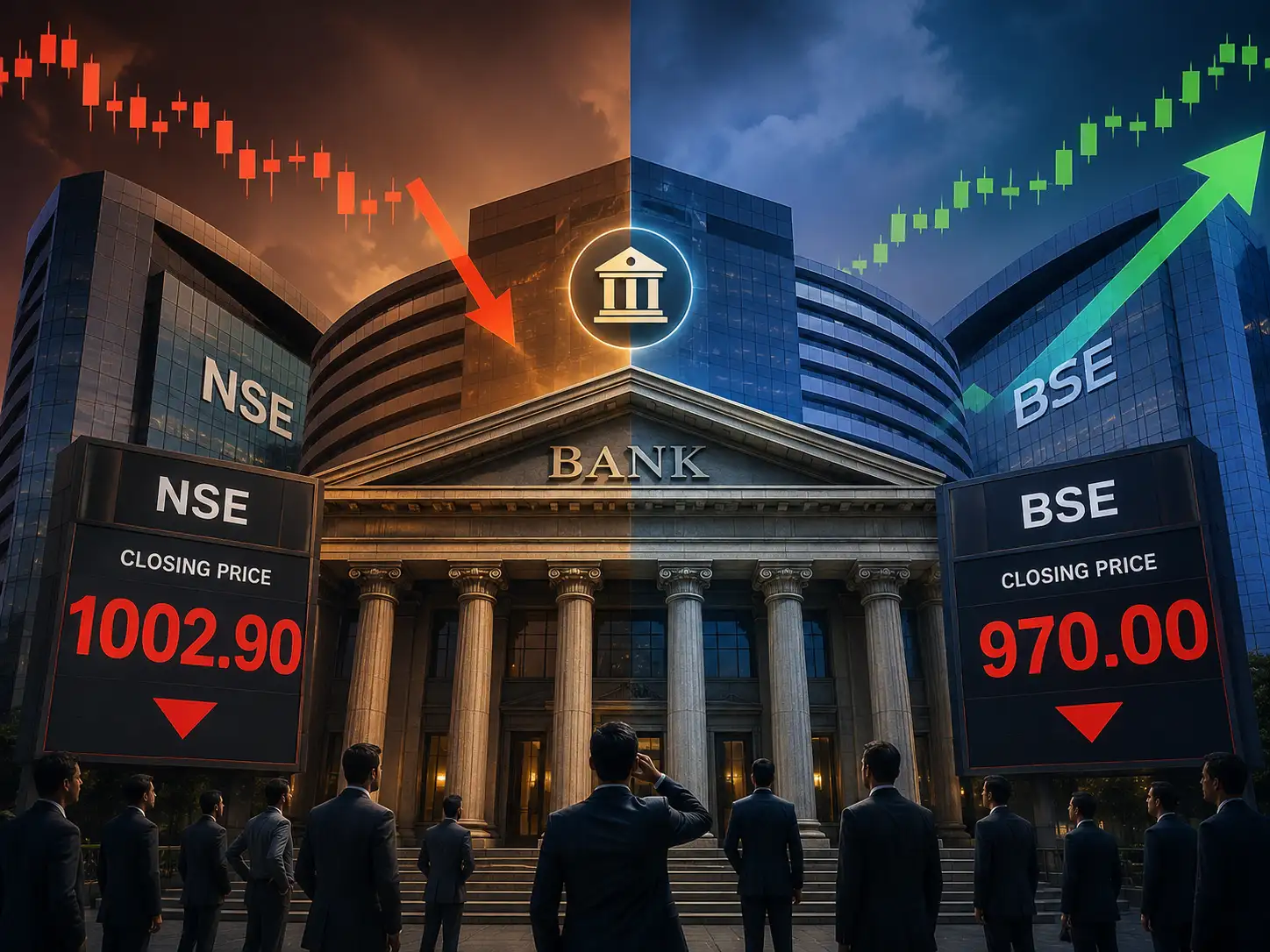
IndusInd Bank Ltd. ended at 1,002.9 rupees on the National Stock Exchange of India Ltd. after the 20-minute auction window closed, while falling more than 3% on the BSE Ltd. to 970 rupees. The gap of nearly 33 rupees was the widest in more than two decades.
Large discrepancies in closing values were also seen in AU Small Finance Bank Ltd., IDFC First Bank Ltd., and Federal Bank Ltd. The BSE Bankex gauge at one point during the auction indicated a drop of 3.3% before partially recovering to end 1.7% lower. Some smaller banks failed to rebound amid thin liquidity and the monthly expiry of the 14-member bank index. On Friday, the gauge jumped 1% at close.
India’s equity and derivatives markets have been marked by unusual moves since the Aug. 3 launch of the auction system. The episodes have raised concerns about the working of the mechanism and its potential for misuse, with the divergence between prices on the NSE and BSE adding to the scrutiny.
“I trade multiple markets globally and haven’t seen such a dislocation where the same stock closes with as much as a 3% gap on different exchanges,” Mayank Bansal, a Dubai-based hedge fund trader said.
One reason such gaps can persist is that during the auction window there is no reliable model for estimating where stocks on the NSE and BSE will close. “This makes pure arbitrage impossible,” said Varun Khandelwal, founder of Gurugram-based Bullero Capital, a proprietary trading firm.
The system used to determine end-of-day prices for more than 200 stocks has faced a backlash. It has also drawn regulatory scrutiny. The Securities and Exchange Board of India recently barred two firms, including a unit of JPMorgan Chase & Co., from the market for allegedly manipulating prices during the auction.
“Traders and other market participants are losing confidence — this kind of volatility may make them avoid this market,” Karthik P, a partner at Karna Stock Broking LLP said.