Indian regulators are considering allowing companies to issue separate classes of shares for listing on domestic exchanges and at GIFT City, in a structure resembling the mainland China-Hong Kong model, three people familiar with the discussions said.
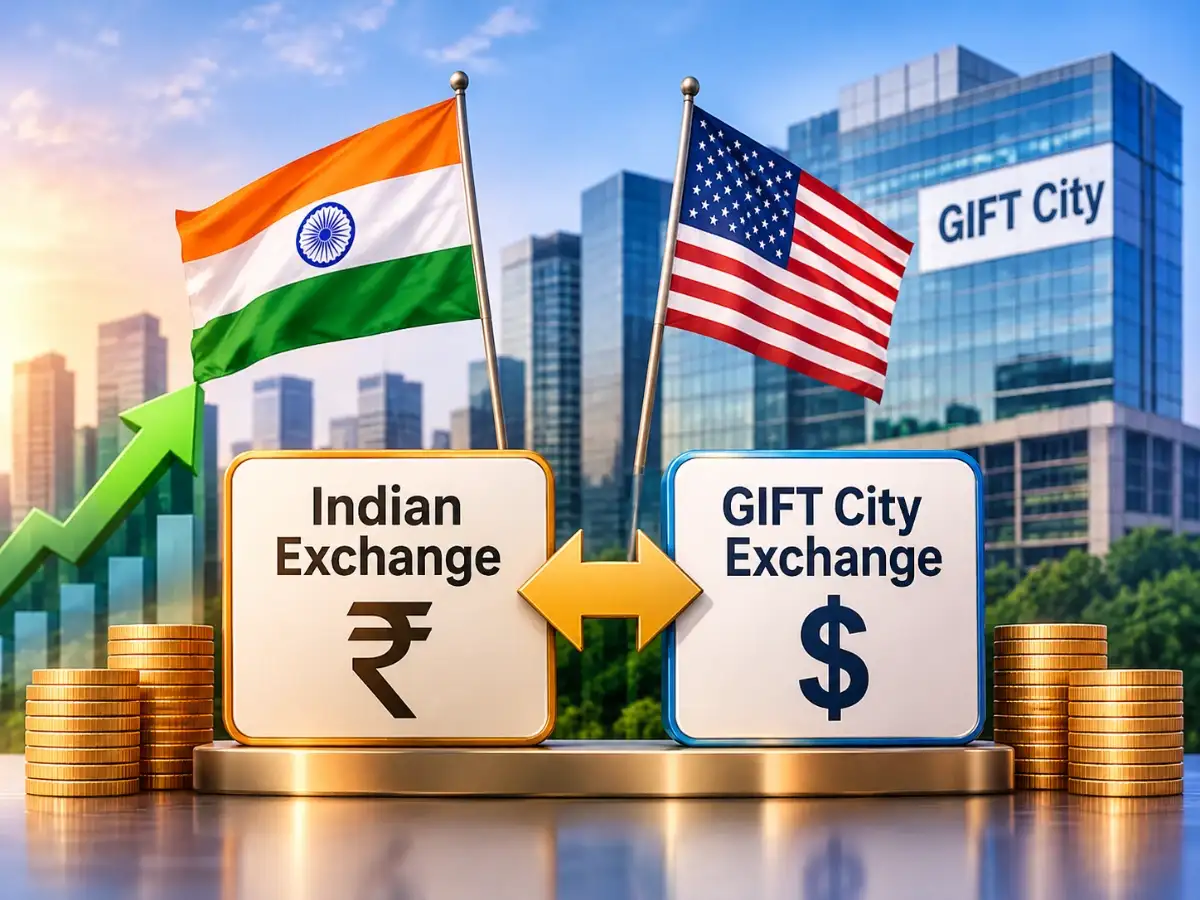
Under the framework being considered, companies could issue one class of shares for trading in rupees on Indian exchanges and another for trading in dollars on exchanges at GIFT City, the sources said.
The proposal is part of efforts to boost equity market activity at Gujarat International Finance Tec-City, or GIFT City, which the government is promoting as a gateway for global capital and financial services.
Since becoming operational about a decade ago, GIFT City has built up activity in areas including asset management and foreign bank lending, but has attracted relatively little primary equity market activity.
The proposed structure is similar to that used by many Chinese companies with separate listings in mainland China and Hong Kong. Under that system, H-shares of mainland-incorporated companies trade in Hong Kong.
The people spoke on the condition of anonymity because the framework has not yet been finalised.
The Securities and Exchange Board of India, the markets regulator, and the finance ministry did not respond to email queries.
GIFT City's financial services regulator said in an emailed response that the issues were "still in discussion stage and it would be difficult to provide our comments at this juncture."
GIFT City, a flagship financial project of Indian Prime Minister Narendra Modi aimed at competing with hubs such as Singapore and Dubai, has had mixed success.
GIFT City has banking assets of about $121 billion and fund commitments of $45 billion compared with India's banking system that holds deposits of about $3 trillion and a mutual fund industry managing nearly $1 trillion, according to regulatory data.
However, GIFT City's equity market has gained little traction, with Cyprus-based Ellinas Finance the only company listing this year.
To boost company listings, the Indian government in 2023 allowed Indian companies to list simultaneously at GIFT City exchanges and on Mumbai's two main exchanges, NSE and BSE.
But authorities have since struggled to boost activity at the financial hub without undermining India's booming domestic equity markets.
The proposed dual-class structure would ring-fence domestic shares on BSE and NSE while giving foreign investors direct access through the two bourses' GIFT City subsidiaries at low taxes, easier rules and without needing to convert dollars into rupees, the people said.
India does not levy capital gains and transaction taxes at GIFT City.
India's framework would allow firms to raise capital from separate domestic and international investors with different regulatory requirements, people said.
The two sets of shares in rupees and dollars would carry the same economic interest and voting power, they added.
"GIFT listed shares will be open to only foreign investors and will be a part of company's public float. Company's founders and owners would not be allowed to invest in GIFT shares through any offshore structures," said the first of the three sources.
To deal with issues around creeping acquisition through GIFT route, any share purchases that exceeded 1% of the float would need to be disclosed, said the second person.