

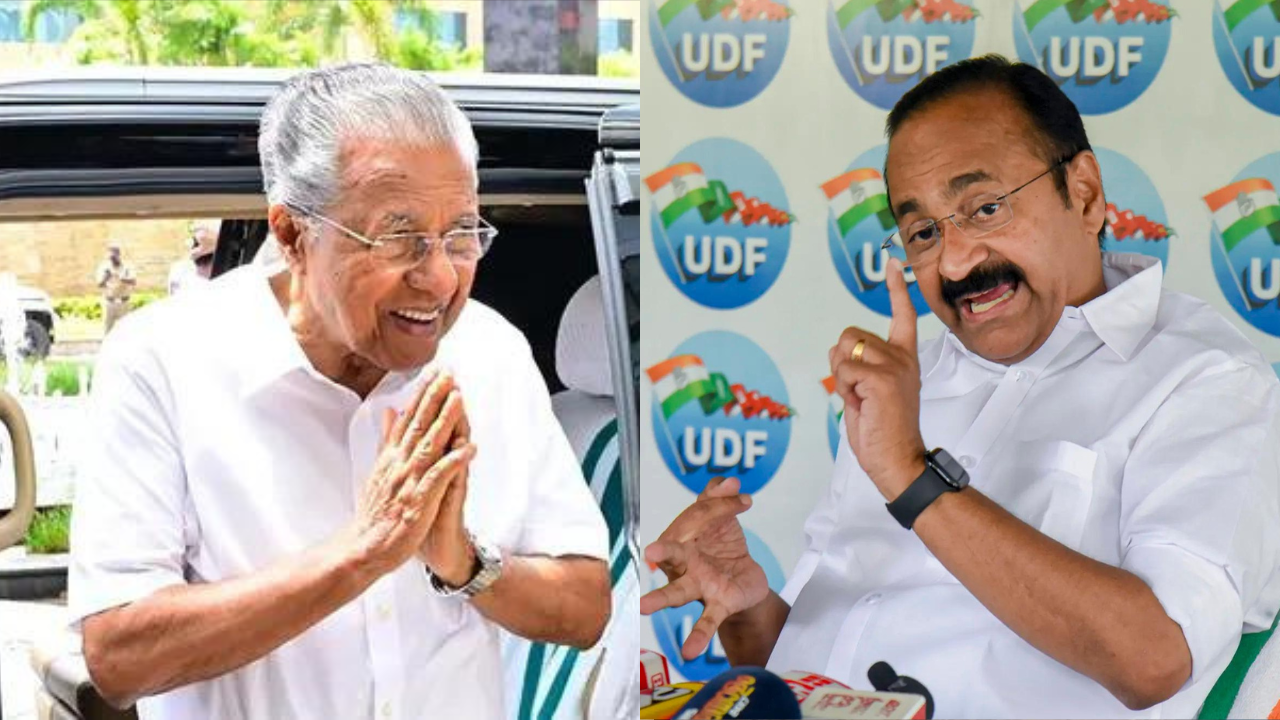
As sweltering heat scorches the land, political temperature is rising in God’s Own Country as the summer election season knocks onKerala’s doors.Long defined by a predictable alternation between the Left Democratic Front (LDF) and the United Democratic Front (UDF), the state now faces a far more complex contest. With chief ministerPinarayi Vijayanseeking a rare third consecutive term, the opposition sensing an opening and theBJPattempting to expand its footprint, the election is shaping into a tight, multi-layered battle.In a state where elections are won by the slimmest of margins, this contest may come down to a few thousand votes across a handful of seats.
Watch
Kerala Election 2026: Who Holds the Master Key? Full Community Breakdown
A state at a political crossroads
As Kerala inches towards the 2026 assembly elections scheduled for April 9, the familiar rhythm of alternating governments is under strain. The contest is no longer a predictable swing between the LDF and the UDF; instead, it is shaping into a layered political battle and emerging as a triangular contest.
For chief minister Pinarayi Vijayan, the stakes are high. After breaking Kerala’s decades-old pattern by retaining power in 2021, the LDF is now seeking a rare third consecutive mandate. Success would not only consolidate Vijayan’s legacy but potentially redefine the state’s political cycle. But, if otherwise, India will see the last red bastion falling. The Congress-led UDF, however, senses an opening. With anti-incumbency building after nearly a decade of Left rule, the opposition is framing the election as a referendum on governance, finances and accountability.Congress top brass, from Rahul Gandhi to Priyanka Gandhi Vadra, has stepped up engagements, signalling the importance of Kerala in the national opposition’s strategy.Meanwhile, the BJP-led NDA is attempting something more ambitious, to disrupt Kerala’s entrenched bipolarity. Led by Prime Minister Narendra Modi and an aggressive campaign, the party is targeting incremental gains that could influence outcomes in closely fought constituencies.Unlike states with clear multi-cornered politics, Kerala’s contests are decided by fine margins, layered loyalties and local dynamics. That makes 2026 less about sweeping waves and more about micro-shifts, where even a small swing in vote share could tilt dozens of seats in the state.
Last election, and what it tells us
In 2021 elections, the ruling LDF won 99 seats, securing a comfortable majority, while the UDF managed 41 seats. The BJP, contesting in most constituencies, won just 1 seat, highlighting the state’s traditional bipolar pattern. Vote share tells a slightly different story: the LDF captured 45.43%, the UDF 39.47%, and the BJP 10.41% of the total votes polled. This indicates that while LDF had a clear majority in seats, the competition was much tighter in terms of votes, especially in closely contested constituencies.
The 2021 assembly elections offered a structural insight into Kerala’s electoral behaviour. According to data from the ADR and Kerala Election Watch, the average vote share of winning candidates stood at 47.98%, with only 39 of 140 MLAs crossing the 50% mark.This means most victories were secured without majority backing, reflecting fragmented mandates and the decisive role of marginal vote swings.Margins were equally revealing. Only a handful of constituencies saw comfortable victories, while several were decided by less than 10% vote difference, and in some cases, fewer than 500 votes. Nearly 46% of re-elected MLAs won with margins under 10%, indicating a limited incumbency advantage.NOTA, often seen as a protest tool, remained marginal at 0.47%, almost unchanged from 2016. While not decisive, its consistent presence points to a small but stable segment of disengaged voters.More recent signals from the 2025 local body elections suggest a tightening race. The UDF edged ahead in vote share and assembly segment leads, while the LDF retained a substantial base but lost ground in several local bodies.The BJP maintained around 16% vote share, with improved seat conversion in select pockets, raising concerns over seat convertibility.When taken together, these trends tell a crucial story: Kerala elections are rarely landslides; they are negotiated outcomes shaped constituency by constituency.
Key faces to watch out for
The 2026 election is as much about leadership as it is about alliances.At the centre is Pinarayi Vijayan, contesting from Dharmadam, whose governance model, combining welfare expansion and infrastructure push, will be directly tested.On the opposition side, state leader of opposition VD Satheesan is expected to anchor the UDF campaign, positioning himself as the face of change, but not without some internal strife in Congress. For the BJP, the campaign is being spearheaded by its state president and former Union minister Rajeev Chandrasekhar, who has emerged as the party’s key face in the run-up to the polls. His campaign has focused on issues such as unemployment, economic growth, and governance, while also amplifying the party’s broader narrative against both the LDF and the UDF.Among the LDF’s prominent leaders are KK Shailaja, whose public health credentials continue to resonate with voters, and Veena George, who represents the government’s welfare narrative.The UDF also reflects generational transition through leaders like Chandy Oommen (son of former CM Oman Chandy), while veterans such as Ramesh Chennithala bring organisational experience.Another BJP candidate is former Union minister V Muraleedharan, symbolizing a high-profile push to expand the party’s footprint.
High-stakes contests
Kerala’s political map is dotted with constituencies where narrow margins and shifting alliances make outcomes unpredictable.Seats like Nemom, Kazhakootam, and Thiruvananthapuram are expected to witness intense triangular contests, especially with the BJP attempting to convert vote share into seats.In several constituencies, data suggest that margins of defeat in previous elections were within 1,000–10,000 votes.Such micro-level gaps mean targeted campaigning, candidate selection, and local alliances could prove decisive.Urban constituencies are emerging as key battlegrounds, where shifting middle-class preferences and youth concerns intersect with traditional party loyalties.
What issues are parties fighting on
Anti-incumbency vs continuity
The central narrative of the election revolves around whether voters prefer continuity or change. The LDF argues that stability and governance gains justify another term, while the UDF and BJP frame the election as a corrective moment.PM Modi recently said at an election rally in Palakkad that “Kerala is sending signals of change.”
Economy and unemployment
Economic stress is a major theme. Rising debt, unemployment, and migration, particularly among youth, have become political flashpoints. BJP leader Rajeev Chandrasekhar has criticised both fronts, saying: “Promises… for the last 70 years… never kept.”He further added, “four out of ten graduates are unemployed and are migrating,” highlighting a concern that cuts across political lines.
Welfare vs sustainability
Kerala’s welfare model is under scrutiny. While the LDF defends it as essential to social development, critics question fiscal sustainability. The debate has sharpened with competing promises from all fronts.But, the promises put out by all the contenders tell a different tale on the fiscals.
Governance and corruption
The opposition has raised concerns over administrative efficiency, corruption allegations, and law and order issues, turning governance into a central electoral issue.
Identity and Sabarimala
The Sabarimala issue continues to influence political discourse, blending questions of faith, gender rights, and political positioning. It also provides an entry point for the BJP’s identity-driven mobilisation.
A SWOT analysis of key parties highlights their prospects and hurdles
LDF (Left Democratic Front)
StrengthsWeaknessesOpportunitiesThreats
UDF (United Democratic Front)
StrengthsWeaknessesOpportunitiesThreats
NDA/BJP
StrengthsWeaknessesOpportunitiesThreats
Promises and bigger promises
The elections are bound to witness more intense competition in welfare commitments, with all three fronts expanding their promise baskets. While the ideological differences remain, there is a clear convergence on social security, employment generation, and public service delivery in order to mint vote dividends.Here is a detailed break-up of what each alliance has promised:
LDF – Welfare continuity with development push
The LDF manifesto builds on its governance record, combining welfare expansion with long-term economic planning:
UDF – Welfare expansion with governance reset
The UDF’s manifesto focuses on direct benefits, social welfare expansion, and institutional reforms:
NDA / BJP – Welfare plus infrastructure and governance overhaul
The BJP-led NDA is blending welfare assurances with infrastructure-heavy promises and institutional reforms:
New calculations in Kerala’s poll scene
Kerala’s electoral arithmetic is undergoing subtle but significant shifts.The rise of three-cornered contests means that even a modest increase in vote share, particularly for the BJP, can influence outcomes in tightly contested seats. This does not necessarily translate into immediate seat gains but can alter the winning margins between LDF and UDF.At the same time, data suggests that over 100 constituencies in previous elections were won with less than 50% vote share. This structural feature makes Kerala uniquely sensitive to micro-swings.Urbanisation, youth migration, and changing voter expectations are also reshaping political behaviour. While traditional loyalties remain strong, there is growing volatility in segments such as first-time voters and urban middle classes.
A contest of margins, not waves
The 2026 Kerala assembly elections are unlikely to produce a sweeping mandate. Instead, they are poised to be decided by narrow margins, local dynamics, and competing narratives of governance and change.For Pinarayi Vijayan, the challenge is to convert governance continuity into electoral endorsement. For the UDF, it is about translating anti-incumbency into a cohesive alternative. For the BJP, the goal is incremental but strategic expansion.Ultimately, the election may hinge not on broad political shifts, but on dozens of closely fought constituencies, where a few thousand votes could determine whether Kerala sticks with continuity, returns to its alternating pattern, or begins to redefine its political structure.
