Escalating tensions in West Asia continue to keep global markets on edge, with investors reacting sharply to every headline around ceasefires, negotiations, and military developments. While markets have so far avoided panic, the volatility across oil, equities, and bond markets suggests that investors are struggling to price in the long-term implications of the conflict.
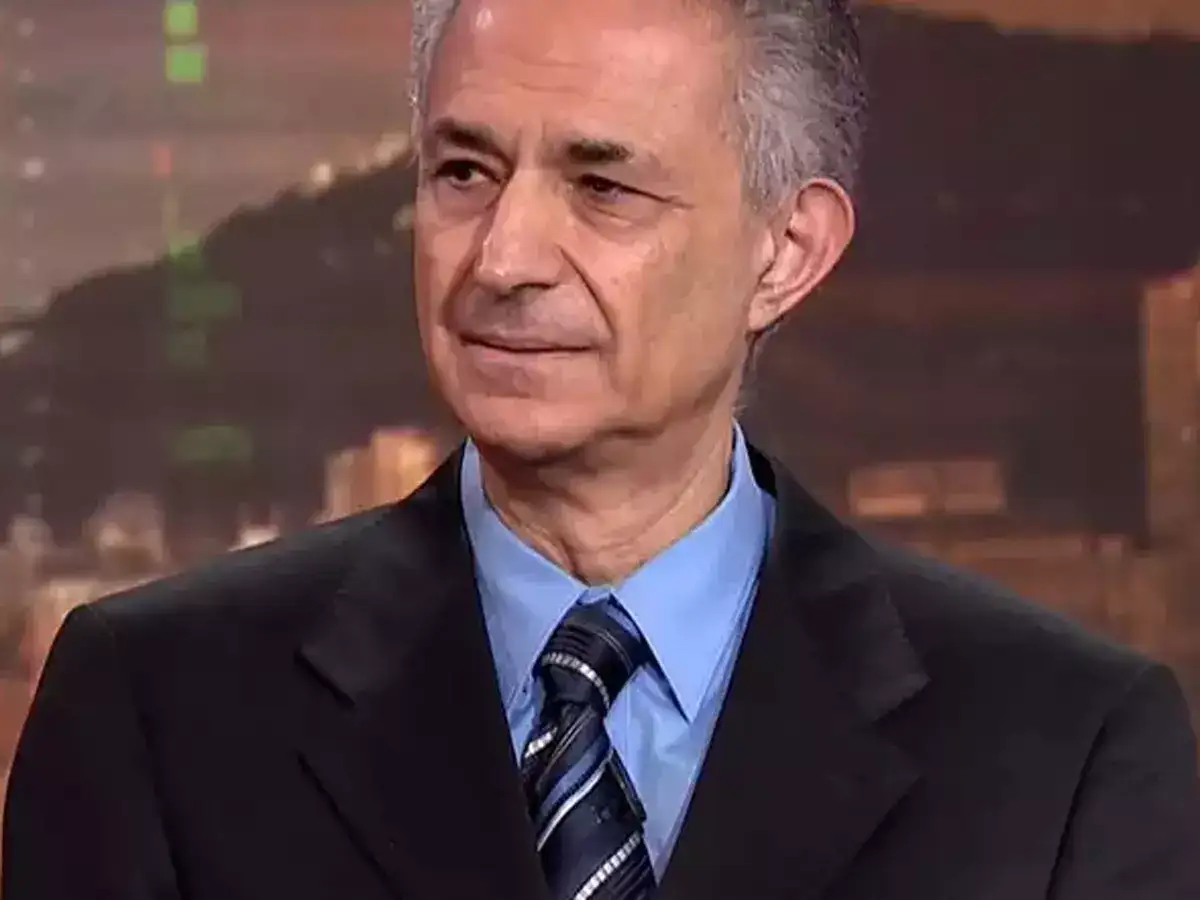
Speaking to ET Now, Andrew Freris, CEO, Ecognosis Advisory said the situation is unlikely to see a quick resolution and warned that markets may have to live with prolonged uncertainty for months, if not years.
According to Freris, the constant stream of contradictory developments has made it nearly impossible for markets to form a stable view. He pointed out that one moment there are reports of negotiations and possible agreements, while the next moment fresh military escalation dominates headlines. This “flip-flop” environment, he said, is leading to sharp swings in oil prices and equities.
“When the war started, look, I am not going to pat myself in the back because what I said at the time was an intelligent child would have been able to say it, that war is going to last for a very, very, very long time. I am not talking about months. I am talking about years,” Freris said.
He added, “There is absolutely nothing for the markets to bite on except as you say to flip-flop. Yes, we are signing, the price of oil comes down, US shares go up. No, we are not signing, the price of oil goes up and so on.”
Freris believes that even if temporary ceasefires or agreements emerge, they may not hold for long. In his assessment, the conflict has already expanded into a wider regional issue, drawing in multiple countries and raising geopolitical risks beyond the immediate participants.
“This is going to last for a very-very long time,” he said, while noting that both sides have already suffered significant setbacks in different ways.
Asian Markets Outshine Wall Street
Despite the geopolitical uncertainty, Freris argued that several Asian markets have delivered stronger returns than the US market over the last year and a half. He specifically highlighted markets such as Singapore, Thailand, Taiwan, Malaysia, and South Korea as outperformers in US dollar terms.
According to him, investors should not assume that the S&P 500 remains the only attractive destination for global capital. He suggested that a number of Asian markets are offering better opportunities without carrying the same valuation concerns as US equities.
“As far as equities are concerned, we already have very good examples coming back from the year 25. In other words, do not trust the S&P. Singapore, Thailand, Taiwan, Korea have all outperformed the S&P consistently in the last year-and-a-half in US dollar terms,” he said.
Freris also noted that India’s market performance has been relatively subdued during this period, though he clarified that India’s weakness cannot be attributed solely to the ongoing conflict.
“The S&P is up, I do not know, 5%, 6%, 7% year to date. Of course, in US dollar terms, that is hardly a big performance and at a market that it is universally acknowledged to be massively overpriced, particularly because it is driven by seven or eight individual shares,” he said.
AI Trade Needs Closer Scrutiny
On the artificial intelligence rally, Freris cautioned investors against treating AI as a single, uniform theme. He explained that the AI ecosystem includes semiconductor manufacturers, infrastructure providers, and software companies — each with different demand drivers and risks.
According to him, the more important question now is whether the massive infrastructure investments linked to AI will generate sustainable demand and long-term returns.
“Yes, remember the AI trade, one has to be incredibly careful what we are talking about because AI, we treat it as a commodity, as gold. No, AI consists of three completely separate but interlinked parts,” he said.
While chipmakers and hardware producers continue to benefit from strong momentum, Freris said he remains more focused on the infrastructure side of the AI ecosystem and whether the eventual buyers of these systems will justify the current scale of investment.
Rising US Bond Yields Remain a Key Concern
Freris also expressed caution over the outlook for US interest rates and bond yields. He said inflation in the United States is likely to remain elevated for an extended period, making it difficult for the US Federal Reserve to aggressively cut rates.
“The sense is very-very straightforward, inflation in United States has gone up and it will stay up and it will stay up for a long time and the Fed is not going to cut,” he said.
He argued that investors are paying too much attention to central banks while underestimating the importance of the bond market itself. According to him, markets are already adjusting to a higher-rate environment, with long-term yields expected to remain elevated.
“The markets are getting more comfortable that they are going to see interest rates on the long term with a number four in front of them,” he said.
Higher US bond yields typically reduce the attractiveness of emerging markets by drawing capital back into dollar assets. However, Freris maintained that selective Asian markets could continue to outperform if investors focus on relative strength rather than broad regional trends.
For global investors, the message appears increasingly clear that volatility linked to geopolitics, oil, inflation, and interest rates is unlikely to fade anytime soon, and market leadership may continue shifting away from traditional US-heavy portfolios.