

The rally was further supported by short covering, as investors unwound bearish positions taken during Monday’s nearly 2.5% market drop.
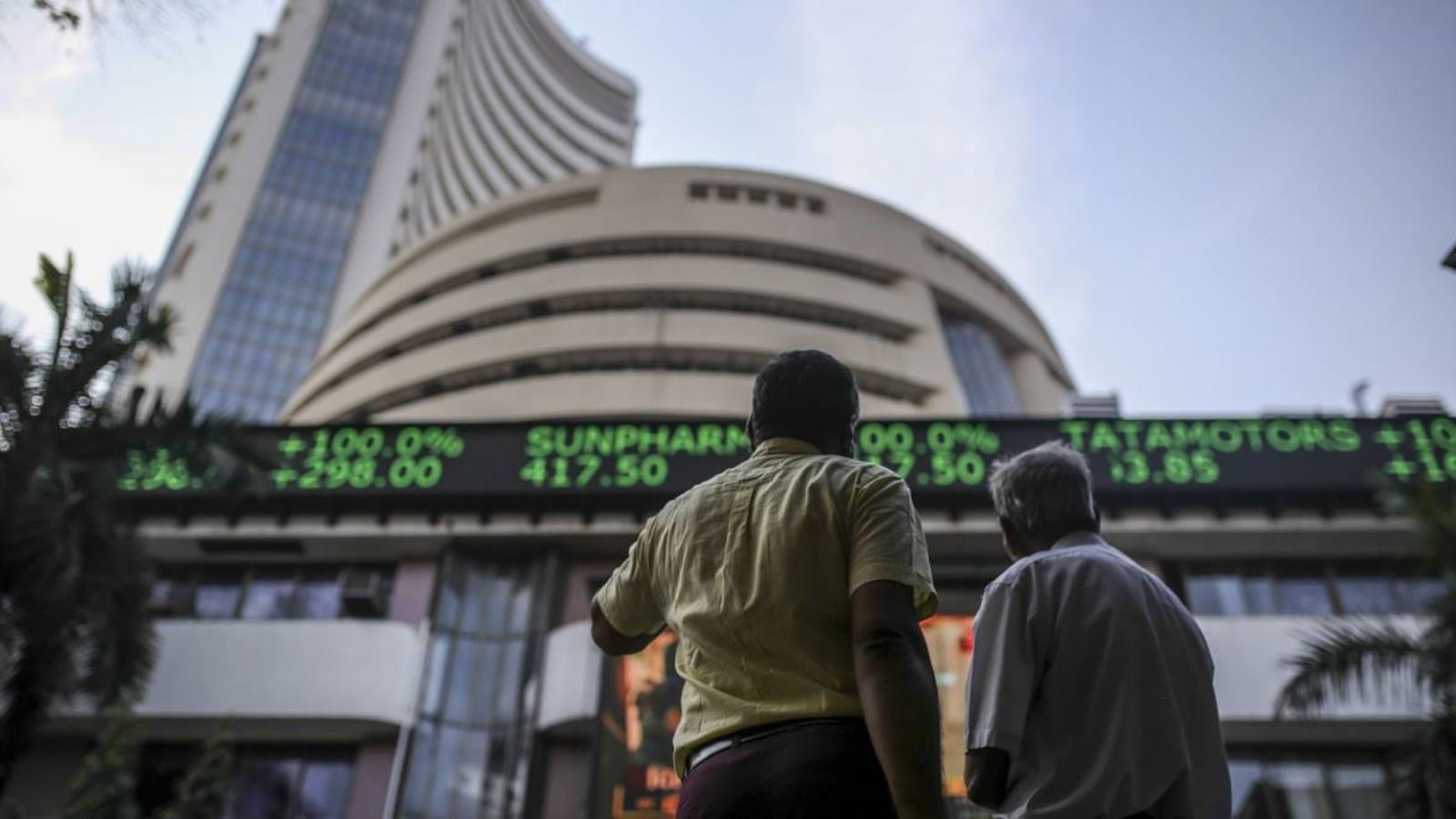
Domestic stock markets rose 1.9% on Tuesday, buoyed by a sharp decline in crude oil prices due to a temporary ceasefire announced by US President Donald Trump in West Asia.
The rally was further supported by short covering, as investors unwound bearish positions taken during Monday’s nearly 2.5% market drop.
The BSE’s 30-stock benchmark Sensex index closed at 74,068.45 points, up 1,372.06 points or 1.9%. The National Stock Exchange (NSE) Nifty 50 index gained 1.8% to end the session at 22,912.40 points. Both indices had rallied as high as 2.5% before some profit booking at higher levels, showing that investor confidence remains fickle despite the relief rally.
With crude prices falling, the rupee gained 10 paise to 93.87 against the dollar. However, the forex market is still on the edge about the temporary ceasefire and the rupee remains precariously close to breaching the 94 mark against the dollar. Alongside the high crude prices, persistent foreign portfolio investor (FPI) outflows have also kept the Indian currency under pressure, breaking multiple crucial thresholds. These foreign players have already sold around $11.3 billion of Indian shares so far this month, which is the highest ever in a single month.
The rally on Tuesday was due to Trump announcing the US would pause military strikes on Iranian energy infrastructure for 5 days, providing some much-needed de-escalation in the conflict. The market direction going forward will largely depend on the situation in West Asia, which would dictate crude oil prices. “Investors should not read too much into a single day’s bounce and should wait for signs of sustainability,” said an analyst.
The rally was broad-based, with all of NSE’s sectoral indices gaining substantially. Broader market indices, consisting of mid-cap and small-cap stocks, gained as much as 3%. Overall, 74% of the stocks traded on the NSE ended higher during the session. The India VIX index, which indicates the volatility in the market, eased over 7% to 24.75 but remains significantly elevated from the pre-war levels of around 14.
While Trump said on social media that both parties held talks about a complete resolution to the conflict, Iran denied these talks. However, the temporary ceasefire by the US has provided a huge boost for markets globally for now. Earlier, Trump had threatened to “obliterate” Iranian energy infrastructure if the Strait of Hormuz was not opened up in 48 hours, to which Iran had warned retaliation.
Story continues below this ad
The temporary ceasefire led to crude prices falling under $100 a barrel for the first time in nearly 2 weeks. However, prices are back around the $100 per barrel mark amid the uncertainty caused by the conflicting statements from Iran and the US.
High crude prices have battered markets globally over the past few weeks, with the Indian market still 9% down since the start of the war in late February despite the latest rally. Experts had feared crude prices rising over $120 a barrel if the conflict were prolonged, with Goldman Sachs recently raising its estimates for average Brent crude oil prices to $85 per barrel for the year from $77.
Earlier, stock markets around the world had also rallied on the US’ announcement of a temporary truce. European markets had rallied sharply late on Monday following the announcement. The US markets had gained over 1% overnight. Asian markets also gained earlier on Tuesday, with the South Korean and Japanese bourses jumping as much as 2%. Both these economies are also heavily dependent on fuel shipped through the Strait of Hormuz — the key waterway that has effectively been blocked by Iran during the conflict.
© The Indian Express Pvt Ltd
