

Post Content
Meta is once again at the centre of a privacy storm and this time, the controversy involves its flagship AI-powered smart glasses which allegedly exposes sensitive user content, including intimate moments, to human data annotators in countries such as Kenya that help train AI models.
First reported by Swedish newspapers Svenska Dagbladet and Göteborgs-Poste, the joint investigation has led to a new class action lawsuit against Meta in the United States, alleging violations of consumer privacy tied to its AI-enabled smart glasses developed in partnership with Ray Ban parent EssilorLuxottica. The Information Commissioner’s Office in the UK is also investigating the social media giant over this matter.
Meta’s Ray Ban AI glasses have surged in popularity over the past few years, with an estimated seven million (70 lakh) customers reportedly purchasing the device in 2025, up from a total of two million (20 lakh) in 2023 and 2024.
The rapid success of Meta-Ray Ban AI glasses have fueled the rise of smart glasses as the next major computing interface after smartphones. But the same technology is also drawing criticism from observers who warn that it could normalise everyday surveillance even as the AI industry pursues a platform shift that, so far, has taken the shape of ‘always-listening’ AI pendants and similar wearables.
Critics also argue that facial recognition-enabled smart glasses could have dangerous implications, especially if law enforcement agencies start using them. Here’s what you need to know about the latest Meta AI controversy.
How do Meta’s smart glasses work?
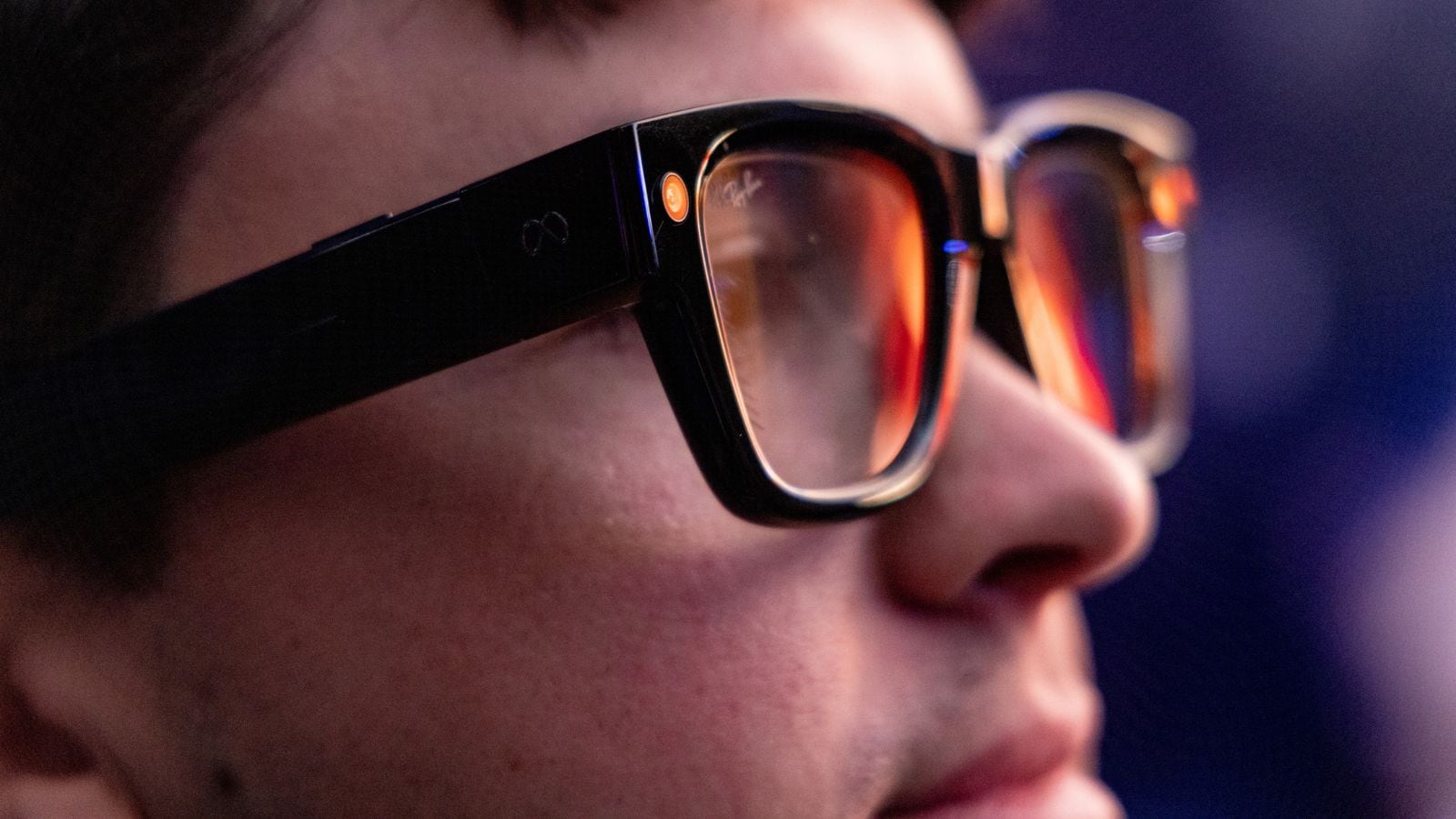
AI-integrated devices like the Ray Ban-Meta Gen 1 smart glasses have become popular among consumers mainly due to their ability to record first-person footage through an integrated camera and microphone array. The glasses also allow wearers to analyse the world around them through Meta’s AI model.
Meta’s smart glasses come with a privacy light that is automatically turned on whenever the wearer is recording a video or taking photos so that people are aware that they are being recorded. However, users have pointed out that the privacy light can sometimes be hard to notice, especially in the outdoors, crowded places, or in bright light.
Story continues below this ad
Also Read | Meta Ray-Ban Display smart glasses hands-on: A step toward making smartphones obsolete
Many people are also not fully aware that much of the footage recorded by Meta’s smart glasses is sent to offshore contractors for data labeling, a widely-used preprocessing step in training new AI models in which human contractors are asked to review and annotate footage. Meta said the content is only fed into the data pipeline for review after users give consent, though it is unclear whether users fully opt-out of the process.
What are Meta contractors seeing?
Third-party contractors of Meta who are based in Nairobi and Kenya said that they are being allowed to review highly sensitive and intimate user data collected by its smart glasses, according to the recently published joint investigation by Swedish newspapers Svenska Dagbladet and Göteborgs-Posten.
“In some videos you can see someone going to the toilet, or getting undressed. I don’t think they know, because if they knew they wouldn’t be recording,” an anonymous contractor who works for a company called Sama was quoted as saying. “I saw a video where a man puts the glasses on the bedside table and leaves the room. Shortly afterwards his wife comes in and changes her clothes,” another data annotator told the newspapers.
Meta’s Ray-Ban Display smart glasses. (Image: Anuj Bhatia/The Indian Express)
The workers further described reviewing imagery of people’s bank cards, users watching pornography, and even filming entire “sex scenes”. One of the contractors reportedly said that they felt forced to watch and annotate the content or else risk losing their job. “You think that if they knew about the extent of the data collection, no one would dare to use the glasses,” one annotator was quoted as saying.
Story continues below this ad
What are the allegations in the lawsuit?
The new lawsuit has been filed against Meta by plaintiffs Gina Bartone of New Jersey and Mateo Canu of California, represented by the public interest-focused Clarkson Law Firm. Both Meta and its glasses manufacturing partner EssilorLuxottica are named in the suit. It accuses the defendants of violating US consumer protection laws by engaging in false advertising.
Meta’s smart glasses are advertised using promises like “designed for privacy, controlled by you,” and “built for your privacy,” which might not lead customers to assume their glasses’ footage, including intimate moments, was being watched by overseas workers, the lawsuit alleged.
Ray-Ban Meta offers four different colour lenses, on the contrary Oakley Meta only offers only one polarised coloured lens. (Image: Meta)
The lawsuit includes several examples of ads that tout the privacy benefits of the smart glasses, describing their privacy settings, and “added layer of security.” “You’re in control of your data and content,” read an ad mentioned in the lawsuit, suggesting that the wearers got to choose which content was shared with others.
However, the lawsuit said that the plaintiffs did not see any disclaimer or information that contradicted the advertised privacy protections.
Story continues below this ad
How has Meta responded to these allegations?
Meta said that it uses contractors to review the content shared by users in order to improve people’s experience with the glasses. The tech giant said it blurs the faces in images and footage before sharing it with the contractors, though sources cited in the joint investigation said that the blurring is not consistent.
Meta has also explained that its privacy policy and terms of service mention that content is shared with human reviewers upon user consent. “In some cases, Meta will review your interactions with AIs, including the content of your conversations with or messages to AIs, and this review may be automated or manual (human),” reads a version of the policy that is applicable for users in the US.
At the Connect Conference, Meta CEO Mark Zuckerberg announced the Ray-Ban Meta Display glasses, its consumer-ready smart glasses with a display for $799. (Image credit: Anuj Bhatia/Indian Express)
Meta’s AI terms of use state that the company reserves the right to “review your interactions with AIs, including the content of your conversations with or messages to AIs, and this review can be automated or manual (human).” The same document also warns that users shouldn’t share information that “you don’t want the AIs to use and retain, such as information about sensitive topics.”
Also Read | Meta plans to upgrade AI glasses with facial recognition in major policy shift: Report
In a statement on the overall allegations, Meta spokesperson Christopher Sgro was quoted as saying, “Ray-Ban Meta glasses help you use AI, hands-free, to answer questions about the world around you. Unless users choose to share media they’ve captured with Meta or others, that media stays on the user’s device.”
Story continues below this ad
“When people share content with Meta AI, we sometimes use contractors to review this data for the purpose of improving people’s experience, as many other companies do. We take steps to filter this data to protect people’s privacy and to help prevent identifying information from being reviewed,” the spokesperson said.
What do we know from past incidents?
Meta has a poor track record when it comes to ensuring the privacy of users. This is not the first time its smart glasses have fueled privacy concerns.
In October 2024, two Harvard University students, AnhPhu Nguyen and Caine Ardayfio, were able to correctly identify someone and find out where they lived using a combination of Meta’s Ray-Ban smart glasses, large language models (LLMs), face search engines,and public databases. In a video demo uploaded online, the two students reportedly used I-XRAY to identify several classmates, their addresses, and names of relatives – all in real time.
Recently, The New York Times reported that Meta is looking to upgrade its AI-powered smart glasses with a new facial recognition feature internally referred to as ‘Name Tag’. The feature would reportedly let wearers identify people as well as obtain information about them via the Meta AI assistant. It is also working on another feature that would allow wearers to continually run cameras and sensors to keep a record of someone’s day, similar to how AI-powered note-taking tools summarise video call meetings, as per the report.
