

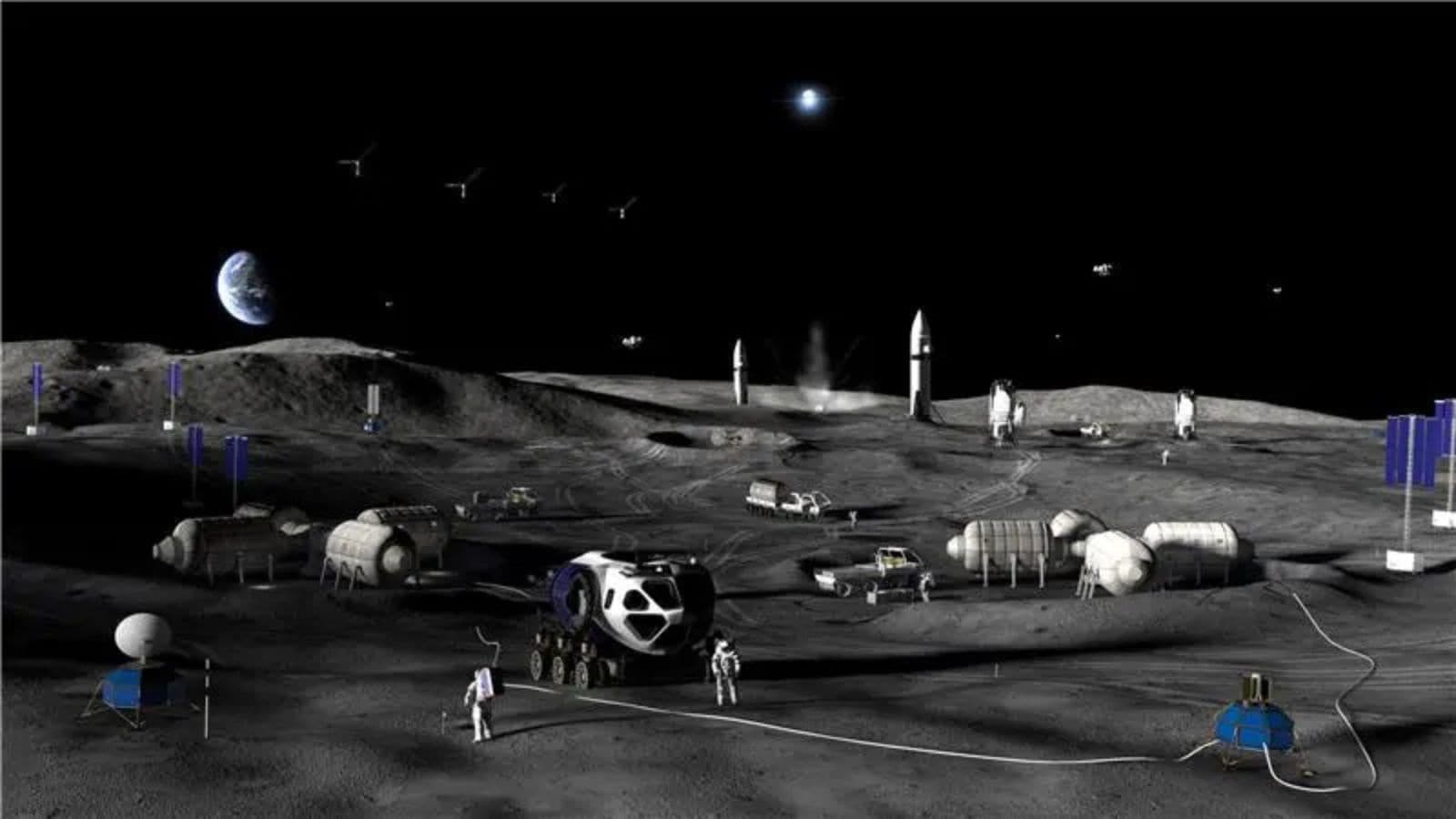
Post Content The Skyfall mission is part of a larger push by Nasa to explore deeper into space. The agency is also adjusting its lunar plans under the Artemis programme, focusing more on building a base on the Moon’s surface. (Image: Nasa)
Nasa has unveiled an ambitious plan to send a fleet of small helicopters to Mars using what it describes as the first nuclear-powered spacecraft designed for interplanetary travel. The mission, called Skyfall, is expected to launch in December 2028 and could mark a major shift in how spacecraft travel across deep space.
At the centre of the mission is a new spacecraft known as Space Reactor-1 Freedom. It will carry the Skyfall helicopters to the red planet using nuclear electric propulsion, a technology not yet used for such journeys.
How nuclear propulsion works
Unlike traditional systems, this spacecraft will be powered by a small reactor through nuclear electric propulsion. It works by using the heat of the reactor to produce electricity, which is then used to power the most efficient engines to move the spacecraft through space.
“Requiring operating temperatures less than nuclear thermal propulsion, the thermal energy produced by the reactor generates electricity, which is then used to power highly efficient electric thrusters,” Nasa officials wrote in a description of the agency’s nuclear electric propulsion efforts.
Also Read | Artemis II: How to watch Nasa move its Moon rocket to launch pad live
This system is different from the radioisotope generators used in older missions like Voyager, which produce electricity but do not help propel spacecraft. Nasa believes nuclear electric propulsion could play a key role in future missions, especially those heading far beyond the sun’s reach.
Skyfall helicopters
The Skyfall mission will include three small helicopters, inspired by Ingenuity, which made history as the first aircraft to fly on another planet. Ingenuity completed 72 flights on Mars between 2021 and 2024, proving that powered flight is possible in the planet’s thin atmosphere.
However, Skyfall’s helicopters will go beyond demonstration. They are designed to carry out real scientific and exploration tasks.
Story continues below this ad
“They will carry cameras and ground-penetrating radar to scout a future landing site, to understand the slopes and hazards for human-scale landers,” Steve Sinacore, programme executive for Nasa’s Space Reactors Office, was quoted as saying by space.com.
“They will also map and characterise the subsurface water ice to find out where the water ice deposits are, along with the size, depth and other important characteristics,” he added.
A step towards human missions
The data collected by these helicopters could help scientists choose safer landing sites for future human missions to Mars. By studying terrain and searching for water ice, the mission aims to support long-term exploration plans.
Also Read | After 14 Years, NASA says a 600 kg satellite will crash back into Earth
Nasa also said the spacecraft itself could continue its journey after delivering the helicopters, potentially travelling further into the solar system.
Story continues below this ad
“SR-1 Freedom will establish flight-heritage nuclear hardware, set regulatory and launch precedent, and activate the industrial base for future fission power systems across propulsion, surface and long-duration missions,” Nasa officials said in a statement announcing the mission.
The Skyfall mission is part of a larger push by Nasa to explore deeper into space. The agency is also adjusting its lunar plans under the Artemis programme, focusing more on building a base on Moon’s surface.
© IE Online Media Services Pvt Ltd
