

In the latest episode of WTF, entrepreneur and investor Nikhil Kamath sits down with two of India's most influential pharmaceutical leaders, Rajeev Juneja, Co-Founder and Managing Director of Mankind Pharma, and GV Prasad, Co-Chairman and CEO of Dr. Reddy's Laboratories, for a candid conversation on India's pharmaceutical growth story, the future of innovation-led healthcare, manufacturing competitiveness, and the opportunities shaping the sector's next chapter.
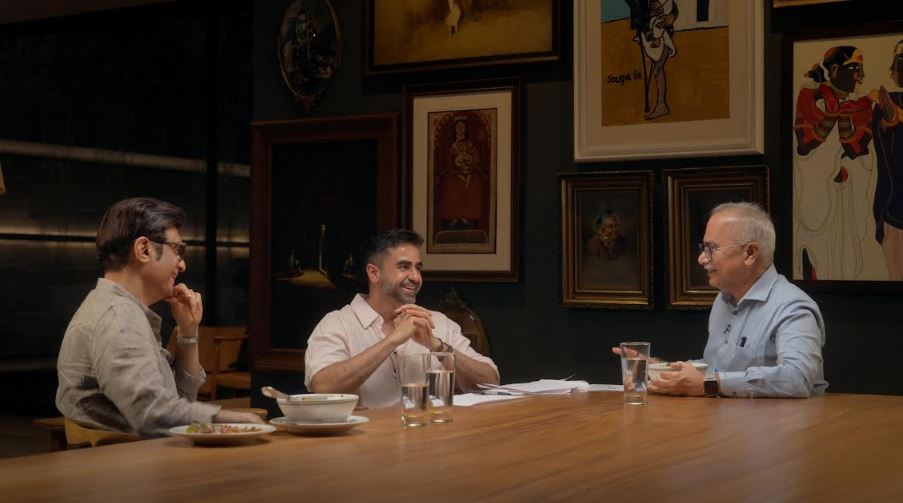
Nikhil Kamath in conversation with Rajeev Juneja, Co-Founder and Managing Director of Mankind Pharma, and GV Prasad, Co-Chairman and CEO of Dr. Reddy's Laboratories
Together, Juneja and Prasad bring more than six decades of experience building businesses that have helped shape India's position as the pharmacy of the world. Through personal stories and industry insights, they discuss how medicines are discovered, manufactured and commercialized, why India remains a global leader in generic drugs, and what it will take for the country to emerge as a stronger innovation-driven pharmaceutical hub.
Reflecting on Mankind Pharma's journey, Rajeev Juneja shares how the company was built after its founding in 1995 with just Rs. 69,000 in capital and a strategy focused on markets often overlooked by larger players. While established pharmaceutical companies concentrated on metros and large hospitals, Mankind expanded its presence across smaller markets in Western Uttar Pradesh, Haryana and Punjab, prioritizing depth of distribution over breadth. The company differentiated itself by pricing products 40 to 60 percent below competitors, making medicines more accessible to consumers. Today, Mankind Pharma is India's fourth-largest pharmaceutical company with revenues exceeding Rs. 40,000 crore.
GV Prasad reflects on joining Dr. Reddy's Laboratories in 1990, when the company's total group revenue was less than Rs. 100 crore, and helping build it into a nearly USD 3 billion global business spanning generics, biosimilars and proprietary drug discovery. He explains the fundamental differences between generics, biologics and innovative medicines, while highlighting both India's strengths and limitations within the global pharmaceutical value chain.
A key theme of the discussion is India's next growth frontier. While India has established itself as the world's leading supplier of affordable generic medicines, Prasad notes that significantly greater value is created through innovation and the discovery of new therapies. The conversation explores emerging treatment areas such as GLP-1 drugs, the economics of drug development, and the investments required to build a globally competitive innovation ecosystem.
The episode also examines India's position relative to China. Juneja and Prasad discuss China's evolution from a low-cost manufacturing destination to a global force in pharmaceutical innovation, noting that 29 percent of all new cancer drugs are now originating from Chinese companies. The discussion highlights the importance of long-term capital, scientific talent, research infrastructure and institutional support in driving innovation-led growth.
Addressing the ongoing conversation around Active Pharmaceutical Ingredients (APIs), the two leaders offer perspectives on manufacturing resilience and supply chain competitiveness. Prasad argues that India has not lost its ability to manufacture APIs but rather faced economic challenges that shifted production elsewhere, while Juneja discusses how Indian companies are increasingly partnering with and licensing molecules from global innovators to bring advanced therapies to patients more quickly.
Beyond industry trends, the episode provides valuable insights for young professionals considering careers in pharmaceuticals. Drawing on their own experiences — from Juneja's early years as a medical representative to Prasad's journey of helping build a global pharmaceutical enterprise — both leaders emphasize the breadth of opportunities available across science, research, manufacturing, sales, entrepreneurship and healthcare innovation.
Speaking on the episode, Rajeev Juneja, said, "What you hate becomes your biggest lesson. Going to that pharmacy, sweeping, buying from the wholesale market, I hated it. But that is where I learned how the market really works."
GV Prasad added, "India is the generic pharmacy of the world. That's a good foundation. But the next frontier is finding new drugs, and I think the next ten years will be extremely interesting for Indian pharma."
Commenting on the conversation, Nikhil Kamath, said, "This conversation made clear something I hadn't quite understood before, that by volume, India is the pharmacy of the world, but by revenue, we're barely a rounding error. The real question, and these two men have spent their careers answering it, is how that changes."
The episode is available now on YouTube.
About WTF with Nikhil Kamath
WTF is a long-form conversation series hosted by entrepreneur and investor Nikhil Kamath. Each episode brings together builders, thinkers, and industry leaders for extended, unscripted conversations on business, ideas, and the texture of how things actually get done. Past guests include Elon Musk, Bill Gates, Prime Minister Narendra Modi, Rishi Sunak, and Akshata Murty.


