

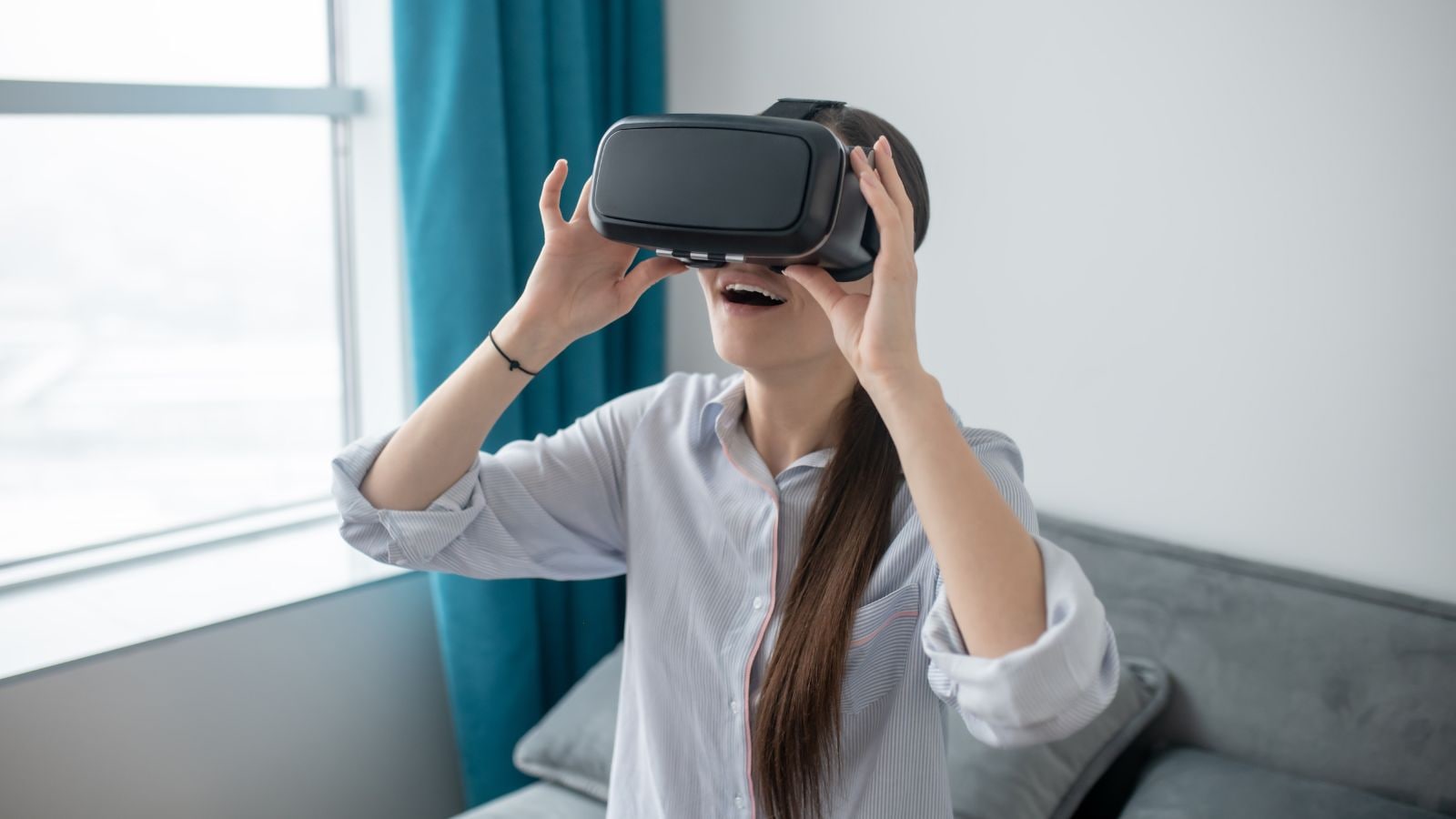
Post Content VitalID technology uses the vibrations generated by our breathing and heartbeats. These subtle movements travel through the neck and into our skulls. (Image for representation: Freepik)
Logging into apps and websites is something we do daily, but unfortunately, it is never an easy task. Even when we use password managers, we still have to be content with remembering different login credentials. Biometric technologies like fingerprint or face scan provide some respite, but they have their own data security problems. Now, scientists have come up with a completely different approach, based on something we don’t even notice: vibrations within our skulls.
A new technology called VitalID promises to revolutionise how we log into different apps and websites, especially those offering an immersive digital experience. Instead of entering passwords or scanning our faces, we can use the subtle movements generated by our own bodies to log in. The study was conducted in collaboration with researchers from the New Jersey Institute of Technology, Temple University, and Texas A&M University.
VitalID technology uses the vibrations generated by our breathing and heartbeats. These subtle movements travel through the neck and into our skulls. Because every person’s bone structure and tissue are slightly different, these patterns are unique— much like fingerprints.
The system was introduced at the 2025 ACM Conference on Computer and Communications Security and is designed primarily for extended reality environments. According to researchers, it does not require any additional hardware. Instead, it relies on motion sensors already built into many modern headsets.
Also Read | Why earning more won’t always make you happier, according to science
“We do not need to add any device or additional hardware,” said Yingying Chen, a computer engineer at Rutgers University. “It requires only software.”
What is extended reality?
Extended reality, abbreviated as XR, comprises virtual reality, augmented reality, and mixed reality technologies. XR technologies combine the physical world with digital elements. XR technologies are mostly used in gaming platforms such as Viture, Meta Quest, and Oculus Rift. However, the use of XR technologies has been increasing.
Today, XR is being explored in fields such as healthcare, finance, education, and remote work. As people begin to store sensitive data and perform critical tasks in these environments, the need for secure and seamless authentication has become more urgent.
Story continues below this ad
“Extended reality will play a major role in our future,” Chen said in a statement. “If immersive systems are going to become woven into daily life, authentication has to be secure, continuous, and effortless.”
How the system was tested
To evaluate VitalID, researchers tested it on 52 participants over 10 months using two popular XR headsets. The results were promising. The system correctly identified legitimate users more than 95 per cent of the time. It was also useful in keeping intruders out, rejecting unauthorised users in over 98 per cent of cases.
The team created a filtering system that can eliminate interference from larger movements such as nodding or shifting position. This ensures the system is only picking up the minute vibrations associated with breathing or the heartbeat.
Also Read: The surprising link between basketball shoes and tectonic plates
With computer models, the researchers studied these movements and found them to be extremely difficult to replicate. While someone might try to mimic another person’s breathing, duplicating the exact way vibrations move through another individual’s skull is far more complex.
Story continues below this ad
As the XR system progresses, it is being used more frequently to store personal information, access financial platforms, and handle sensitive information. The traditional process of using the system can be quite cumbersome. The process of typing in the password using hand gestures can be quite cumbersome. The two-factor authentication can be quite distracting.
VitalID is one such system that can be used in the future as it operates in the background without the need for any input. It is still commercially unavailable. The system is one step towards the future of more natural and secure authentication systems. It is up for licensing and is ready for research collaboration. The provisional patent is already filed.
© IE Online Media Services Pvt Ltd
