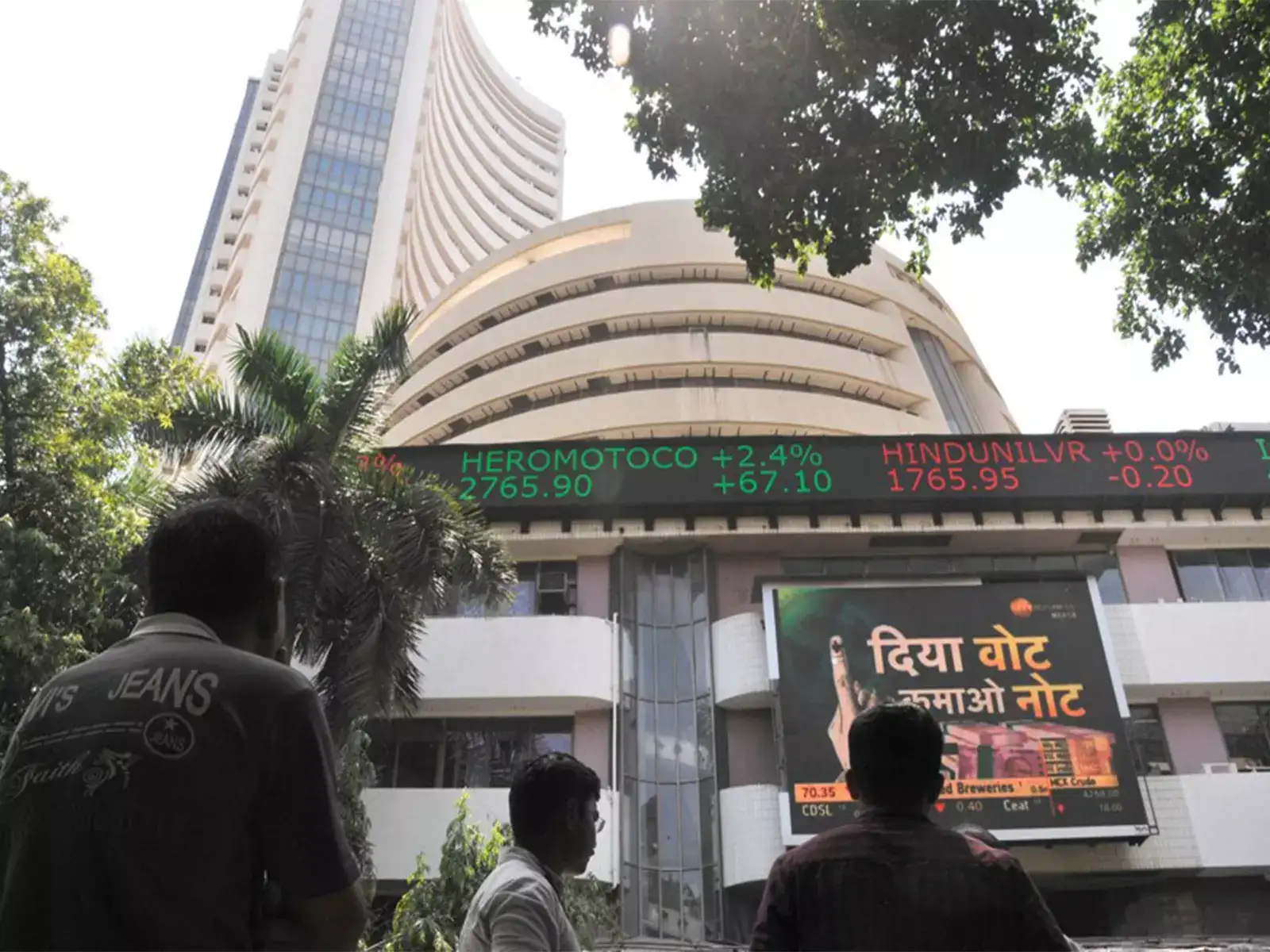


The upcoming public offerings of the National Stock Exchange (NSE) and Reliance Jio have become the biggest talking points on Dalal Street. Given their sheer size, many investors are questioning whether these mega issues could absorb liquidity from the secondary market and temporarily weigh on equities.
According to him, there is ample capital waiting to enter the market, and successful IPOs could, in fact, encourage more investors to participate rather than divert money away from existing stocks.
Plenty of cash remains on the sidelines
Responding to concerns that the NSE and Jio IPOs could suck liquidity out of the market, Agarwal said the bigger story is not about IPOs but about the amount of idle money waiting for attractive investment opportunities.
"Look, I would not say IPOs, but there is a lot of money on the sidelines. If we go through how investors have invested into, let us say, mutual funds as a vehicle, the peak inflows happened for five successive months from September 2024 to January-February 2025. And then after that, despite one-and-a-half years having gone by, two wage increases for employees, GDP growth-related uptick in revenues and profits for businesses, the inflow levels have actually been lower than what you saw at that point in time. That gives you a sense that there is a lot of money on the sidelines waiting for good paper to come in," he said.
He believes IPOs provide investors with an attractive entry point into equities, but only if they deliver sustainable returns after listing.
"So, that is the thought. If the IPOs are good—and by good, I mean they list and provide sustained gains to investors—that sets in motion a virtuous cycle. Other people who are on the sidelines also start looking at the market and come in. But the important thing is that investors who participate in the IPO should make money. If they do not, then the virtuous effect either does not take place or gets broken," he added.
Mega IPOs could temporarily pressure large-cap stocks
While Agarwal does not see liquidity as a structural concern, he believes the size and composition of the upcoming offerings could temporarily affect large-cap stocks.
He pointed out that his investment approach continues to favour alpha generation over simply tracking benchmark indices.
"We have been saying it is time for alpha—alpha meaning higher returns versus the large-cap index. The reason is simple. If you just hold on to the thought that markets follow earnings growth, this is a period where the broader market is delivering better earnings growth than the narrower indices. That does not change."
According to him, large IPOs typically attract money from institutional investors, particularly from large-cap-oriented funds.
"If we get two large IPOs, which pull money from the fund fraternity more from large-cap funds than from mid- and small-cap funds, it would mean some amount of selling pressure in that part of the market versus the rest."
He drew parallels with last year's IPO cycle.
"Last year, there was a very strong pipeline of smaller companies that absorbed liquidity between September and December. During that period, the mid- and small-cap segment of the market took a breather. This year, while the number of issues may be lower, the amount of money being raised per issue is significantly larger, and these companies belong to the large-cap space," he said.
With foreign portfolio investors continuing to remain sellers in large-cap stocks, Agarwal believes the IPOs could become another short-term headwind for that segment.
Valuations are finally working in investors' favour
Unlike several previous market phases, Agarwal believes investors currently have the rare advantage of attractive valuations alongside fading macroeconomic concerns.
"This is a rare time in the market where, frankly, you do not have many worries and valuations are good. Large-caps are below their long-term averages. Mid-caps crossed their long-term averages last month, so they are only slightly above historical averages. Overall, valuations are on your side," he said.
He added that several risks which dominated investor discussions earlier in the year have eased considerably.
"Issues like the India-US trade deal not happening, rupee depreciation, oil price shocks and similar concerns are largely behind us. Even the AI-related sell-off has already been reflected in IT valuations. Given where valuations are today, the impact is significantly lower than what it was, say, in February."
Weak monsoon may not necessarily derail earnings
While concerns over below-normal rainfall continue to dominate market conversations, Agarwal believes investors may be overlooking the positive impact that delayed rains can have on several sectors of the economy.
"If we continue to believe that markets follow earnings growth, then lower rainfall over the next quarter or two may actually mean better industrial output and stronger GDP."
He explained that excessive rainfall often disrupts economic activity.
"Good rains, while beneficial overall, reduce power consumption, mining activity and construction work. That naturally brings down GDP growth during those months."
As a result, he believes weaker rainfall in the near term could support earnings across several industrial sectors before any agricultural stress begins to emerge.
"So, if rains are actually as weak as they are being made out to be, markets could have two quarters of good numbers to look forward to before any monsoon-related stresses begin to surface."